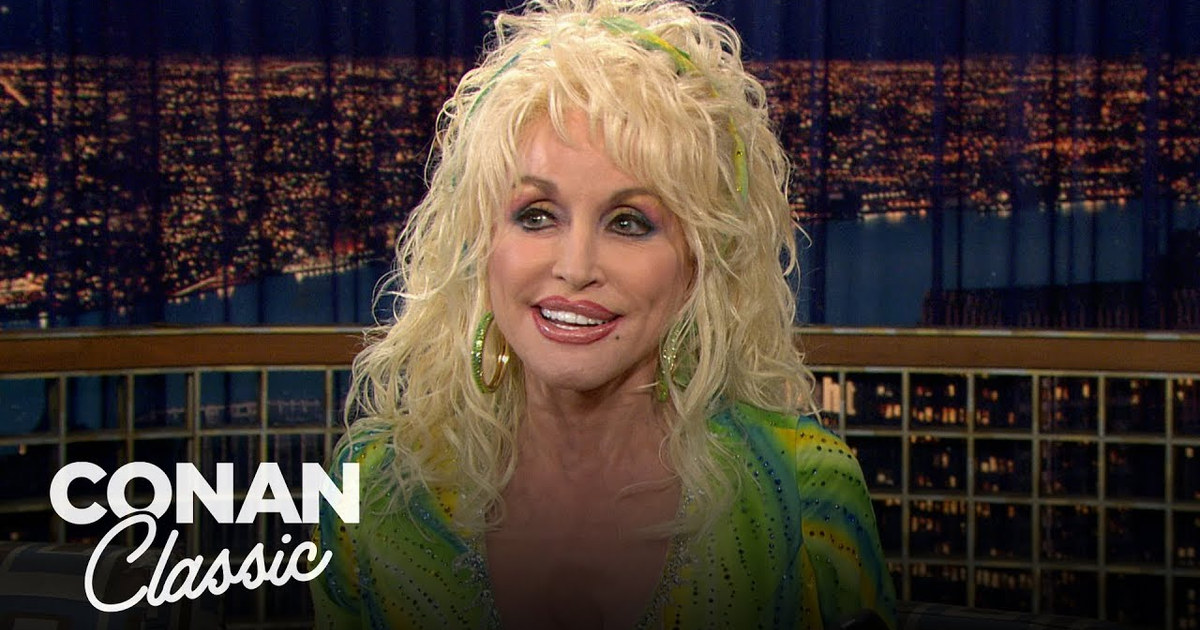
Part 2
Now here's the through-line that makes this more than a funny anecdote. Dolly confirms she used a version of that line in 9 to 5, the 1980 workplace comedy directed by Colin Higgins. Her character, Doralee Rhodes, tells her boss, "I'll turn you from a rooster to a hen with one shot." That's not a writer's invention. That's Dolly's life bleeding into her screen work. The film, which runs about 110 minutes and also stars Jane Fonda and Lily Tomlin, became a hit because it tapped into real frustration — and Dolly brought her own experience to the table.
So when you watch 9 to 5 now, you're not just watching a comedy. You're watching a country girl who once pulled a gun in a New York hotel lobby turn that moment into a punchline that millions of people would quote for decades. That's not luck. That's craft. She took a scary, ridiculous situation and shaped it into a story she could control. And she's been doing that ever since.
The cinematography of her storytelling is worth studying. She doesn't linger on the threat. She doesn't milk the fear. She moves straight to the laugh. That's a choice. It's the same choice a director makes when they cut away from violence to show the reaction. Dolly knows the power is in the release, not the tension. She lets Judy's laughter be the release valve. And she lets the audience in on the joke — because she's already in on it herself.
That's why this story matters. It's not just a wild anecdote from Dolly Parton's early days in country music. It's evidence. Evidence that she's always been able to take the mess of real life and turn it into something you can laugh at. Evidence that she doesn't need a script to find the punchline. And evidence that the line between Dolly Parton the person and Dolly Parton the performer has always been thin — because she's never pretended to be anything other than what she is.
Next, we'll look at how her father kept her grounded with a bronze statue and a pigeon joke — and why that might be the most important review she ever got.
Scene Two: The Courthouse Statue and the Outhouse — How Dolly Parton's Dad Kept Her Grounded
Picture the frame: a bronze Dolly Parton, cast and bolted down in the courthouse yard of her Tennessee hometown. Civic pride in metal. The kind of permanent honor most celebrities never get — a statue in the town square, lit by whatever sun God gives it, shot from every angle by tourists with phones. Dolly, years ago, was beaming about it. She admits she went on and on, bragging — 'not being conceited, just proud.' Fair enough. A bronze statue is a hard thing to be humble about.
Then her father steps in and delivers the line that should be mounted on a plaque in every Hollywood agent's office: 'To your fans you may be some sort of idol, but to the pigeons you're just another outhouse.'
That's the grounding mechanism in one sentence. It's scatological, it's humble, and it's impossible to argue with. You can debate taste, legacy, fame — but you cannot debate pigeons. They don't care about your Grammy nominations. They don't care about '9 to 5' or 'Jolene' or the fact that you've been a country-music institution since the late '60s. They see a perch. They see a surface. They see an outhouse.
In lighting terms, this is the country-music equivalent of a hard key light — no softbox, no diffusion, no bounce card. Just a raw source aimed straight at the subject. It's the kind of light that shows every pore. And Dolly tells this story on herself. She's the butt of the joke, and she knows it. That's the difference between humility and performed humility. Performed humility is a beauty dish with a grid — flattering, controlled, still fake. This is a bare bulb. It hurts, and it's honest.
[[AD]]
Dolly has had decades of surreal success — country music, film, pop culture, theme parks, Broadway, Rock & Roll Hall of Fame induction in 2022. She's one of the few artists who can move between '9 to 5' (1980, directed by Colin Higgins, 109 minutes) and a Led Zeppelin cover without anyone blinking. But when asked how she stays sane, she doesn't name a guru or a meditation app. She credits a 'good family, good support system.' That's the whole rig. No fancy lighting package. Just people who knew her before the bronze.
The statue itself is a visual symbol of permanence — the town saying, 'We claim her.' It's civic pride cast in metal. Most celebrities never get that. Most get a star on a sidewalk or a handprint in cement. A courthouse-yard statue is different. It's a statement that you belong to a place, that you're part of its history. It's the kind of honor that can make a person start believing their own press.
Then the pigeon joke deflates it instantly. It takes that bronze idol and turns it into a public restroom for birds. It's a reminder that fame is a point of view. From the ground, you're a legend. From the sky, you're a ledge. Dolly's dad understood that a statue doesn't change what you are — it just changes what you're standing on. And if you forget that, the pigeons will remind you.


