Part 2
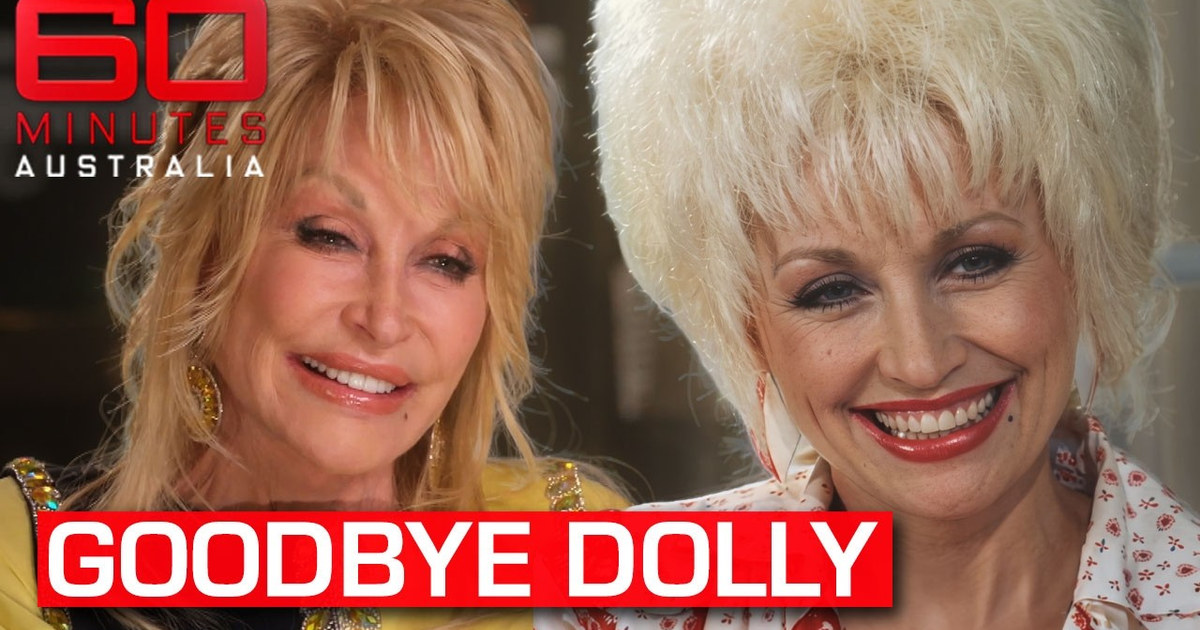
She also knows exactly how to handle the people who poke at it. In a 1986 60 Minutes interview, Mike Wallace asked about her measurements — a question you could not get away with today — and Dolly's response was instant: "No, you can't. Up yours, Buster." She has said, "I've got a brain beneath the wigs and a heart beneath the boobs." And on the subject of attention, she is unbothered and delighted: "I have young boys still whistling at me. I say I'm married, but I ain't dead and I ain't blind." That line is the genre fan's Dolly in a nutshell — warm, filthy-clean, and completely in control.
There's a humility underneath all of it that makes the whole thing land. She grew up as one of 12 children in a one-room log cabin in East Tennessee. She has never been ashamed of it. "We were very poor, but we were rich, as my mama said, in the things that matter — kindness and love and understanding. It just depends on what you call wealth and success." That's not a PR line. That's the origin story that gives the rhinestones their shine. When she jokes about running for president — "Can you imagine anything worse than being the head of a country? I think we've had enough boobs in the White House" — the self-awareness is the joke and the point at the same time.
So yes, the surface pleasures are real, and they are not guilty pleasures. The voice, the hits, the theme park, the wigs, the one-word chorus that unites a karaoke bar — that's a legitimate reason to love Dolly Parton, and it's the reason millions do. But if you're the second kind of fan, the one who came for the craft, you already know the surface is only the front end. Underneath it is a songwriting catalog, a publishing empire, and a career architecture that deserves its own engineering diagram. That's the next layer, and it's where the craft nerd gets to have fun.
[[AD]]
The Craft Nerd's Dolly: Songwriting, Business, and Engineering a Legacy
If you're the kind of viewer who watches a movie and immediately fires up the IMDb trivia page, you're in the right place. Dolly Parton isn't just a genre machine—she's a systems architect. Her career is a masterclass in engineering with a soul, and for those of us who treat filmmaking as code with a heartbeat, her blueprint is worth studying line by line.
Start with the raw output: over 5,000 songs written. That's not a hobby; that's a production pipeline. But the real genius shows in the details. Take '9 to 5,' the 1980 workplace comedy directed by Colin Higgins and starring Jane Fonda, Lily Tomlin, and Dabney Coleman. Dolly wrote the title track, and when she recorded it, she didn't have a typewriter handy. So she used her acrylic nails as percussion, tapping them against a surface to mimic the clack of keys. That's lateral thinking—turning a physical attribute into a sonic signature. A programmer would call that a clever hack; a musician calls it a hook. Either way, it's the kind of problem-solving that separates the pros from the poseurs.
[[VIDEO]]
But Dolly didn't stop at songwriting. She built an empire. She created her own record label, her own musical (the Broadway production of '9 to 5'), and her own theme park, Dollywood. Dolly Incorporated is a juggernaut, and its founder is worth half a billion dollars—the sixth richest singer in the world, ahead of Justin Bieber and Taylor Swift. Yet she frames it all as a byproduct of good engineering, not the goal. 'I count my blessings more than I count my money,' she says. That's not false modesty; it's a design principle. The money is just exhaust from a well-tuned engine.
Her songwriting philosophy is equally pragmatic. The 'cup of ambition' line from '9 to 5'—'Pour myself a cup of ambition / And yawn and stretch and try to come to life'—captures the daily grind with surgical precision. She credits God for her talent, but she clearly does the work. That humility is a feature, not a bug. She's said she would do it for nothing, and she has—early in her career, she wrote songs for others without a guarantee of fame or fortune. That's the passion that drives the craft, the intrinsic motivation that no amount of money can buy.
Longevity, for Dolly, is a maintenance schedule. Keeping up appearances isn't vanity; it's upkeep, like changing the oil in a car or grooming a show dog. She's famously quipped, 'Good lighting, good makeup, and good doctors and a good attitude don't hurt any either.' She's self-aware about her cartoonish look—'cartoons don't really age that much,' she notes—and she leverages it. When she's 90, she says, she'll probably look about the same, just with thicker makeup and bigger hair. That's brand management as engineering: a consistent interface that users can rely on.
Then there's her marriage to Carl Dean, a stable system running since 1964. She met him at a laundromat in Nashville on her first day in town—the Wishy Washy Washateria, of all places. They've been married 53 years, and their opposite personalities (he's reclusive, she's the center of attention) create a balanced load. He likes staying home; she likes staying gone. That's not a bug; that's a feature. Personal life as infrastructure: reliable, low-maintenance, and essential to the uptime of the whole operation.


