Part 3
The hair was the same. She was doing her own backcombing in high school, one of the few girls with a big bouffant. 'My daddy used to raise bees and some of those hairdos look like a beehive,' she joked. 'So maybe I was influenced by that.' But there was also a practical reason: 'All the country singers, if you didn't have big hair, you weren't going to make it far.' The look was a career necessity. And she turned that necessity into an art form. 'I love the idea of wigs,' she said. 'My hair, I love it to be bleached, and so when I would do all that bleaching and I would do all that teasing, my hair was just not in good condition. But I still wanted that look.' So she found a way. She always finds a way.
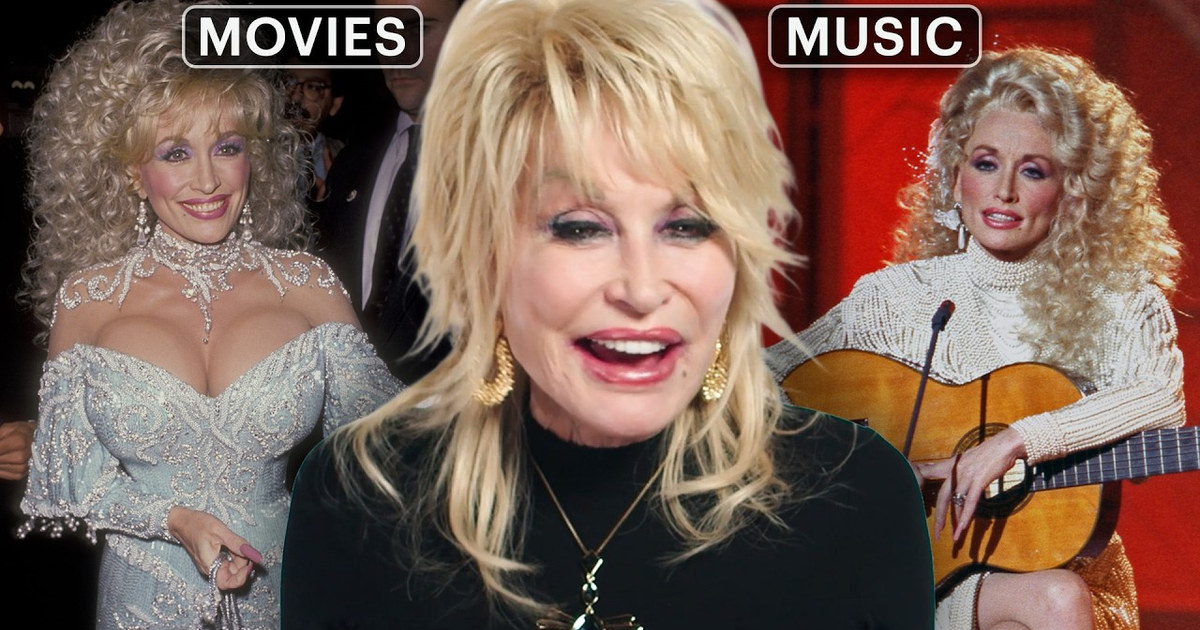
That art form carried her into the movies. In 9 to 5 (1980), directed by Colin Higgins, she played Doralee Rhodes, a secretary who's had enough. The hair was big, the skirts were tight, but the character was grounded. The film ran 109 minutes and became a hit, proving Dolly could act. The look served the character: a working woman who refused to be diminished. The wig was armor. And it was also a punchline—but a punchline she controlled.
Two years later, The Best Little Whorehouse in Texas (1982), again directed by Colin Higgins, let her go full sparkle as Miss Mona, a brothel madam with a heart of gold. Runtime: 114 minutes. The costumes were louder, the feathers were fluffier, and Dolly was in her element. She wasn't just playing a role; she was amplifying her own mythology. The film was a musical, and she was the centerpiece. Every sequin was a statement.
Then came Steel Magnolias (1989), directed by Herbert Ross. Dolly played Truvy Jones, the owner of a beauty salon. Of course she ran a salon. The wig was part of the job. The film ran 117 minutes and is still quoted today. In a cast that included Sally Field and Julia Roberts, Dolly held her own. The look was now meta: her character literally fixed hair for a living. The artifice was on the nose, and she loved it. 'I love my shine and frills,' she said, and in Steel Magnolias, she got to share them.
But the wig wasn't just for the movies. It was infrastructure. Dolly had wigs for every occasion—she said so herself: 'I've got a wig for every occasion.' She planned her own wig line. She opened Dollywood in 1986, a theme park in Pigeon Forge, Tennessee, that turned her persona into a place. There was merchandise. There was a production company, Sandollar Productions, which she co-founded with Sandy Gallin in 1985. The artifice became a business model. The shine was a product. The frills were an enterprise.
Think about that for a second. Most stars treat their image as something to be managed by publicists and stylists. Dolly treated it as a product line. The wig wasn't a secret; it was a selling point. She didn't hide the fact that her hair was fake. She monetized it. That's ownership. That's entrepreneurship. And it's labor—constant, demanding labor. You try keeping a wig straight for fifty years. You try maintaining a public persona that never cracks. Dolly does it with a smile, but it's still work.
The platform shifted, but Dolly shifted with it. From network TV—her variety shows in the 1970s and '80s, like The Dolly Show (1976) and Dolly (1987)—to the internet. In the 2010s, she appeared in Vogue's YouTube series 'Dolly Parton's Life in Looks,' walking through her iconic outfits. It was a perfect fit: a visual medium for a visual woman. She could explain the stories behind the wigs, the dresses, the sparkles. It was self-documentation as entertainment. And it racked up millions of views, introducing her to a new generation.
[[VIDEO]]
Then came Netflix's Dumplin' (2018), directed by Anne Fletcher. The film is about a plus-size teenager who enters a beauty pageant inspired by Dolly. Dolly wrote and performed the songs. Runtime: 110 minutes. She was still using the look to tell stories, but now the story was about inclusion. The wig had become a symbol of acceptance. 'I can still have it all even if it's fake,' she said in the transcript. That line is the heart of Dumplin'. It's the heart of Dolly. It's the heart of the business.
Compare her to Madonna. In Truth or Dare (1991), directed by Alek Keshishian, Madonna turned self-documentation into control. The film ran 119 minutes and showed a pop star who was unafraid to be shocking. But Dolly predates that model and softens it. Her business is generosity, not shock. She invites you in; she doesn't push you away. The wig is a welcome mat. Madonna's blonde ambition was a challenge; Dolly's blonde ambition is a hug. And that hug has sold millions of records and theme park tickets.
That's the difference. Madonna's artifice was a weapon. Dolly's artifice is a tool. She uses it to build, not to destroy. She uses it to include, not to exclude. And she does it with a smile. 'The higher the hair, the closer to God,' she said. And if that's true, Dolly's been in heaven for decades. But she's also been in business. The two are not mutually exclusive. In fact, they're the same thing.


