Part 2
Think about A Star Is Born. The story has been told three major times: George Cukor's 1954 version, running 176 minutes, with Judy Garland and James Mason; Frank Pierson's 1976 version, running 139 minutes, with Barbra Streisand and Kris Kristofferson; and Bradley Cooper's 2018 version, running 136 minutes, with Lady Gaga and Cooper himself. Each film is obsessed with the construction of a star persona. The hair, the makeup, the stage name, the wardrobe—it's all manufactured. And in every version, that manufacture becomes a trap. The industry takes a woman's raw talent, packages it, and then punishes her for the package. The artifice is something done to her. It costs her love, sanity, or life.
Dolly's story is the inverse. Her artifice is not done to her. It's done by her. Porter Wagoner was a mentor and a TV partner, but he didn't invent the blonde bombshell. Dolly did. She saw what country music rewarded—big hair, flash, personality—and she out-glammed it. She didn't get broken by the machine. She built a Dollywood. In A Star Is Born, the star is a product. In Dolly's Life in Looks, the star is a producer. That's the difference between a tragedy and a toolkit.
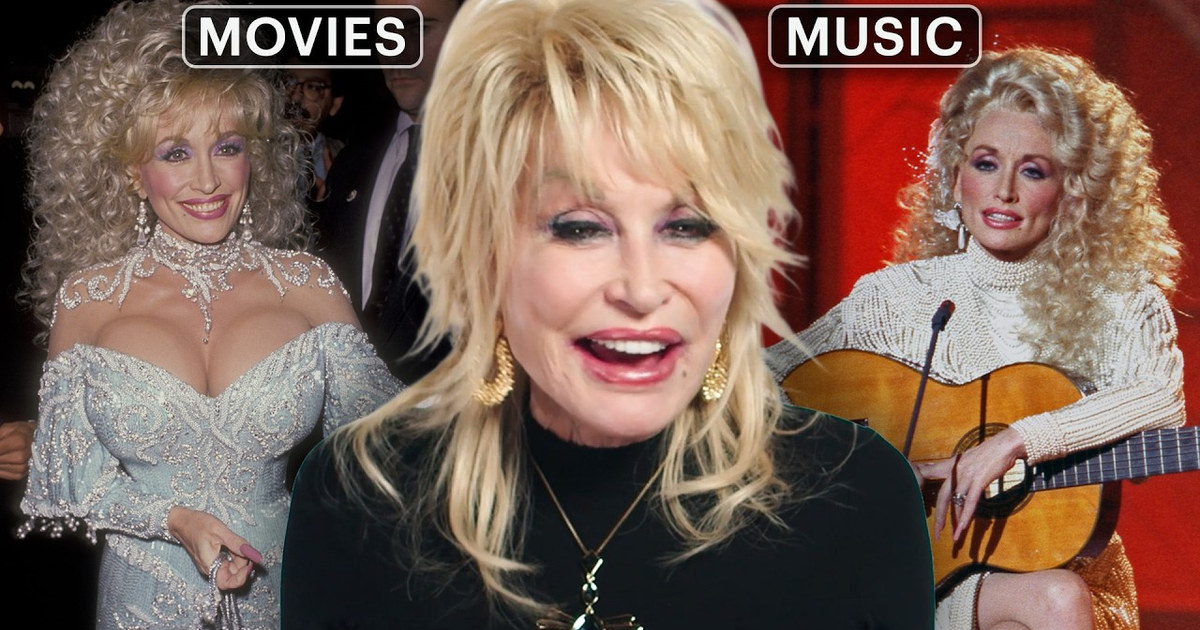
This is why the “fake” charge never sticks. A fake is something meant to replace the real. But Dolly's wig doesn't replace Dolly. It extends her. The acrylic nail doesn't replace a fingertip. It adds a weapon. The rhinestone doesn't replace the woman. It reflects her. She is not a natural blonde who is lying about her hair color. She is a songwriter who built a visual instrument.
You can see it in the way she talks about her look. She doesn't say “I had to wear wigs.” She says “I love the idea of wigs.” She doesn't say “I couldn't grow my nails.” She says “I always wanted pretty nails.” Wanting is the engine. The look is a desire made visible. And desire is about as real as a person gets.
There's also class in every sequin. “Gaudy” is a word people use to put poor taste in its place. It's what you call a working-class woman who dares to be visible. Dolly takes the insult and wears it as a crown. She doesn't dress to pass as rich. She dresses to announce that she made it anyway. The feed sack becomes a shift dress. The acrylic nail becomes a guitar pick. The beehive becomes a cathedral. That's not imitation. That's alchemy.
And the “higher the hair” line is not just a punchline. It's a folk religion. In the video, she says “we really believed that.” We. Not I. That “we” is the women in country music, the women in Appalachia, the women in church pews with Aqua Net and ambition. Big hair was a shared language. It was a way of being seen in a world that preferred them silent. Dolly didn't invent that faith. She just took it higher.
So answer the question. Can a self assembled from wigs, acrylics, and rhinestones be the truest version of a person? In Dolly's case, yes—because the assembling is the person. She is not hiding under the hair. She is living in it. The higher the hair, the closer to God, and God, in this gospel, is the right to design yourself. Her fake is not a lie. It's a deliberate, joyful authorship. It's a woman saying, “I can still have it all even if it's fake,” and meaning not that she settled for less, but that she refused to let anyone else define what “all” means.
That's the first answer. The wig tells the truth because she chose it. The nail tells the truth because it holds the guitar. The rhinestone tells the truth because she wanted it forever. But if the look is a philosophy, it's also a business. The same woman who built a face also built an empire. And the next question is not just how Dolly looks. It's how Dolly works. Because the higher the hair, the taller the mountain—and Dolly Parton has never been afraid of heights.
The Business of Being Dolly: From 9 to 5 to Dollywood
By the late 1970s, Dolly Parton was no longer just a country singer. She was a brand in the making, and the first product was the look. With Colleen Owens behind the scenes making the hair bigger, and Dolly herself insisting on clothes that were 'gaudy but flowy'—designed to 'hide a multitude of sins'—the silhouette was set. Big sleeves that moved when she moved. Sparkles that caught the stage lights. It was an aesthetic that didn't just say 'country' or 'glamour'; it said 'Dolly.' And that name was about to become a business.
She once said, 'I take any of the fashions that I like, idolize them, gaudy, flamboyant, fun, comfortable for me, noticeable.' That's not a fashion statement; it's a mission statement. The look was never about following trends. It was about taking what worked and making it bigger, brighter, and unmistakably hers. 'I just kind of wear what I feel good in,' she added. But what she felt good in became a template for an empire. And that empire started with a wig.
[[AD]]
Think about her origins. She grew up poor in rural Tennessee. Her mother made clothes out of feed sacks. 'We'd been wearing sack dress all our lives because we were back in the country,' she recalled. When shift dresses became fashionable in the 1950s, she laughed: she'd been wearing them forever. But that poverty also taught her resourcefulness. She couldn't grow her nails long because she played guitar. So when acrylic nails came out, she was first in line. 'I played guitar all my life and I never could grow my nails really long,' she said. 'And so when they started coming out with those acrylic nails I was first on.' That's the Dolly way: see a limitation, find a workaround, make it fabulous.


