Part 2
You’ve probably seen the memes, the Halloween costumes, the drag tributes. But the wig story starts smaller than that. It starts with something called a “fall.”
A fall is a half-wig, a hairpiece that clips in at the crown and cascades down. In the ’60s, when Dolly was coming up through Nashville, falls were the gateway drug. “When hair pieces and falls they called them came out, I started wearing a little hair piece before I started wearing the wigs,” she recalls. She wasn’t alone. Country music was a big-hair business. As Dolly puts it, “All the country singers, if you didn’t have big hair, you weren’t going to make it far.” And the scene had a gospel: “The higher the hair, the closer to God.” They really believed that.
So the fall was practical. It added volume without demanding a full commitment. But it was also a rehearsal. Dolly was learning that hair could be modular. It could be swapped. It could be a costume change.
Then came the wigs. “When wigs started coming out where they were good enough for where we were going,” she says, the game changed. Suddenly she wasn’t fighting her own damaged strands. She was choosing a look. And that choice came with a philosophy: “I can have a hairdo of any kind anytime I want it.”
Think about what that sentence actually means. It’s not about vanity. It’s about control. Dolly’s natural hair—bleached, teased, backcombed since high school—was a limitation. The wig was a release. She could go from a bouffant to a shag to a sleek countrypolitan bob without waiting for her scalp to recover. She could match her hair to her mood, her outfit, her song. “I just kind of wear what I feel good in,” she says. “I have a very outgoing personality, so I kind of like to dress according to my moods.”
The wig made that possible. It turned hair into a wardrobe.
You might be wondering: didn’t anyone give her grief for wearing fake hair? In country music, authenticity was currency. But Dolly had a comeback that shut it down. “I can still have it all even if it’s fake.” That’s the line. That’s the whole thesis of her look, and honestly of her career. If the real thing won’t cooperate, build a better version. If your hair won’t do what you want, wear a wig. If your nails won’t grow, get acrylics. If you’re short, wear high heels. “I’ve got little short stubby hands, so of course I’m gonna have long nails. I’m short, so I wear high heels. And my hair don’t do what I wanted to, so I wear wigs.”
It’s a logic so clean it feels like a magic trick. The wig isn’t a lie. It’s a solution.
[[AD]]
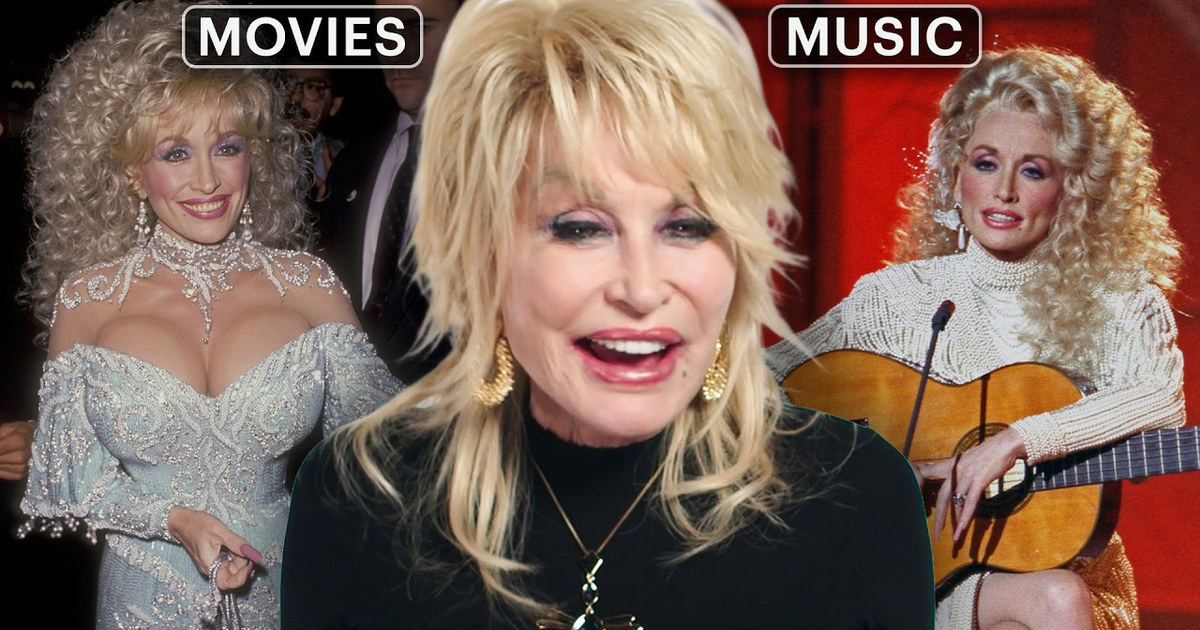
And Dolly ran with it. By the ’70s and ’80s, her wigs were as famous as her songs. She had a signature look: platinum, gravity-defying, often curled tight or swept into a mountain of volume. She wore them on album covers, on The Porter Wagoner Show, at the Grand Ole Opry, and eventually in movies like 9 to 5 (1980, directed by Colin Higgins, 109 minutes) and Steel Magnolias (1989, directed by Herbert Ross, 117 minutes). In 9 to 5, her secretary Doralee Rhodes rocks a blonde mane that’s pure Dolly—big, bright, and totally in on the joke. In Steel Magnolias, she plays Truvy Jones, a Louisiana salon owner whose own hair is a masterpiece of Southern glamour. The wig isn’t hidden. It’s the point.
But here’s the detail that often gets lost: Dolly didn’t just wear wigs. She planned to sell them. She’s talked for years about launching her own line of wigs and hairpieces. It makes perfect sense. She already had the brand, the look, and the language. “I’ve got a wig for every occasion,” she’s said—a line that sounds like a joke but is also a business plan. Why rent a look when you can own the factory?
That tease matters because it shows how early Dolly understood something the rest of the entertainment industry took decades to catch up on: image is infrastructure. A wig is not a frivolous accessory. It’s a tool. It’s inventory. It’s a way to show up as exactly who you want to be, on any given Tuesday, without waiting for your biology to cooperate.
So when you see Dolly today—78 years old, still platinum, still towering—don’t think of the wig as a crutch. Think of it as a paintbrush. She’s been painting the same masterpiece for sixty years, and she’s never once let her natural hair tell her what to do.
And now go back and watch the opening again. That first shot of her hair—the volume, the shine, the impossible height—hits different when you know it’s a choice. Not a disguise. A decision.
Stop 3: The 1970s — Big Hair, Big Sleeves, and Rhinestones
First, look at the hair. Not the songs, not the rhinestones yet — the hair. In the 1970s, Dolly Parton's hair stopped being a hairstyle and became architecture. It was whipped, teased, sprayed, and stacked until it looked less like hair and more like something you could rent out as a second home. And that was the point.
This is the decade where Dolly went solo, stepped out of the Porter Wagoner shadow, and turned herself into a one-woman spectacle. The voice was already legendary. Now the look had to match it. So let's take this stop slowly, because there's more going on up there than a can of Aqua Net and a prayer.


