Part 1
You Have Probably Seen the Trailer: The Question of Dolly Parton's Realness
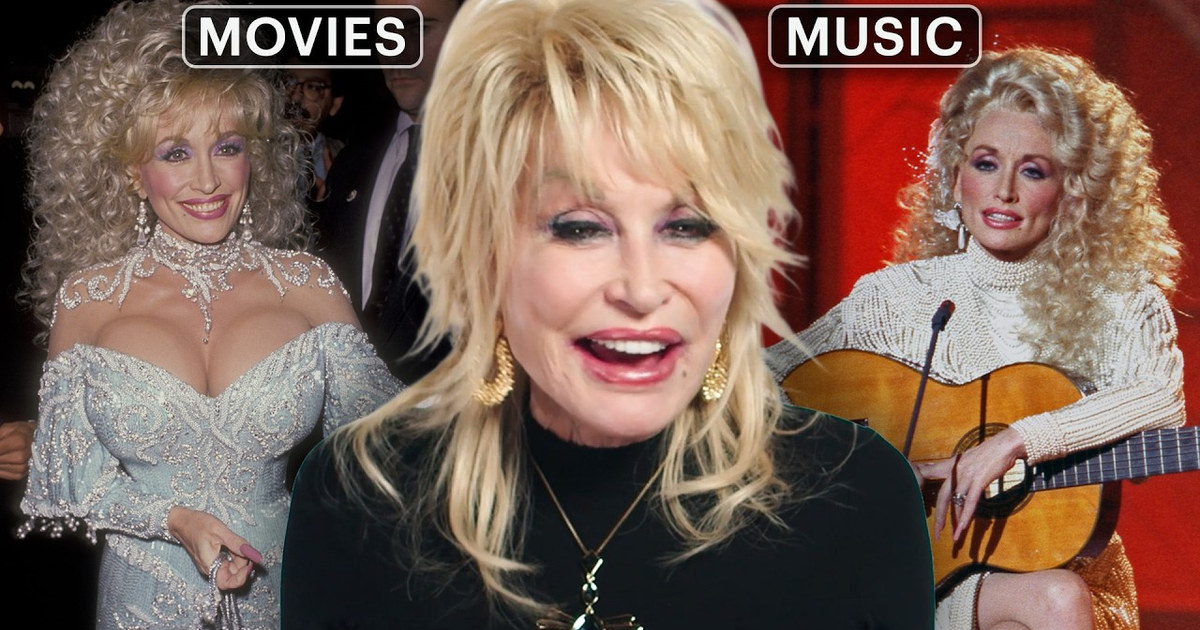
You have probably seen the trailer. Maybe it was Vogue's “Dolly Parton's Life in Looks,” uploaded to YouTube in 2020, where Dolly walks through decades of wardrobe and hair as if flipping through a family album. Or maybe you saw the clip: the rhinestones, the wig, the nails, the laugh. The thumbnail alone asks a question we don't know how to answer without sounding like a jerk. Can a self assembled from wigs, acrylics, and rhinestones be the truest version of a person?
Dolly answers it before we can. “I can still have it all even if it's fake,” she says in the video, and the line lands like a punchline until you realize it's a thesis. She isn't confessing. She's explaining. The fake is not a cover-up. It's a construction site.
Start with the hands. “I've got little short stubby hands,” she says. “So of course I'm gonna have long nails.” She is short, so she wears high heels. “My hair don't do what I wanted to, so I wear wigs.” Every sentence is a problem and a solution. In Dolly's grammar, the body is not a fate. It's a first draft.
Then the punchline again: “I can still have it all even if it's fake.” Most stars would run from that word. Dolly puts it on a T-shirt, or at least on a rhinestone. Because she knows something the rest of us are still learning. Authenticity is not the absence of artifice. It's the presence of authorship.
The Vogue video is only a few minutes long, but it covers a lifetime of invention. She talks about idolizing fashions that were “gaudy, flamboyant, fun, comfortable for me, noticeable.” That list matters. Gaudy and flamboyant are how the world sees it. Comfortable and noticeable are how she feels it. The look is not for the audience first. It's for her first. The audience just gets to watch.
Trace it back to the feed sacks. Dolly remembers her mother making clothes out of feed sacks in rural Tennessee. “We'd been wearing sack dresses all our lives,” she jokes when shift dresses became fashionable. The joke is also a biography. Poverty taught her that fabric is just material. Imagination is the real luxury. When the fashion world finally caught up to the sack dress, Dolly had already been wearing one for years. She didn't need to be told that style could be improvised.
The nails are a similar story. She played guitar all her life, but she “never could grow my nails really long” and “always wanted pretty nails.” Then acrylics arrived, and she was first in line. A less confident artist would see a contradiction: guitar player versus glamour. Dolly saw a workaround. The nails didn't stop the music. They became part of the instrument. When she plays, the acrylics catch the light. The light catches the audience. That's not vanity. That's production design.
The hair goes deeper. In high school, she was backcombing before it had a marketing budget. “I was one of the few girls in high school that was having that big old bouffant hair,” she says. Her father raised bees, and some of those hairdos looked like a beehive. “Like a family of something could live under some of those hairdos.” It's a funny line, but it's also tender. The beehive is a home. The hair is a hive. The girl from the Smoky Mountains is building a shelter on her head.
In country music, that shelter was not optional. “All the country singers, if you didn't have big hair, you weren't going to make it far,” Dolly says. And then the old expression: “The higher the hair, the closer to God.” She adds, “We really believed that.” That's not a joke about vanity. It's a theology of ambition. In a world that told poor Appalachian girls to stay small, big hair was a way to take up space. It was a crown you could tease into place.
Wigs came later, after all that bleaching and teasing had wrecked her natural hair. She loved the idea of wigs, loved being bleached, but her hair was “just not in good condition.” She still wanted “that look.” So she started with hair pieces and falls, then moved to wigs. This is the part where a cynic says, “See? It's all fake.” But Dolly already told us. The wig is not a scandal. It's a solution. Her hair didn't do what she wanted, so she wore wigs. The wig does what she wants. That's not deception. That's control.
The rhinestones have a similar origin story. On The Porter Wagoner Show, which ran from 1967 to 1974, Dolly went from a girl with a guitar to a television personality with a uniform. The rhinestone suit became her armor and her advertisement. She has credited Rose Maddox as a catalyst—the woman who made rhinestones look like possibility rather than costume. Dolly wanted rhinestones “forever.” That word matters. Forever is not a trend. Forever is a vow.
This is where the look becomes a language of defiance, not disguise. When Dolly steps out in a rhinestone suit, she is not hiding behind it. She is announcing herself through it. The wig, the nails, the heels, the makeup—none of it is a mask over the “real” Dolly. It's the alphabet she chose. She spells her name in sequins. And because she chose it, it tells the truth.


