Part 2
Think about the best covers in history. Jimi Hendrix's 'All Along the Watchtower' isn't just a Bob Dylan song—it's a Hendrix song. Johnny Cash's 'Hurt' isn't just Nine Inch Nails—it's Cash's confession. That's what Dolly wants. And that's what Miley did. She didn't try to be Dolly. She was Miley singing Dolly. And that's why it worked.
[[VIDEO]]
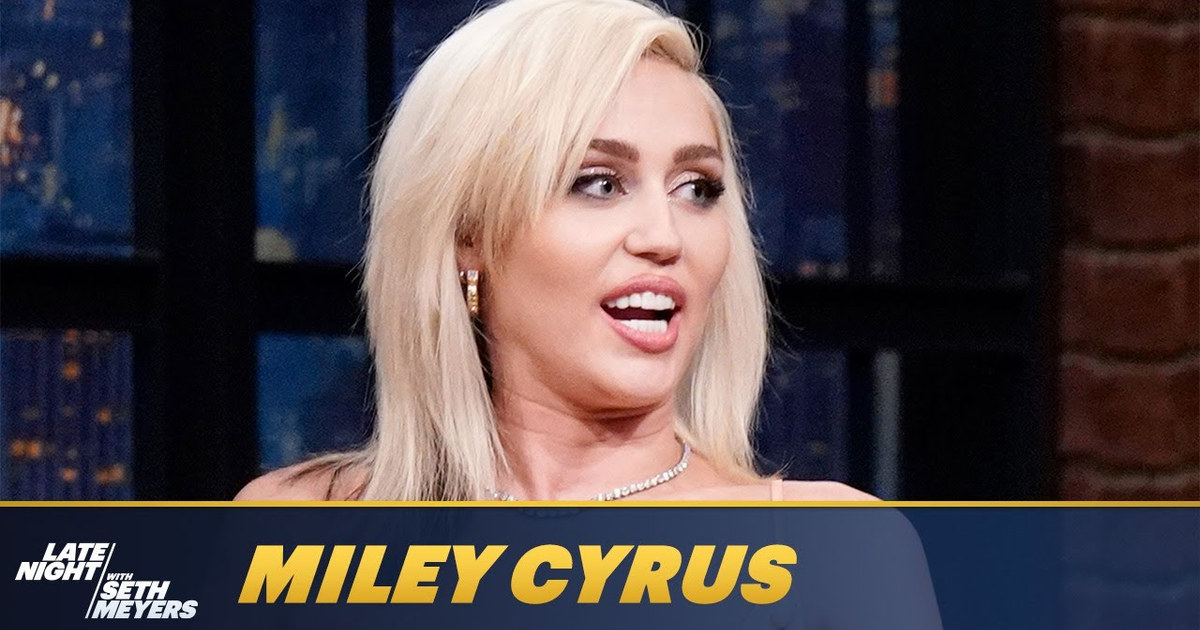
As a cinematographer, I've seen this a thousand times. The best scenes are often the ones shot in one take, with minimal coverage. When you over-rehearse, you lose the magic. The actors become robots. The camera becomes a machine. But when you embrace the constraints—when you have to get it right in one take—you get lightning in a bottle. That's what happened on SNL that night.
And let's not forget the Dolly Parton fax machine itself. It's a perfect metaphor for analog connection in a digital world. Dolly types a letter, someone scans it, texts it to Miley. It's convoluted, but it's personal. It's not casual. It's a ritual. And that ritual creates meaning. Just like shooting on film instead of digital—the limitations force you to be present, to be deliberate.
Miley even started writing her own notes because she was so inspired by Dolly's effort. That's the power of analog. It's not about efficiency. It's about connection. And that's what SNL's last-minute cover gave us: a connection between Miley, Dolly, and millions of viewers. No rehearsal could have planned that.
So next time you're stuck with a constraint—a tight deadline, a single lens, a last-minute change—remember Miley on SNL. Remember that constraints don't limit creativity; they focus it. They force you to be yourself. And that's when the magic happens.
What to watch for: In the next section, we'll see how nature itself became the ultimate constraint when Miley's plane was struck by lightning at 30,000 feet. Sometimes the universe rewrites your shot list.
Lightning Strike at 30,000 Feet: When Nature Overrides the Shot List
Miley Cyrus was sitting in her mom's lap, crying, when the lightning hit. She wasn't buckled in—she'd already decided seatbelts didn't matter. The plane was somewhere over South America, heading to a show in Brazil that had already been canceled because the stage was underwater. And then the sky lit up.
That's the moment every cinematographer dreads: the one where the shot list becomes toilet paper. You can plan for rain, you can plan for wind, you can plan for a lead actor who won't hit their mark. You cannot plan for a lightning strike at 30,000 feet. And that's the point. The best-laid plans—whether they're a shot list, a tour schedule, or a live TV rundown—get rewritten by forces beyond control. What defines the final cut isn't the plan. It's the resilience and adaptability of the people in the room.
[[AD]]
I've shot second-unit on enough features to know that chaos is the only constant. You're on a rooftop in downtown Los Angeles at 3 a.m., you've got a 50mm anamorphic prime wide open at T2.2, you've got a 4x4 bounce card taped to a C-stand, you've got a gaffer who's been awake for 19 hours, and then the wind picks up and your bounce card becomes a kite. You don't panic. You adapt. You protect the crew first, the gear second, the shot third. Because the story will still be there after the storm. The people might not be.
That's exactly what happened on Miley's plane. Emergency landing. Middle of South America. Her band—rock'n'rollers to the core—wanted to play anyway. "We got to get to the fans!" they said. And Miley, who'd just been crying in her mom's lap, had to be the voice of reason: "We're in the middle of the forest in a broken-down airplane. There's floods where we're supposed to be going. The stage is sinking." That's a producer's brain kicking in when the artist's heart is still racing. It's the same instinct that tells you to call the safety meeting before the lightning tower goes up.
Brazil, where she was supposed to play a couple of days later, turned out to be the hero of the story. They let the whole crew in early so everyone could recuperate. That's the analog move in a digital world: when the plan falls apart, you don't double down on the schedule. You open the door, you give people time, you let the humanity back in. It's the same reason Dolly Parton still sends faxes. It's not about efficiency. It's about care.
As a cinematographer, I've learned to find the story in the chaos. You're shooting a night exterior, the generator dies, the moon disappears behind a cloud bank, and suddenly you're left with nothing but the practicals—a streetlamp, a car headlight, the glow of a phone screen. And that's when you get the shot. The one that feels real because it wasn't supposed to happen. The lightning strike on Miley's plane was terrifying, but it's also the kind of moment that reminds you why you do this. You can't fake that. You can't schedule it. You just have to be ready to roll when it hits.
The same goes for the SNL cover. Lorne Michaels told Miley on Saturday afternoon that she was doing "Jolene" because Elon Musk's monologue ran long. No rehearsal. No prep. Just pure adrenaline and a live audience. That's the analog chaos that digital perfection can't touch. You can shoot a music video with 47 takes and a click track, but you can't fake the electricity of a last-minute cover on live TV. It's the difference between a fax from Dolly and a text from her assistant. One has fingerprints on it. The other is just data.
So what do you watch for next time you're sitting in a theater, watching a perfectly polished production? Look for the seams. Look for the moments where the weather won, where the schedule broke, where the actor forgot their line and improvised something better. Look for the analog faxes, the last-minute covers, and the lightning strikes that shaped the final cut. Because that's where the soul lives. Not in the flawless execution, but in the recovery.
Miley walked off that plane and eventually got back on stage. Brazil welcomed her early. The show went on—maybe not the one that was planned, but the one that mattered. And when she signed off with "Club Fred!" you could hear the relief and the defiance in her voice. That's the sound of someone who's been through the storm and come out the other side. It's the same sound you hear on a set when the sun finally breaks through and the director yells, "That's a wrap."
Next time, we're digging into more celebrity analog quirks and behind-the-scenes chaos. From directors who refuse to shoot digital to actors who still use flip phones, we'll explore why the old ways refuse to die. Because in an age of AI-generated everything, the human touch is the ultimate special effect.


