Part 2
And look at who gets to decide what counts as rich in this song. Not the neighbors. Not the audience. Not the kids in the schoolyard. A little girl in a patchwork coat, standing in a schoolyard, doing the arithmetic herself. That's not a greeting card. That's a philosophy, delivered by someone who actually lived it and never asked permission to believe it.
Watch How She Sings It
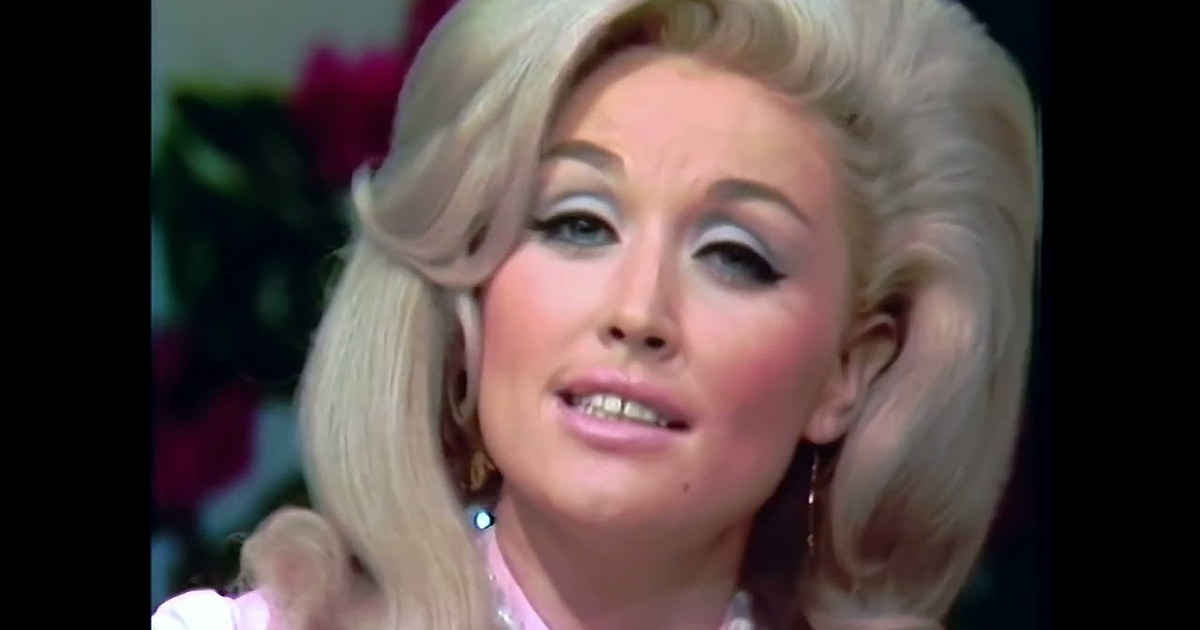
The writing is the reason the song survived, but the performance is the reason this particular clip is worth your time. She doesn't showboat. There's no melisma gymnastics, no big dramatic key change, no moment where she stops the song to make you admire her. She tells it almost conversationally, like someone recounting a story they've told a hundred times and still mean every word of.
That restraint is a choice, and it's the right one. The song is about a coat that wasn't much to look at and meant everything. Singing it modestly is the whole point.
[[AD]]
The Most Requested Song on the Show
When she finishes, the host thanks her and calls it a beautiful number. Then he tells the audience two things: that this is one of the most requested songs Dolly does on the show, and that she'll do it again real soon. Just like that. No big buildup. Of course she'll do it again.
I keep coming back to that. Of everything a country star could sing on television — the singles, the covers, the duets, the crowd-pleasers — the one people keep writing in to request is a song about a coat made out of rags, sung by a woman whose family really did hand-sew her clothes. Audiences weren't requesting a hit. They were requesting the truest thing she had.
[[VIDEO]]
What to Watch For When You Hit Play
If you take nothing else from this letter to you, take these. Listen to the intro and notice how casually the host calls it one of her own numbers — the show is proud of her for writing it, and it should be. Listen to how far back the band sits in the mix, leaving her voice almost naked in the room. Wait for the schoolyard verse and notice that the hurt doesn't get fixed, because that's the part that makes the ending ring true instead of cute.
And when she gets to rich as I could be, listen to how she doesn't play it as defiance. She plays it as fact. Like a woman reading you a receipt.
The Part You'll Carry Out With You
What gets me about Coat of Many Colors isn't nostalgia, and it isn't even the melody, though that melody is going to live in your head rent-free for a few days. It's that Dolly took the worst day of a poor kid's school year — the day everyone laughed at the thing she was proudest of — and turned it into a song so good that strangers write in and ask to hear it again. She didn't win that argument on the playground. She won it permanently, in public, on television, over and over.
That's what I wanted you to see. Not a sweet old clip, but a woman quietly collecting on a debt nobody else remembered owing.
Stick around for the next one — there's another of her own numbers from this era that does the same trick with an entirely different story, and it's every bit as good.
Go watch it once for the song, then play it again for the little girl in the patchwork coat who grew up and wrote the whole thing down.


