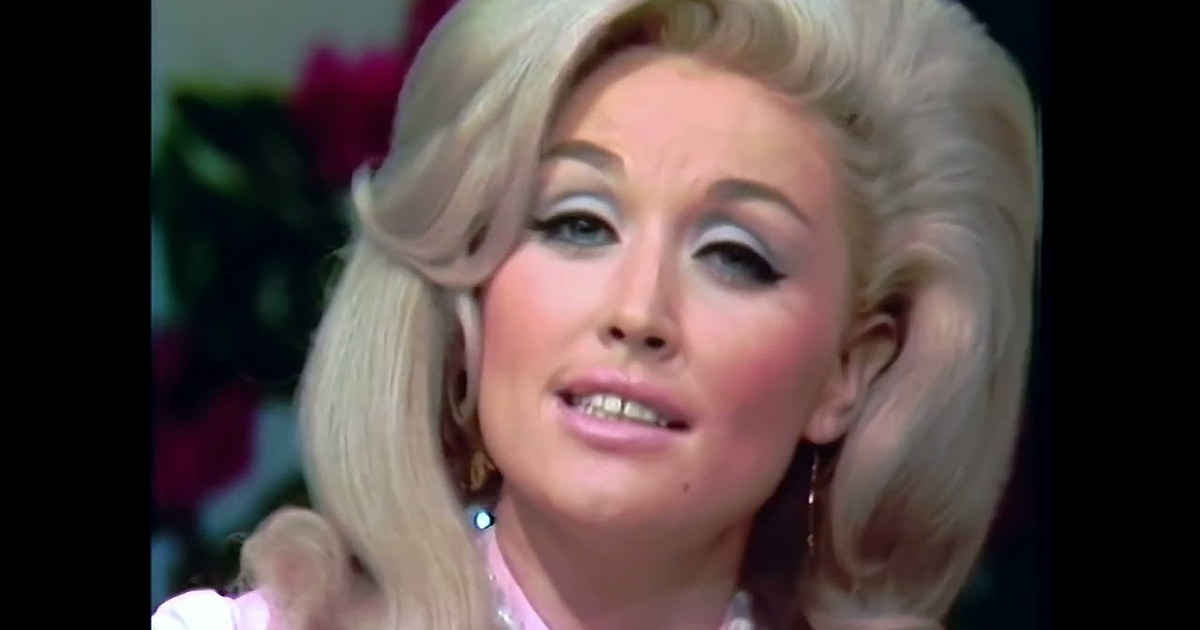
Part 1
Here's the moment. Dolly Parton is standing in a TV studio with a live audience, a few verses into a song she wrote herself, and she lands on this line: one is only poor only if they choose to be. She doesn't belt it. She doesn't reach for the rafters or hold a note until the band swells behind her. She just says it, plain as a kitchen table, like it's the most obvious math in the world. And the room goes quiet, because every single person in it knows she means it.
You haven't seen this yet, which means I'm a little jealous of you. Because the first time through, you're going to think you already know where this song is headed. A sweet country lady, a humble childhood, a nice little moral at the end. Then it goes somewhere better than that, and it does it without raising its voice once.
What You're Actually Watching
The clip opens with the host doing his weekly introduction — the beautiful little lady that I always look forward to her song each week — and then he hands her the slot he calls one of her own numbers. A real pretty one, he says, called Coat of Many Colors. Then he says her name: Miss Dolly Parton.
That little phrase, one of her own numbers, is doing more work than it looks like. This isn't a guest swinging by to promote a single. This is Dolly using a regular weekly slot to sing something she wrote herself, with no co-writer credit to hide behind. The host teases it like a favorite, not a novelty. That's your first clue that you're not watching filler.
The second clue is that this song is not some buried deep cut she's dusting off. She performs it on the show often enough that the host calls it one of the most requested numbers she does. Keep that in your pocket for later, because it says something wild about what audiences actually wanted from her.
[[AD]]
A Box of Rags, and a Mother Who Made It Mean Something
The song is autobiography, and it refuses to dress itself up. Dolly opens by going back through the years, wandering once again into the seasons of her youth, and she recalls a box of rags that somebody gave the family. Every piece was small. She didn't have a coat, and it was way down in the fall.
So her mama sewed them together — every piece with love — and made her a coat of many colors. That's the title. That's the hook. A coat made out of a box of scraps that nobody else wanted.
But here's the part that grabs you by the collar. While she was sewing, her mother told her the Bible story of Joseph and his coat of many colors. Then she said maybe this coat would bring her good luck and happiness. Then she blessed it with a kiss.
Stop and sit with that for a second. A woman with no money and no fabric budget takes a box of other people's leftovers and turns it into a garment with a Bible story stitched into it. That's not sewing. That's a theology lesson with a needle. And Dolly, waiting for the thing to dry so she can wear it, is just a kid who can't wait for morning.
[[AD]]
Then She Wore It to School
Patches on her britches. Holes in both shoes. Coat of many colors. Off she hurries to school, proud as anything — and the other kids laugh at her and make fun of her. That's the hinge of the whole song, and it's where most writers would either get bitter or get preachy. Dolly does neither.
She tries to explain. She tells them the love her mama sewed into every stitch. She tells them the story her mama told her while she worked, and she tells them straight out that her coat was worth more than all their clothes. They don't understand. She was trying to make them see, and they couldn't.
I love that the song doesn't redeem the schoolyard. It doesn't say the kids came around, or apologized, or learned their lesson. They just don't get it. That's the honest version of childhood, and it's the honest version of a lot of adulthood too.
The Line That Flips the Whole Song
And then she closes the loop: one is only poor only if they choose to be. We had no money, she says — but I was rich as I could be, in that coat of many colors her mama made for her.
That's the payoff the song has been quietly building toward for three verses, and it lands like a hand on your shoulder rather than a finger in your chest. Which brings me to the thing I want to argue with you about.
[[AD]]
Why This Isn't Sentimental Country Kitsch
Here's my case. Plenty of country songs romanticize being broke. They turn poverty into a warm sepia postcard and let the listener off the hook. Coat of Many Colors doesn't do that. It never once says poverty is fine, or that getting mocked is good for you, or that kids in nice coats are villains. It makes a much stranger and much braver claim: that wealth is something you can make, not just something you can buy.


