Part 2
The host asks her about Clingmans Dome, the highest point in the Smokies, and Dolly admits she doesn’t know its elevation. He later supplies the figure—6,600 feet—and she is pleased to have the answer. It is an unguarded moment: the woman promoting a park in the mountains doesn’t pretend to be a walking atlas. She knows what the place means to her, and she is happy to learn another fact about it.
[[AD]]
The yearbook turns the interview homeward
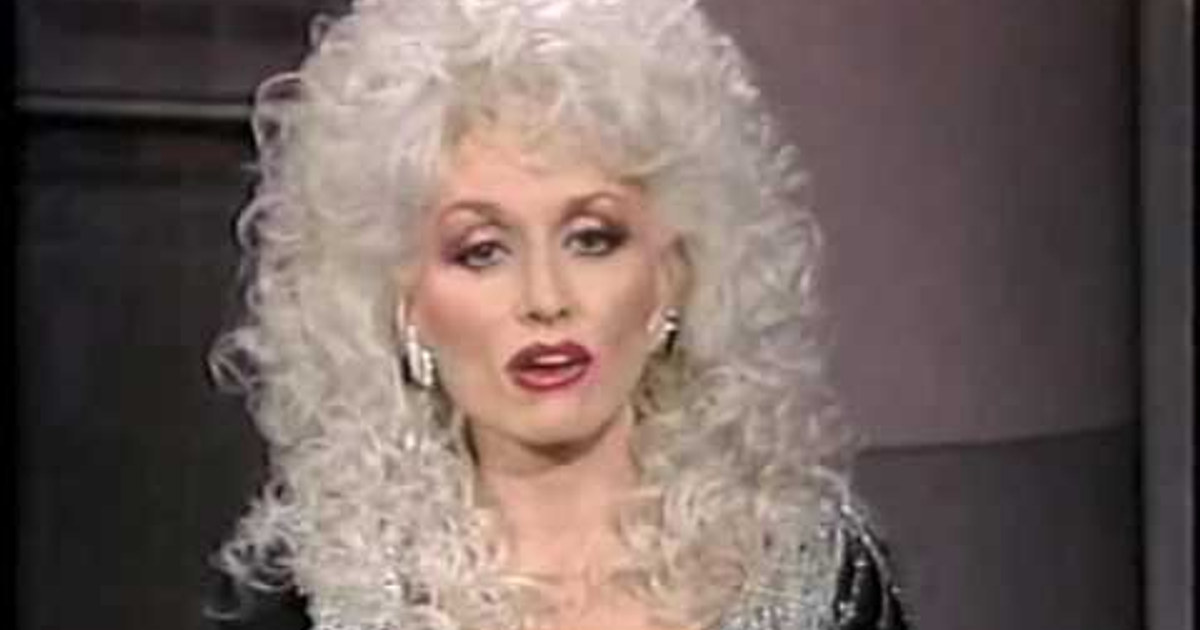
Then the show brings out Dolly’s high-school yearbook. The object changes the mood without changing the playfulness. A theme park can tell you what someone hopes to build; a yearbook shows a face from before the public story began. Dolly recognizes the picture, notes that her hair was real—not a wig—and begins looking through the pages for the people she knew.
She remembers classmates, including a boy who became a mayor, and jokes about her school reputation. She wasn’t the cheerleader or the girl winning school titles, she says. Instead, she wore a lot of makeup, tight clothes, and her hair high. Some people thought she was a bad influence on their daughters because she told jokes and stood out.
Then she gives the story its affectionate turn: she says some of the girls around her were doing more than she was, but she was getting the credit. It’s a neat bit of comic timing, but it also reveals how early Dolly understood the power of a look. The hair, the makeup, the clothes—what others read as trouble became part of the unmistakable public image she shaped for herself.
The yearbook scene gives the conversation a deeper connection to Dollywood. Both are acts of looking back, but neither is frozen in the past. Dolly can laugh at the high-school version of herself without disowning her. And she can build a park around Smoky Mountain heritage without treating heritage as something locked behind glass. Memory, in her hands, remains lively.
[[AD]]
A marriage built in separate worlds
The host’s proposal is one of the interview’s running jokes. He asks Dolly to marry him; she agrees to consider it, even though she has already been married for twenty years. The joke gives them room to talk about her husband, who stayed outside show business and made his living first in asphalt paving, then largely in real estate.
Dolly says he never tried to talk her out of her career. That, she suggests, is part of why they got along: he could tell her about the driveways he paved, and she could tell him about the songs she sang. Their work belonged to different worlds, and neither had to compete with the other.
Her description of the marriage is notably simple. They are good friends, she says, and friendship matters. They spend enough time together to enjoy the quality of it, and enough time apart to keep things interesting. The host jokes that perhaps she hasn’t seen her husband in years; Dolly replies that she had just come from home the day before.
The exchange is warm because it resists turning marriage into a grand secret. Dolly doesn’t offer a dramatic lesson. She offers a practical one: respect separate lives, take pleasure in each other, and don’t mistake distance for estrangement. The same clear-eyed balance appears in her account of Dollywood. A big dream needs partners with different strengths; a lasting relationship needs room for two people to remain themselves.
The joke is the welcome mat
The host’s teasing gives the interview its bounce, but Dolly is never simply a target for the jokes. She redirects them, adds details, and decides how far to take the game. When he flirts, she flirts back. When he misreads the brochure, she corrects him. When the yearbook appears, she turns potential embarrassment into a story about her friends and the reputation she earned.
That balance makes the conversation more than a promotional stop. The laughter lowers the formality around a major project, allowing Dolly to talk about the decisions behind it without sounding like she is reading from a pitch. She can discuss jobs, attendance, and park operations, then make a joke about her husband selling corn dogs. The serious and the silly share the same table.
And Dolly’s humor is never a detour from the work. It is part of how she makes the work approachable. She asks the host to come to the Smokies and have fun, even if that means acting foolish. The invitation sounds like a joke, but it is also a clear welcome: come see the place for yourself.
[[AD]]
That welcome is the thread running through her description of Dollywood. She wants visitors to encounter the landscape, the crafts, the food, and the music. She wants the park to be clean and well run. She wants local people to benefit from it. And she wants to appear there herself, guitar in hand, rather than vanish once her name is on the sign.
Why the small moments still shine
The interview’s appeal lies in the way its subjects keep touching. The theme park leads to the Smokies; the Smokies lead to the high-school yearbook; the yearbook leads to the young Dolly who stood out before the world knew her. Along the way, a host’s mock proposal opens onto a thoughtful account of marriage. Nothing is treated as too grand to joke about, and nothing meaningful has to be announced with a trumpet.


