Part 2
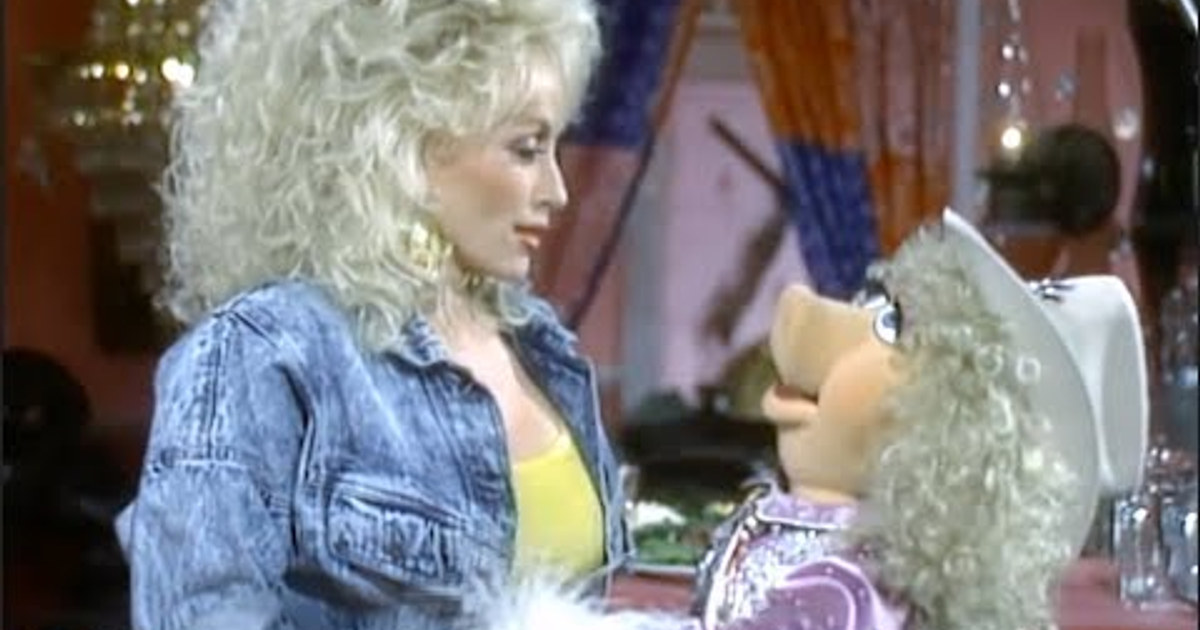
That is the engine of the whole sketch. Miss Piggy's confusion between consumption and creation. She thinks the trappings are the talent. She thinks the image is the art. And Dolly Parton — the woman who built the most iconic image in country music history — is the one who has to explain that it doesn't work that way.
The irony is so thick you could cut it with a rhinestone. Dolly, the ultimate image-maker, is telling Piggy that image isn't enough. And Piggy, who has no image except borrowed parts of other people's, is convinced she's one shopping spree away from the Grand Ole Opry.
Alright. We've seen the headbands. We've clocked the Made in Taiwan label. We've met our two guides. Now let's walk a little deeper into the trailer and ask the next question: why Dolly? Why is she the perfect foil for this particular pig at this particular moment? That's our next stop.
Stop Three: The Masterclass That Isn't — Broken Hearts and the 'Moah' Rule
Step into the next room of the sketch. The furniture is still ridiculous. The headbands are still dead. But now Dolly Parton sits Miss Piggy down for what looks like a singing lesson and turns out to be something closer to a sermon. Two rules. That's the whole curriculum. And by the time Dolly finishes, you realize you've just watched the entire thesis of country music delivered in under two minutes on a variety show.
Rule one: stop saying 'moah.' You know the sound. It's the exaggerated, theatrical 'more' that Miss Piggy uses when she wants the spotlight, the crown, the encore. Dolly doesn't just tell her to drop it. She asks the question that detonates the whole affectation: 'How many times have you ever heard Johnny Cash say moah?'
Sit with that for a second. Johnny Cash. The Man in Black. By 1980, when this episode of The Muppet Show aired, Cash had been a country institution for over two decades. He'd already recorded 'I Walk the Line' in 1956, 'Folsom Prison Blues' in 1955, and the live At Folsom Prison album in 1968. He didn't need to say 'moah.' He just was more. That's the difference. Dolly is pointing at a legend and saying: that's the standard. Not the volume. The authenticity.
Why does the 'moah' joke land so hard? Because Miss Piggy's affectation isn't country at all. It's theatrical. It's Broadway. It's the sound of a diva who has decided that if she adds enough props, enough furniture, enough Willie Nelson headbands, she'll become the thing she's imitating. Dolly's advice cuts the other way: authenticity is about dropping the performance, not adding more to it. You don't become country by buying the bus. You become country by getting out of your own way.
[[AD]]
And then comes rule two. The one that isn't a joke at all.
Dolly says it plain: 'Hard work and heartbreak is what country music is all about.' She tells Miss Piggy she's got to get that little heart broken. She's got to lose a great love. She's got to suffer some. On paper, it sounds like a punchline. In context, it's the actual thesis of the genre.
Think about the songs that built country music. Hank Williams released 'Your Cheatin' Heart' in 1953 — a song so specific, so lived-in, that it still sounds like a confession. Patsy Cline recorded 'Crazy' in 1961, written by Willie Nelson, and turned it into one of the most emotionally precise performances in American music. Loretta Lynn released 'Coal Miner's Daughter' in 1970, a song that isn't just sad — it's a detailed, working-class memoir of a childhood in Butcher Hollow, Kentucky. These aren't generic weepies. They're stories with addresses. They have names, places, jobs, and specific kinds of pain.
That's what Dolly means. Heartbreak in country music isn't a mood. It's a credential. You can't fake it with a western motif and a bed that says Made in Taiwan. The genre rewards the scar, not the costume.
Now watch Miss Piggy's face. She takes it in. She nods. She thanks Dolly for the 'wise advice indeed.' And then, the second Dolly walks away, she says it: 'There's got to be a shortcut.'
[[VIDEO]]
That is the punchline of the entire sketch. Not the dead headbands. Not the Taiwanese bed. That line. She has learned nothing. She wants the crown without the scar. She wants the title without the tears. She wants to be queen of country music and skip the part where Hank Williams dies at 29 or Patsy Cline boards that plane in 1963.
And here's the uncomfortable question the sketch leaves sitting on the coffee table: is Miss Piggy a villain, or is she just a stand-in for every reality TV contestant who thinks fame is a costume? The ones who show up with the right wardrobe and the right catchphrase and the right backstory, convinced that the shortcut exists. Dolly Parton, who wrote 'Jolene' and 'I Will Always Love You' on the same day in 1973, knows there is no shortcut. She lived the hard work and the heartbreak. Miss Piggy is still shopping for the bus.
So the masterclass that isn't a masterclass ends the way all great comedy ends — with the student failing the test and the audience laughing because we recognize her. We've all wanted the shortcut. We've all said 'moah.' The question is whether we ever stop.


