Part 1
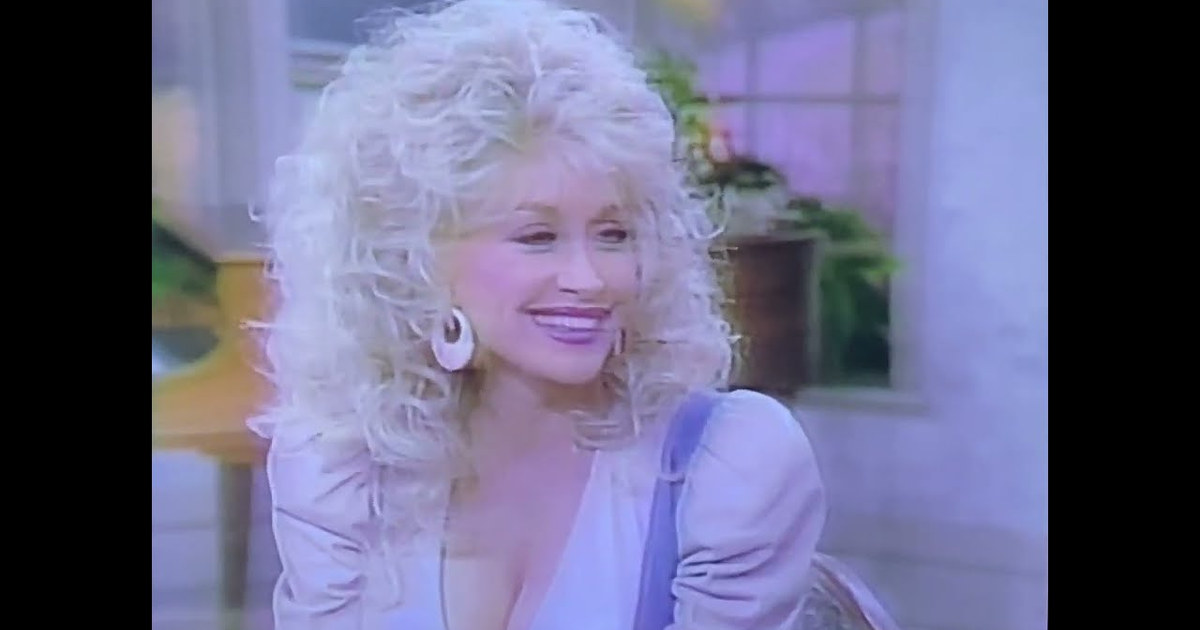
First, look at this: right before she ever settles onto the studio stool, look down toward the floorboards. The stage crew tried to clip the wireless microphone receiver directly into her cowboy boot. It didn't hold, but notice her reaction. She doesn't fuss, she doesn't stop tape, and she doesn't break character. She laughs, points out the rogue wire, and takes command of the entire room with a grin.
Welcome to our archive vault. The year is 1989, and what you are looking at is not merely promotional morning television. It is Dolly Parton standing right at the intersection of a massive career reinvention, balancing high-stakes Hollywood cinema with a fierce, grass-roots return to Appalachian country roots.
Most viewers remember this era through polished film posters or glossy album covers. But if you walk through the tape piece by piece, you discover how much tactical calculation went into every single gesture. Let’s take the tour in an order you probably wouldn't pick yourself.
[[AD]]
Stop 1: The Beauty Parlor Counterfactual
Have you ever wondered what Dolly Parton genuinely thinks would have happened to her if the Nashville bus had broken down in 1964? Listen closely to how she describes Truvy Jones, her character in the then-upcoming film adaptation of Robert Harling's Off-Broadway hit, Steel Magnolias.
She calls Truvy 'sort of like me if I had never got in show business.' She doesn't frame the character as a caricature; she frames her as an alternate timeline. Truvy runs the local beauty shop in Chinquapin Parish, dispensing styling advice, gossip, and emotional armor in equal measure. Parton admits with zero hesitation that without music, she would have chased that exact brand of local glamor herself.
Notice the setting she details. Director Herbert Ross took the production entirely on location down to Natchitoches, Louisiana. While the original stage play stayed strictly inside Truvy's converted garage salon, the film opened the doors out into the town, the homes, and the neighborhood.
Fair warning: if you haven't revisited this 1989 Southern classic, major story spoilers follow.
[[AD]]
Dolly casually lays out the emotional gut punch of the plot right on morning television. She outlines the real-life tragedy of a young woman with severe diabetes—played by Julia Roberts alongside Sally Field as her fiercely protective mother—who defies medical advice to carry a child, leading to heartbreak. Yet Parton instantly balances that darkness by pointing out the camaraderie between Shirley MacLaine, Olympia Dukakis, and Daryl Hannah.
She had already survived the Hollywood skepticism during 1980's 9 to 5 alongside Jane Fonda and Lily Tomlin. By 1989, she knew she thrived inside an ensemble of powerhouse women. When asked about her male co-stars on set—like Sam Shepard playing Truvy's husband Spud—she tips her hat, but her focus stays firmly glued to the sisterhood inside that beauty parlor.
Stop 2: The Soundboard and the Bluegrass Pivot
Now, let’s pivot our tour away from cinema and step directly into the recording studio. Why would an international pop-crossover icon in 1989 suddenly pull a sharp U-turn back to hardcore acoustic mountain instrumentation?
Notice the tape playback of her in the booth working on the White Limozeen album alongside producer Ricky Skaggs. Skaggs was the high priest of the neo-traditional country revival, and Dolly brought him in specifically to strip away 1980s synth gloss and lay down banjos, fiddles, and blazing acoustic guitars.
[[AD]]
Look at the track she chooses to highlight: 'Time for Me to Fly.' That wasn't a standard country tune written on Music Row. It was an arena-rock power track by REO Speedwagon, written by Kevin Cronin. Skaggs and Dolly picked it up, stripped off the electric distortion, and rebuilt it from the ground up as a high-octane bluegrass stomper.
Why do that? Because she understood genre friction better than anyone in Nashville. She could honor rock songcraft while proving her vocal delivery could out-sing any acoustic picking Skaggs could throw at her. She also mentions forming The Mighty Fine Band and taking tour buses back out on the highway because she famously hated flying.
Notice that tiny comment about looking forward to highway truck stops. A global star making multi-million dollar box-office deals, genuinely excited to grab coffee at an interstate diner between tour dates with a band of Nashville session titans. That wasn't a persona; that was her operational reality.
Stop 3: The Architecture of the Icon
Step into the center of the gallery here and examine how she deals with physical scrutiny. Morning television hosts in the late eighties loved to fixate on her frame, her nails, and her hyper-curated aesthetic.
[[AD]]
Watch the host literally reach out to measure her waist with his hands on camera. An intrusive move that would derail almost anyone else becomes, in Dolly's hands, a masterclass in stage control. She cracks self-deprecating jokes, explains how she keeps her energy high by eating tiny meals throughout the day, and shifts the conversation effortlessly back to her own terms.
Then comes the question every interviewer felt compelled to ask: why the towering wigs? Why not just style her natural hair?
Her answer is refreshingly utilitarian. Her natural hair is fine, straight, and droops under studio heat; heavy backcombing and teasing destroyed it. Wigs weren't an insecurity—they were engineering. She owned roughly 365 of them, allowing her to get camera-ready in under forty-five minutes flat.


