Part 2
[[AD]]
That is one idea restated four different ways in under a minute, by a woman who had spent two decades being described as a blonde joke in a wig.
The named comparison for this section is Shirley MacLaine. In Terms of Endearment (1983), MacLaine plays a mother whose entire life is a series of small, unglamorous negotiations — and who still, at the end, insists on wanting more. Same thesis. Same refusal to be tidy. It is no accident that Parton lists MacLaine first when the names start flying.
And then the host does the thing. He reads her names, one at a time, and asks for one sentence. It should be the fluffiest segment of the interview. It turns into the most revealing.
Shirley MacLaine: "quality, a character, bizarre." Olympia Dukakis: "precious, deep, talented." Sally Field: "extremely talented, intense, too hard on herself, but wonderful." Daryl Hannah: "precious, shy, extremely talented, timid, a big heart, just full of love." Julia Roberts: "young, intense, a bit harsh at the moment, great potential. I think she's got a wonderful future."
[[AD]]
Sit with that last one for a second. In 1989, Julia Roberts was one year away from Pretty Woman (1990). "A bit harsh at the moment" is a working actor's honest read on another working actor — and not one publicist in the room would have let it through today.
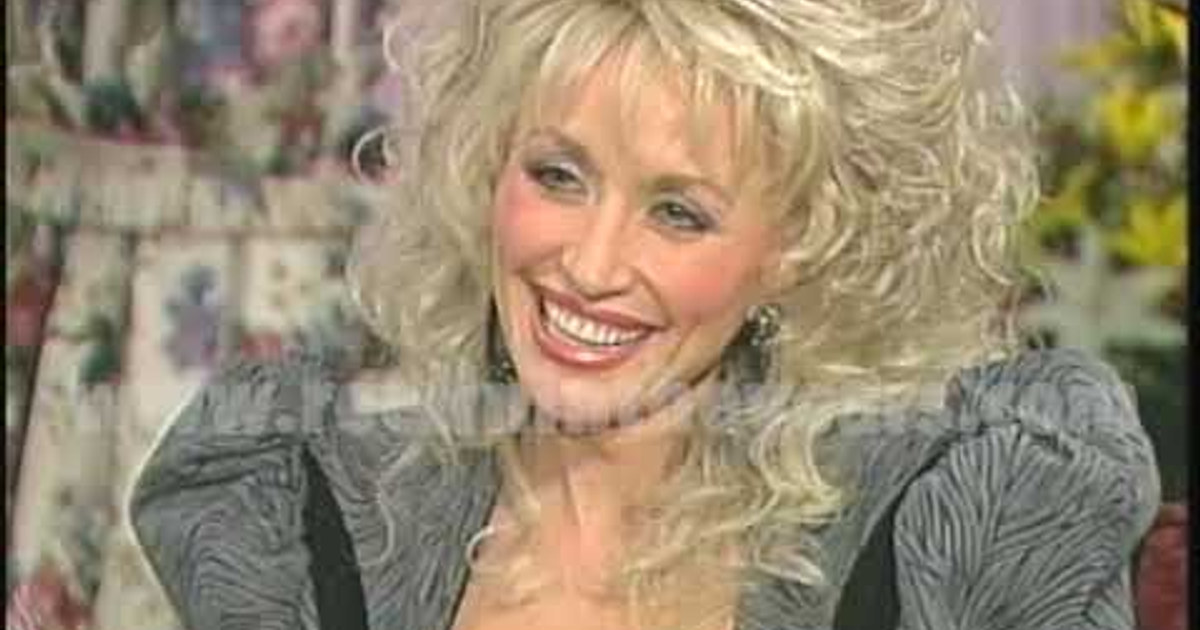
Then the host reaches the final name on the list. Dolly Parton. Somebody, he says, called her raunchy. Her reply is the hinge the whole interview swings on: "Dolly can be raunchy, but it's all in good spirit."
Third: Can a Dirty Joke Be a Form of Honesty?
Here is where the clip gets genuinely good.
She says she loves dirty jokes. She says she says whatever is on her mind, the way she always has, and that it has landed her in trouble since she was a little girl. Then comes the line that ought to be printed on something permanent: "If people are offended by me, they shouldn't hang around me."
[[AD]]
That is not a shrug. That is a boundary drawn out loud and in public by a woman whose entire image had been assembled by other people.
The named comparison for this section is Mae West. In She Done Him Wrong (1933), West built a career on saying something filthy while the censors sat in the audience unable to prove it. The double entendre was not decoration. It was armor, and it was a machine that printed money.
Parton ran the same play with a Tennessee accent, a rhinestone wardrobe and a wig the size of a satellite dish. Both women understood the same rule: the fastest way to control what people say about you is to say something wilder about yourself first. If you are going to be the joke, at least be the one telling it.
[[AD]]
She also just flat-out does comedy in this interview. Asked how she relaxes, she rattles off a lake house, fishing, a boat. She and her husband camp, and they drive the camper all over the country. "I love to go in old tore-out houses or ghost-looking houses, find old books and no bottles."
The host admits he just had a weird image of being rear-ended on the highway by Dolly Parton in a Winnebago. Her response, deadpan: "It's possible. It happened. I've rammed it into a few things."
That is a joke. It is also a woman informing you that she is not delicate.
And then she closes the loop. She does not deny being raunchy. She reframes it. The raunch is not a contradiction of the rhinestones — it is the engine under them. The thing that made her a star and the thing that keeps her honest are the same thing.
The Cas Walker story at the top of the interview runs on identical fuel. As a ten-year-old on his Knoxville radio and TV show, she and Fred Smith would write fake public service announcements and slide them in for Walker to read live to an unsuspecting audience. Fifty years later, asked about it on camera, she says: "I'm sure I did. We were doing all kinds of things. I'm not admitting nothing."
[[VIDEO]]
That is not evasion. That is craft. She gives you the story, the laugh and the wink, and then she keeps the last card face down — because the woman who never tells you everything is the woman who still has something left to sell you next year.
[[AD]]
What the Clip Actually Answers
So here is what the interview actually proves. The question we started with — can the punchline also be the artist? — was the wrong question all along. It assumed the joke and the art were competing for the same oxygen, and that one of them had to win.
Parton's answer is that the joke was never in the way. It was load-bearing. The wig got her into the room. The joke got the room to relax. Then she opened her mouth and out came I will never apologize for trying, and the room had to sit with the fact that it had been laughing at the person saying the truest thing in it.
Look at what she is actually promoting in this clip. Steel Magnolias is the most quote-ready movie of 1989 — a film that stacks its wisdom in one-liners and trusts you not to notice the grief underneath. White Limousine is a country record from a woman the format had already written off once. Dollywood is a theme park with her name bolted to the front gate. And she is back on the road with a full band for the first time in more than six years.
Four things that sound like a portfolio. She treats them like a single argument: a person is allowed to be profitable and sincere in the same breath.
The last real thing she says in this interview, underneath all the laughing and the one-liners about Winnebagos, is that she would rather have a life full of attempts than a life full of safety. The trailer sold you the tears. The interview sells you the thesis.
What is worth watching here is not the line about thirty minutes of wonderful. It is the woman who wrote the check and then refused to apologize for cashing it.
Next time the clip crosses your feed, listen past the laugh. She is answering a question nobody thought to ask her until she was forty-three years old — and she had been answering it the entire time.
Which is exactly where the next part of this series picks up: what happened when the culture finally did start asking, and what it cost her to have been right all along.


