Part 1
You have probably seen the trailer for Steel Magnolias. Six women, one beauty parlor, a wedding, a funeral, and an awful lot of pink. Trailers are built to sell you tears. What they cannot sell you is the argument running underneath the movie — that a short, spectacular life beats a long, careful one.
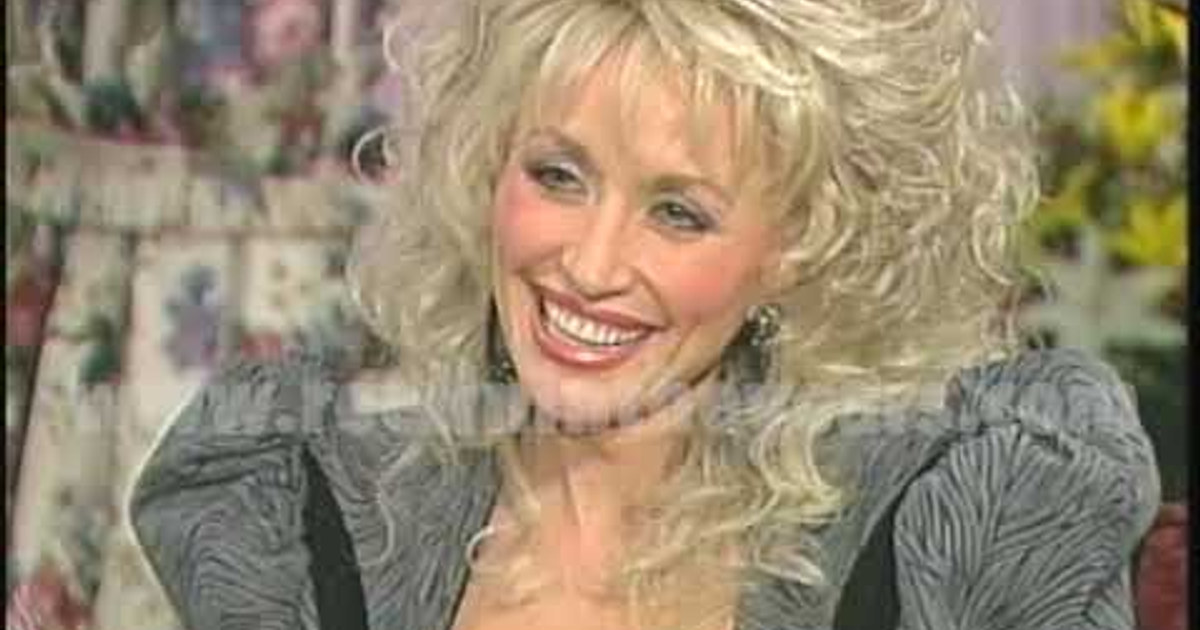
Now here is the clip that brought you here. It is a 1989 television interview, the kind of press stop that normally produces nothing but a plug and a smile. The host opens by asking Dolly Parton to sing the Cas Walker theme song. She does it, note for note, like it was yesterday. Then he asks whether she used to sneak fake public service announcements onto Walker's radio show as a kid. She grins. "I'm not admitting nothing. I don't want Mr. Walker to send a hitman after me."
And there it is, in under two minutes: the joke, the hustle, the honesty hiding inside the joke, and the total refusal to apologize for any of it. Which is the question this entire interview keeps circling without ever quite asking out loud. Can the punchline also be the artist?
[[AD]]
1989 was a strange, good year for Parton. She had a new album, White Limousine, produced by Ricky Skaggs — a country record made by a woman the industry had spent a decade insisting was too pop, too big, too much to be country anymore. It spun off two number one singles. She had put together the Mighty Fine Band, her first full road group with proper lighting and sound in more than six years.
And she had Steel Magnolias about to land in theaters, opposite Shirley MacLaine, Olympia Dukakis, Sally Field, Daryl Hannah and a twenty-one-year-old Julia Roberts.
In the interview she says she feels good. She says her life is in good order. She says she has been writing so much she cannot lay her pencil down — paper by the bathtub, paper by the bed, a dictaphone on one side and a tape recorder on the other.
So the question of whether a punchline can also be an artist is not theoretical here. It is sitting right there in the chair, answering in complete sentences.
[[AD]]
First: Can a Brand Also Be an Artist?
The host calls her a great businesswoman. Her answer is neither false modesty nor a victory lap. It is a business plan. She has a television production company and a movie production company. Some of those projects never carry her name at all. She has a rule: hire people smarter than you, then let them run their own area.
"I always certainly want to hire people smarter than me," she says. She has good lawyers. Good accountants. People looking after each other, and hopefully, she adds, all looking after her.
Then she gets to Dollywood, and this is the part worth slowing down for. "I'm not going to put my name on something and just walk off," she says. "There's no way I would do that. I'm very involved in that. I'm very proud of that."
That is not a celebrity renting out a logo. That is an owner. And the entertainment business has never quite known what to do with a woman who is both.
[[AD]]
The named comparison for this section is Lucille Ball. In the 1950s, Ball turned Desilu from a production shingle into a working studio — the one that would later put Star Trek (1966) and Mission: Impossible (1966) on the air. By every account she was a ruthless, effective executive who read the balance sheets herself.
Nobody called Ball less of an artist for it. They called her a genius and meant it twice.
The host then asks Parton if she is a workaholic. "I guess I am," she says, "but I play hard too. When I rest, I rest real good." Later she sharpens it: "If being busy and wanting to do good and having a good time makes you a workaholic, then I guess I'm totally addicted."
So here is the first answer. Commerce is not the opposite of art. It is the scaffolding that keeps the art standing after the cameras go home. Dollywood is not a betrayal of the songwriting. It is the reason the songwriting can keep happening on her terms.
[[AD]]
Second: Can a Philosophy Fit on a Poster?
The host reads her the big line from the movie. "I'd rather have thirty minutes of wonderful than a lifetime of nothing special." He calls it a good line. She claims it instantly. "That's my philosophy."
Then she adds the other one, the one Truvy actually says in Steel Magnolias: there's no such thing as natural beauty. Delivered with a straight face, it is a joke. Delivered twice, it becomes a worldview.
This is the moment a lesser interview would end. She has handed the audience a fridge magnet. Watch what she does with it instead — she builds an ethic out of it, in real time.
"I would rather fill up my days and make a lot of mistakes than to have not tried anything at all." And: "I have no regrets." And: "I will never apologize for trying." And then the one that lands hardest, because it is the only one that costs her anything: "When I'm old and rocking away in my rocking chair, I'd rather regret a few things I did than to regret a whole bunch of things I didn't do."


