Part 1
Fade in on suds. Pink tile. Golden taps. Neck-deep in foam sits Dolly Parton, looking straight down the barrel of an ABC prime-time lens. No orchestra yet. No glitzy variety set. Just Dolly, a sea of bubbles, and a warning shot aimed at network television.
"People have been saying, 'You're never going to sing like Glen Campbell, you'll never be as funny as Carol Burnett, and you'll never look like Cher,'" she drawls, totally unbothered. She pauses. A beat. Then the punch: "I'm not trying to compete. I'm just trying to be myself. At least I got your attention. If setting in a bubble bath isn't enough to get your attention, what can I tell you? I've been in hot water before."
Cut to black. Smash into the brass section. That single bathtub opener is the Rosetta Stone for the entire 1987 premiere of *Dolly*. It wasn't just a cheeky cold open. It was an editorial thesis statement. Dolly Parton knew variety television was supposed to be dead. She didn't care. She turned the water up and invited the madness in.
[[AD]]
Smash Cut to Beverly Hills: The Mechanics of 'Bubblin' Over'
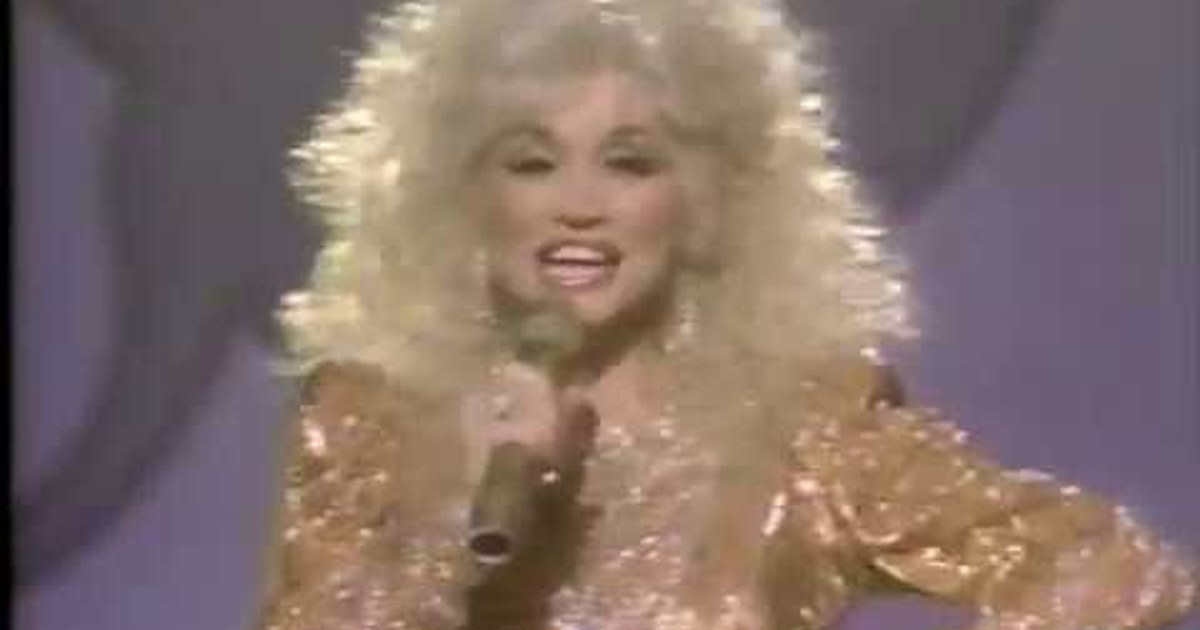
Hard cut to the stage. Rhinestones catch the key light. The tempo revs instantly into "Bubblin' Over," kicking off the show with sheer kinetic velocity. Dolly struts the deck in full southern sovereign mode. She is grinning ear-to-ear, daring the audience to blink.
Look at the pacing. In less than two minutes, she transitions from mountain girl to prime-time titan. She cracks jokes about her early syndicated Nashville days—where she worked on a shoestring, contrasting it with ABC's production budget: "It's nice to have the whole shoe." She rattles off the hit list of demographic promises: gowns for the women, laughs for the men, Pee-wee Herman and Hulk Hogan for the kids. Bruce Springsteen? "I'd like to tell you we'll have Bruce Springsteen. I said I'd like to tell you that. We couldn't get him."
It is classic, self-aware showmanship. She sets up the entire variety engine right before our eyes. The skeptics said network variety was a relic of the seventies. Her counter? Push the needle into the red. Pack the frame until it burst.
[[AD]]
Cross-Cutting Tropes: The Dudley Moore Shakespeare Collision
Doorbell rings. Hard whip to a luxury parlor set. Enter Dudley Moore holding flowers, reciting *Romeo and Juliet* like he wandered off a London soundstage into a Tennessee living room. It's highbrow classical poetry colliding head-on with pure Smoky Mountain swagger.
"Bottoms up," Dolly quips, clinking champagne flutes. "In my case." She plays the innocent student pleading for dramatic acting lessons. Moore pitches an improvised Civil War romance where he plays Captain Beauregard Latimer Trueblood III and she's Ethel Jones, the Belle of Memphis. The camera pushes in close. He hams up the melodrama; she plays the deadpan observer who sees right through the game.
"Trouble is, I'm serious and he's acting," she whispers aside. Then, the pivot. She ditches the Shakespeare bit entirely. Cuts through the artifice. "Let's cut this, and you play for me." Moore slides onto the piano bench, the studio lights soften, and the bit transforms from broad sketch comedy into genuine musical intimacy. That is the rhythm of this show: mock the medium, then master it.
[[AD]]
The Tabloid Blitz: Hulk Hogan and 'Headlock on My Heart'
Jump cut to the audience. Dolly works the floor, pulls a viewer named Bob out of his seat, and hands him a tabloid. The headline is pure grocery-store checkout gold: Dolly Parton falls madly in love with a 300-pound professional wrestler. She doesn't sue. She doesn't issue a denial. She turns the rumor into prime-time content.
Cue the music video: "Headlock on My Heart." We get strobe lights, wrestling mats, smoke machines, and Hulk Hogan himself, tearing off shirts while Dolly wears bridal silk in the center of the ring. It is camp dialled up to eleven. Total pop surrealism.
Think about the calculation here. In 1987, Hulkamania was sweeping global pop culture. Dolly didn't wait for late-night talk shows to validate her sense of humor. She hijacked the WWF phenomenon, strapped it into a country-pop structure, and walked out holding the belt. "Never let it be said that I don't cooperate with the press," she laughs right after the pinfall. Total media subversion disguised as Saturday-night fun.
[[AD]]
Tempo Shift: Flipping the 45 to 78 RPM
Kill the flash. Drop the lights. Center stage narrows to Dolly and three vocalists: Gene Miller, Richard Dennison, and David Rowland. No rhythm section. No backing track. Just four microphones and pure four-part vocal harmony on "Do I Ever Cross Your Mind."
The arrangement starts out sweet, melancholic, dripping with classic country sorrow. Dolly's vibrato holds the room still. It's a textbook emotional reset—a breath of air after the Hulk Hogan chaos. But she refuses to linger in nostalgia for too long.
"Let's pretend we have this little song on a 45-speed record," she instructs the band, "and we flip it up on 78 speed." Bam. The tempo quadruples instantly. Staccato syllables fly like machine-gun fire. Dolly matches them syllable for syllable, laughing through the lightning-fast bluegrass sprint without missing a single pitch. It proves her central point: she can clown around all evening, but musically, her timing is razor sharp.


