Part 3
But the red flags aren't just digital. They're embedded in the story's emotional architecture. Devan once drove to meet Rylan when she lived close, only to have her uncle answer the door and say no one by that name lived there. Rylan later explained it away: the uncle didn't know who Devan was. "Which was kind of depressing," Devan admits. Then there's the gas money. Devan sent her $100 for gas when she was supposedly driving to see him but got nervous and turned back. He also sent a birthday card with money, which she claimed a friend ripped up. Each detail is a small betrayal, but the show doles them out like breadcrumbs, never all at once. The genre fan leans in; the craft nerd admires the pacing.
[[VIDEO]]
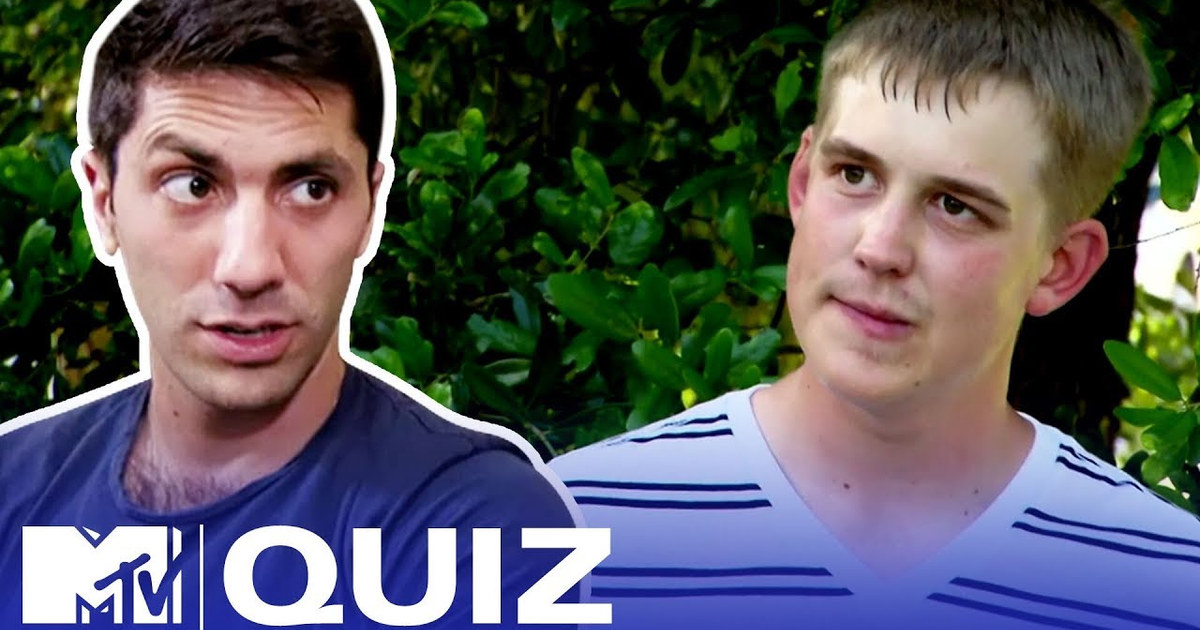
Nev's suggestion of a video test is a perfect example of the show's playful meta-commentary. "If it were me," he says, "I would say, 'Can you send me a video of you saying supercalifragilisticexpialidocious?'" It's a ridiculous word, but it's also a clever test: if Rylan can't pronounce it on camera, she's not who she says she is. Devan, however, is 100% positive in his heart. That unwavering hope is what makes the genre work. Without it, there's no tension, no stake, no reason to watch the confrontation.
The confrontation itself is the genre's climax, and this episode delivers. The decision to go inside the house alone—Nev and Todrick waiting outside, Devan walking up to the door—is a direct nod to the 2010 film Catfish, directed by Ariel Schulman and Henry Joost, which started it all. That film, a documentary about a similar online deception, ran 87 minutes and became a cultural touchstone. The series, which premiered on MTV in 2012, has evolved into a weekly ritual of revelation. But the core remains: the slow walk to the door, the knock, the pause, the answer.
The phone call with Michelle, the woman who answers the door, is another layer. Michelle says, "I don't know if I can do this. I see him and it's scary." That line is the genre's emotional pivot. It's not just about Devan's heartbreak; it's about the person on the other side, who may be just as trapped. The craft fan notes the careful framing here. The camera doesn't exploit Michelle's fear; it holds on her face just long enough to register, then cuts away. It's a choice that keeps the show from tipping into cruelty.
Compare this to other reality investigation shows. NBC's Dateline, which has been on the air since 1992, uses a similar slow-burn structure but with a journalistic distance. The podcast Serial, which debuted in 2014, mastered the art of the incremental reveal for audio. Catfish sits somewhere in between: it's more intimate than Dateline, more visual than Serial. And like those shows, it uses music and pacing to heighten drama. The electronic score pulses during the searches, softens during the emotional beats. It's manipulative, sure, but it's also effective. The genre fan feels the rush; the craft nerd appreciates the engineering.
The ethical dimensions are where the two audiences might diverge. Nev and Todrick act as mediators, but they're also producers. They know the cameras are rolling. The potential for real harm is always there—Devan's heart is on the line, and Michelle's life is being exposed. But the show's careful framing avoids outright exploitation. When Michelle says she's scared, the show doesn't linger. When Devan's hope shatters, the camera gives him space. It's a delicate balance, and this episode walks it well.
For the genre fan, the payoff is the confrontation: the moment when the truth finally comes out. For the craft nerd, the payoff is the construction: the way the episode builds tension through cross-cutting, the way it uses Devan's hope as a counterweight to every red flag, the way it lets the silence do the talking. Both audiences get what they came for, and that's the genius of Catfish. It's a show that understands its dual nature—part soap opera, part sociological experiment—and plays to both without pandering.
In the end, the episode satisfies the genre fan with its slow burn and emotional payoff, and the craft nerd with its precise editing and ethical considerations. It's a reminder that reality TV can be both entertaining and thoughtful, if you know where to look. And for a hobbyist programmer like me, it's a lesson in debugging human behavior: you follow the data, you test your hypotheses, and sometimes you find a bug you didn't expect. But you also remember that behind every data point is a person, and that's the soul part.
[[AD]]
Pure Craft: The Investigative Stack, the Tech, and the Human Algorithm
If you're a genre fan, you're here for the slow burn of red flags and the inevitable confrontation. But if you're a craft nerd like me, you're here for the investigative stack—the tools, the techniques, and the human algorithm that drives them. This is where the show shines as a masterclass in debugging a real-life mystery. Let's break it down like a programmer would: input, data gathering, pattern matching, anomaly detection, hypothesis testing, and finally, the deploy.
The input is Devan's story: a 21-year-old from Canyon, Texas, who met a girl named Rylan on MeetMe, a social discovery app that was huge in the mid-2010s. They talked for a year and a half, exchanged numbers, and got serious. But they never Skyped. She never had data. She didn't have Facebook. In 2015, that's a glaring anomaly. As Nev points out, "in 2015 someone would be walking around with no Facebook and just MeetMe app on their phone"—that's a red flag the size of Texas.


