Part 1
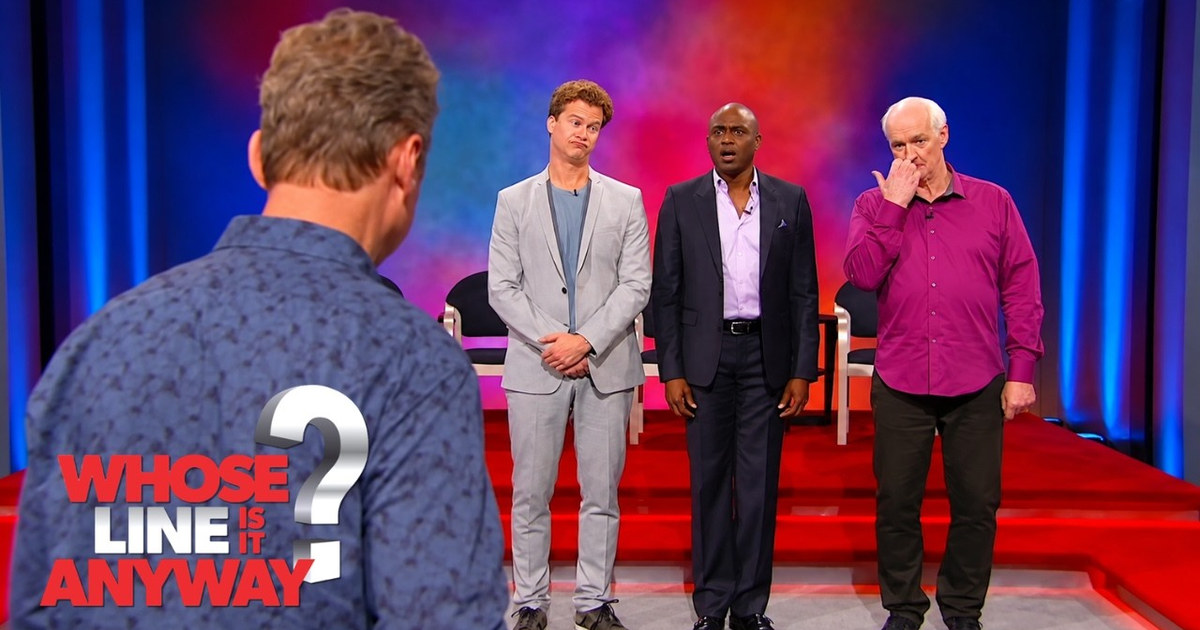
Every time four performers walk down to the center of the stage on Whose Line Is It Anyway, two very different audiences tune in. The first is the genre tourist. You came for the raw punchlines, the rapid-fire skewering of pop-culture monoliths, and the belly laughs generated when someone inevitably turns a wholesome film franchise into a physical disaster. You want to see Leonardo DiCaprio frozen in hypothermic panic or a CW cop show reduced to a broadcast absurdity.
Then there is the craft viewer. If you look at improv through the lens of systems engineering, what is happening on that stage looks less like theatre and more like real-time multi-threaded computing without an error-handling wrapper. Performers operate with near-zero latency, populating shared memory registers with physical stage markers, dynamic timing constraints, and linguistic traps, all while debugging dead bits in front of a live studio audience.
Neither perspective is superior. In fact, the perennial magic of the quick-fire game 'World's Worst' lives right at their intersection. It is a stress test where high-concept satire meets the raw mechanics of instant execution, showing what happens when master-tier stage veterans treat comedy as runtime computation with a soul.
[[AD]]
The Genre Layer: Breaking Hollywood's Golden Tapes
When host Aisha Tyler calls the prompt for the world's worst audition reel or actor's showreel, the genre audience immediately anticipates the targets. The game functions as a hit-and-run parody machine targeting film history. The setup is lightning-quick: step up to the invisible mic, deliver the premise, execute the payload, step back into the queue.
The jokes land because they target universal Hollywood shorthand. Consider the instant jump into Back to the Future as a local weatherman, or stepping up with absolute sincerity to declare, 'This is my audition for Chewbacca,' followed immediately by shouting Kirk Douglas's immortal line: 'I'M SPARTACUS!' It is a deliberate misallocation of cultural data, smashing two unrelated cinematic properties into each other for an instantaneous spark.
Then comes the visceral genre parody: a screen test for Leonardo DiCaprio's Oscar-winning turn in The Revenant. Instead of method-acting endurance in the freezing wilderness, the performer collapses the entire historical epic down to pure bodily absurdity: 'It's so cold... MY NIPPLES ARE POINTING!' It takes an austere, prestige cinematic moment and reduces it to crude, relatable biology in under four seconds.
[[AD]]
The Engine Room: Low-Latency State Machines
Now watch that exact same audition sequence from the perspective of craft. What you are witnessing is an asynchronous task runner. Each performer—Jonathan Mangum, Wayne Brady, Colin Mochrie, and Ryan Stiles—is cycling through a localized queue of ideas while continuously monitoring the state of the room.
The hardest part of this format is not generating the punchline; it is managing the transition latency. A performer must read the exact millisecond the previous laugh crests and drops, stepping forward at the precise inflection point so the pacing never flatlines. Step up too early, and your setup is swallowed by the lingering applause. Step up too late, and the room goes cold, forcing you to reboot the energy from zero.
Watch how Ryan Stiles and Colin Mochrie construct the 'Line!' sequence. It begins as a simple trope: an incompetent actor forgetting his words. But instead of letting it die as a one-off, they instantiate an iterative loop. 'Line.' 'You're fired.' 'Every day, you're fired.' Then another layer: 'Line.' 'Get off the stage.' 'Line.' 'Your car's being towed.' By the time Colin snaps with 'Just f*** off!', they have turned an empty prompt into an escalating recursive routine, proving that syntactic repetition can build its own comedic momentum.
[[AD]]
High Concepts and Trash Cinema Collisions
For the genre fan, the back half of the audition reel segment accelerates into rapid-fire references. Titanic gets dismantled in two lines: the desperate hyperventilating cries of 'Rose! Rose! I'm drowning!' followed by the jarring, triumphant pivot to 'I'M THE KING OF THE WORLD!' It plays directly into audience memory, turning James Cameron's three-hour epic into an emotional whiplash gif.
We get a sudden audition for Wilson the volleyball in Cast Away, giving voice to an inanimate sports object. We get superhero satire that completely ignores Marvel's polished universe to present the pure biological terror of shrinking: 'An ant is insane! I can't carry 100 times my own weight! This is insane! The Raving Ant!' It works because it takes the comic book logic seriously for half a breath before fracturing it into panic.
Even the holy grail of space opera isn't safe: 'Luke, I'm your daddy,' delivered with sleazy domestic banality instead of mythic gravitas. And just when you think the genre homages have settled, Colin leans into Lassie tropes, only for the scene to mutate mid-stride into a grotesque tactile gag: 'You cut my tongue! That's because you're licking a man!' It is unhinged, chaotic, and relentlessly funny.
[[AD]]
Procedural Inversion: Hospital Logic and Tactical Subversion
Shift the game to 'The World's Worst Thing to Say or Do in a Hospital,' and the craft demands shift from parody to subversion of professional protocol. Every medical drama—from ER to Grey's Anatomy—is built on authority, sterility, and solemn life-and-death stakes. The prompt demands that the performers systematically violate every single one of those parameters.
The comedy operates here on rapid status drops. A doctor in tears over a flatline suddenly stops crying, checks his watch, and deadpans: 'I'm just kidding. All right, put it in the books. Operation completed at...' The craft here is in the tonal brake check. The performer builds emotional weight solely to pull the rug out from under the audience's narrative expectations.


