Part 3
Next comes the guest appearance by Oprah Winfrey, then riding the massive wave of her newly syndicated national talk show. Their initial banter tackles body image, corsetry, and 1970s feminist tropes with blistering candor. Dolly's line about burning her girdle instead of her bra because 'it would've taken the fire department three weeks to put the fire out' is pure, unfiltered stand-up gold for the variety enthusiast.
Then the production pivots into a sketch that directly attacks the racial and structural hypocrisies of musical theater casting. Dolly arrives to audition for *Porgy and Bess*. The unseen casting director gives her the immediate brush-off, listing off other shows she's failed to land: *Dreamgirls*, *A Raisin in the Sun*, *The Wiz*. When she pushes for the specific reason, the director finally stammers out the reality: 'Wrong color.'
Her reaction is sublime. Instead of righteous outrage, she responds with absolute theatrical literalism: 'You know, you do have a point, and I appreciate your honesty.' Seconds later, she returns to the stage dressed in a vibrant red gown: 'You were so right. I look much better in red!' before immediately belting out Gershwin's 'Summertime.' For both the genre viewer and the craft analyst, this is razor-sharp satire. It uses the bubbly exterior of the variety show format to poke directly at industry absurdity without ever sounding academic or lecturing.
[[AD]]
Tonal Compaction: Shifting Registers from Burlesque to 'Coat of Many Colors'
The ultimate test of any variety hour is tonal modulation. In the span of forty-five minutes, this episode journeys through bubble bath monologues, Shakespearean spoofs, professional wrestling brawls, Pee-wee Herman skits, and Gershwin standards. A lesser production would suffer catastrophic tonal whiplash; the seams would tear, and the emotional resonance would leak out completely.
Instead, Dolly brings the entire broadcast down to an absolute emotional whisper. Standing alone, she begins an unhurried, deeply intimate storytelling preamble about her childhood in the Great Smoky Mountains. She speaks of growing up in a family of twelve children, her farmer father, and her mother hand-sewing scraps of discarded cloth into a school coat. There are no gimmicks here, no dancers, no frantic camera pans.
[[VIDEO]]
When she launches into 'Coat of Many Colors,' the entire network apparatus steps back to let pure songcraft occupy the space. For the genre fan who grew up on country music, this is church. It is an unimpeachable masterwork of narrative songwriting delivered by its architect at the peak of her interpretive powers. Every syllable feels earned, grounding the previous hour of candy-colored 1980s glitz in real, hardscrabble Appalachian humanity.
For the student of performance engineering, the transition is breathtaking. Dolly has spent the last forty minutes establishing that she is completely in control of the room's comedic and theatrical levers. Now, she flips an emotional breaker, dropping the noise floor to near zero. She holds the entire national television audience in the palm of her hand using nothing more than a narrative arc and the pure timber of her upper register. It is a stunning display of dynamic range.
[[AD]]
Live Audience Telemetry: The Good News Feedback Loop
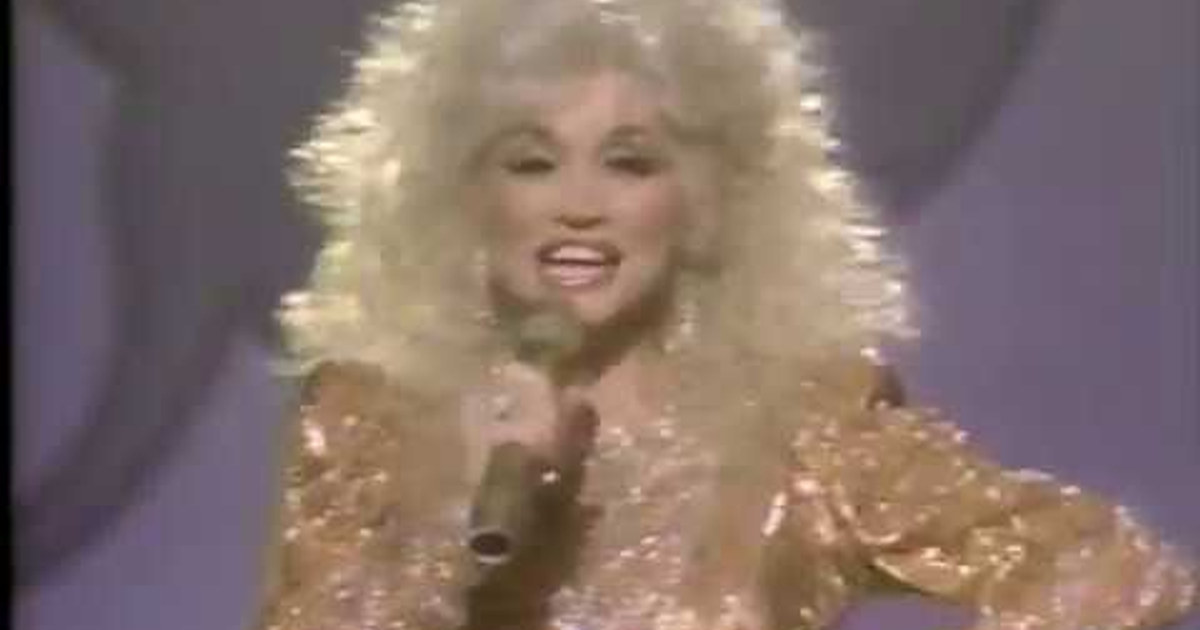
Rather than closing the show with a detached, rehearsed ensemble farewell, Parton wraps the premiere by taking the stage directly into the studio crowd. Dressed in a tight-fitting, glittering evening gown, she declares it is 'time to feel good' and initiates an unscripted, impromptu interaction segment: she asks random audience members to share their good news.
From a production standpoint, opening a hot microphone to an unscreened live studio audience during a premiere broadcast is the television equivalent of running untested code directly in production. Anything can go wrong: dead air, awkward tangents, hostile remarks, or complete comedic flatlines. Yet look how effortlessly Parton processes the incoming data packets.
One man reveals he bought thirteen lottery tickets and won $50,000; Dolly immediately validates his joy while joking about her own total lack of lottery luck. A woman reveals she was pulled over for speeding a decade ago and ended up marrying the officer who stopped her three years later. Parton's instant callback—'So in other words, you collected, right?'—draws a massive, authentic laugh. She uses zero scripted teleprompter safety nets here; it is pure, real-time relational improvisation.
The System Closed: When Form Becomes Function
By the time the closing credits roll over the final musical sign-off, the dialectic between genre and craft has resolved completely. What looked on paper like a chaotic assortment of 1987 pop trends—a variety show trying to please everyone from wrestling kids to Broadway patrons—reveals itself as a unified, brilliantly executed piece of performance art.
The viewer who came purely for the genre thrills leaves thoroughly entertained by the sheer volume of cultural spectacle. Where else could you watch Dudley Moore quote Shakespeare, Hulk Hogan fight in a wedding ring, Pee-wee Herman sing Hank Williams, and Oprah Winfrey trade one-liners about corsets, all within sixty minutes of network television?
At the same time, the viewer who came to study the craft walks away with deep reverence for the invisible engineering underneath. Behind the big hair, the shimmering gowns, and the self-effacing Southern charm lies one of the most formidable performance systems ever deployed in prime-time television. Dolly Parton did not just survive the impossible variety format; she ran rings around its architecture, reminding us that true genius doesn't choose between spectacle and substance—it builds a house large enough to hold both.


