Part 1
Every broadcast artifact from the golden age of network television operates on two simultaneous frequencies, whether the production team explicitly designed it that way or not. In the premiere broadcast of Dolly Parton's 1987 eponymous variety series, that split is not merely present; it is the entire operating system of the hour. If you boot up this tape today, you immediately find yourself sorted into one of two demographic cohorts based entirely on what you came looking for.
The first cohort is the Genre Viewer. You came for the neon-soaked, high-gloss maximalism that could only exist in the autumn of 1987. You want the sheer audacity of prime-time variety television: Hulk Hogan executing wrestling promos inside a rhinestoned ring, Pee-wee Herman delivering frantic physical comedy alongside an Appalachian icon, and Oprah Winfrey trading quips about foundation garments before pivoting to theatrical satire. For the genre fan, the show is an unhinged, joy-fueled buffet of pop culture hyper-competence.
The second cohort is the Craft Viewer. You look past the pastel sets and see an astonishing piece of entertainment engineering. You are looking at the clock cycles: how an eight-camera setup tracks complex stage blocking without dead space, how an artist recalibrates her pitch and breath support between broad slapstick and delicate mountain folk ballads, and how an absolute master of audience manipulation manages cognitive load across a live studio audience. You treat the broadcast like a legacy mainframe codebase—gleefully untangling how so many volatile subsystems run without a single kernel panic.
[[AD]]
Cold Boot in a Bathtub: Framing, Pacing, and State Management
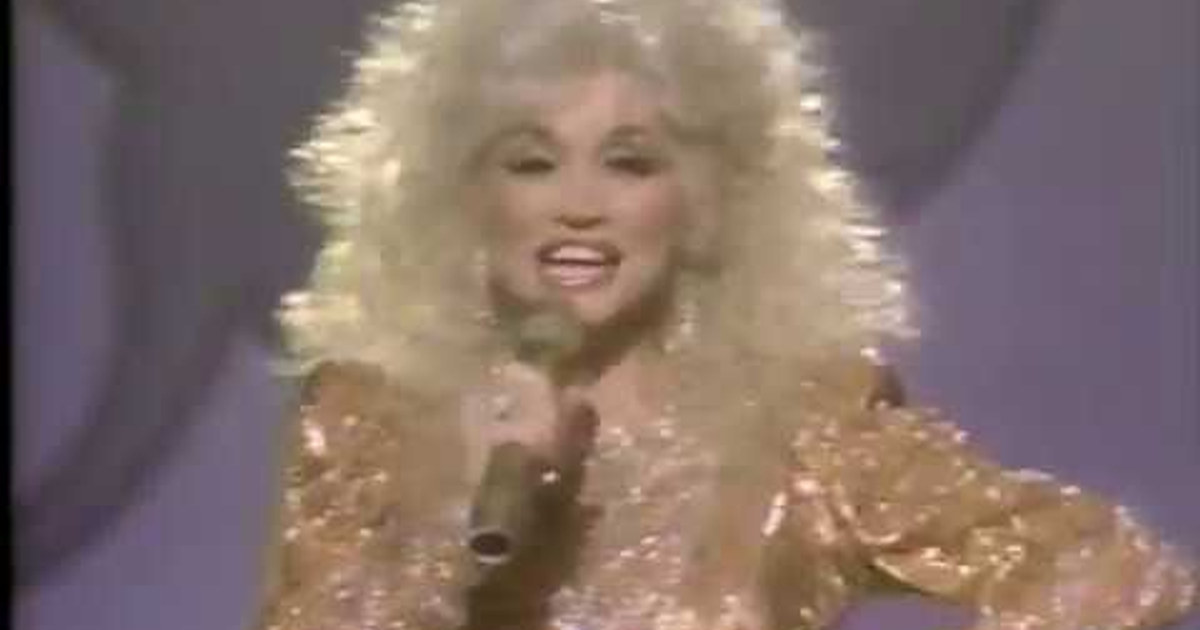
Consider the opening sequence. In an era when most variety pilots opted for high-energy brass introductions and synchronized dance ensembles storming a proscenium, this production initiates an asynchronous cold boot. We open on Dolly Parton submerged in a bubble bath. It is a visual choice that immediately disarms the medium. For the genre enthusiast, it is vintage, playful Dolly: self-effacing, glamorous, slightly bawdy, and hyper-aware of her own public caricature.
From a technical craft standpoint, however, the sequence is an exercise in rigorous baseline calibration. Monologuing in water places extreme constraints on physical staging; Parton cannot lean on blocking, movement, or external props. Every ounce of momentum relies purely on facial micro-expressions, vocal rhythm, and direct address down the barrel of the primary camera. Notice how she delivers the introductory payload: dismantling industry warnings about comparison to Carol Burnett, Glen Campbell, or Cher before instantly translating that vulnerability into an absolute command of the frame.
When she steps from that bath-bound intimacy straight into the opening musical salvo, 'Bubblin' Over,' the transition is seamless. In software design, you would call this an elegant state transition. She pivots from a confidential one-to-one conversational protocol to the thunderous acoustic footprint of a full network variety orchestra without dropping a single fraction of a beat. She signals to the home viewer that while the production budget might be massive, the human engine driving it remains completely untamed.
[[AD]]
The Dudley Moore Routine: Screwball Farce Meets Elizabethan Burlesque
Enter Dudley Moore, bearing floral bouquets and quoting Shakespeare. For the genre viewer, this segment delivers the exact cozy, star-studded crossover that 1980s network television promised every Sunday night. You have an Oscar-nominated British satirist bouncing against the high priestess of country music, trading Champagne toasts and double entendres in a set designed to look like a high-end Beverly Hills drawing room.
The pure-craft observer, on the other hand, notes how the scene functions like an intricate clockwork mechanism. Dudley Moore enters reciting lines from *Romeo and Juliet* and *Hamlet*, handing over rosemary for remembrance and fennel for columbine. Dolly does not play the oblivious country bumpkin; she plays the sharp-witted counterweight who recognizes the literary affectation instantly. Her responses are micro-tuned: 'What a way to say hello.' She lets him set up the intellectual pretense precisely so she can deflate it with devastating, deadpan timing.
The improvisation game that follows—where Moore casts them as Ethel Jones, the Belle of Memphis, and Captain Beauregard Latimer Trueblood III—is a clinic in comedic status manipulation. The genre viewer simply enjoys the escalating absurdity of Moore calling her a 'golden-haired popsicle.' The craft analyst watches how Parton controls the pacing of the improv, deliberately breaking character just enough to let the audience in on the joke, before effortlessly steering Moore away from the theatrical bit and directly onto the piano bench.
[[AD]]
The Mechanical Comedy of Acting as Reacting
During that exchange, Moore delivers the classic theatrical axiom: 'Always remember that acting is reacting.' On its face, it sounds like standard showbiz banter. Yet within the specific architecture of this variety sketch, Parton turns that thesis into a literal operating loop. She questions whether his romantic overtures are simulated or authentic: 'Trouble is, I'm serious and he's acting. You are acting, aren't you? Or are you reacting?'
The comedy here works by exposing the actual mechanisms of theatrical illusion. Moore, normally known for manic physical comedy and rapid-fire linguistic delivery, is systematically disarmed by someone whose comedic reflexes are rooted in folk tradition and mountain storytelling. The genre fan enjoys the charming romantic friction; the craft purist sees two entirely distinct schools of performance technique finding complete harmonic convergence.
When she finally halts the bit by pointing out that 'these folks know I'll never be a serious actor, but I know you are a serious piano player,' she performs a clean context switch. She terminates a low-efficiency sketch before it wears out its welcome and redirects the guest star toward his highest-value asset: his musical virtuosity. It is an editorial decision made on the fly, visible right on screen, demonstrating remarkable editorial discipline.


