Part 3
Throughout the novel, the reader is conditioned to believe that the primary tension lies between human intention and automated failure. We spend hundreds of pages parsing the crash data: Did Charlie touch the wheel? Did the radar misread an obstacle? Did Noah's distraction constitute criminal manslaughter?
[[AD]]
The ending pulls off a brilliant inversion of expectations. Without spoiling every breadcrumb, Holsinger reveals that the most terrifying black-box algorithm in the story is not the software running the minivan, nor is it the language model chatting with Alice. The black box is Lorelei herself.
The family was not undone by an unexpected software glitch; they were undone by the deliberate, desperate human choices made behind the curtain. Lorelei, the celebrated guardian of ethical computing, is forced into a corner where her academic theories smash against raw maternal protection and personal secrets.
For the genre lover, this twist delivers the classic floor-drop sensation. It recontextualizes every interaction between husband and wife, making an immediate second read practically mandatory. For the craft purist, it is the ultimate fulfillment of thematic design: the human soul remains stubbornly un-debuggable.
[[VIDEO]]
Where the Narrative Compiles Cleanly
In an era saturated with shallow technophobic thrillers and dry, bloodless moral allegories, Bruce Holsinger's Culpability stands out as a genuine achievement in literary engineering. It honors the visceral demands of the commercial suspense genre without ever insulting the reader's intelligence.
It gives the beach reader relentless momentum, escalating stakes, family friction, and genuine shock value. At the exact same time, it gives the literary analyst a brilliant inquiry into modern liability, the limits of anthropomorphism, and the terrifying realization that we have integrated autonomous systems into our lives long before settling our own moral balance sheets.
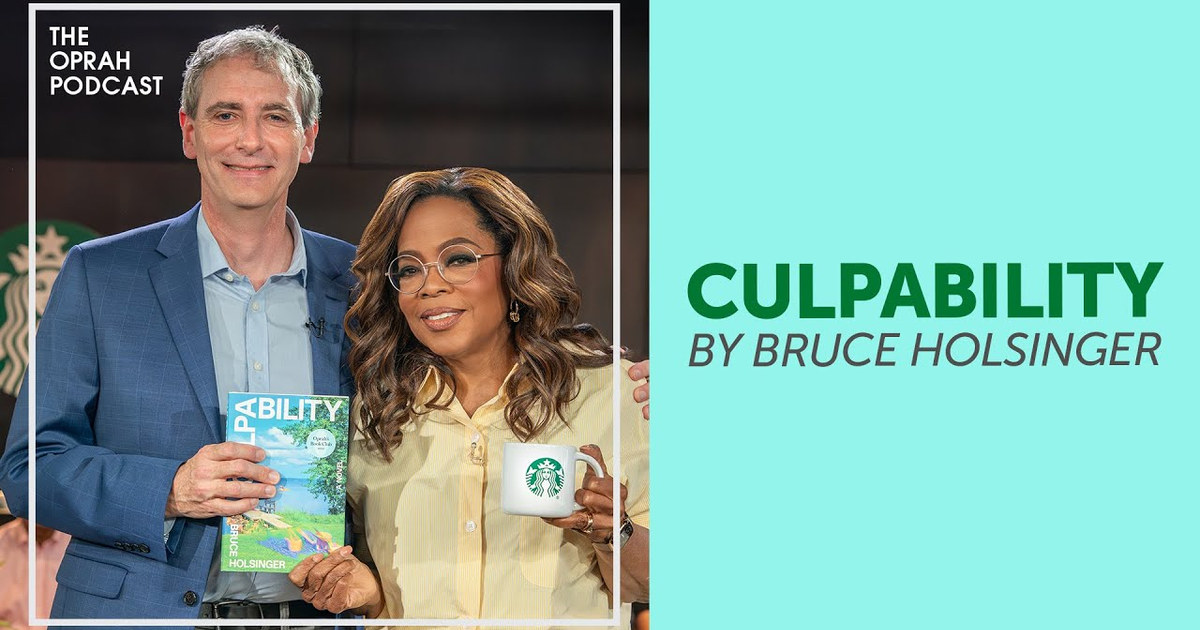
Oprah’s Book Club has spotlighted many profound stories across its 116 selections, but Culpability feels uniquely urgent for the world we inhabit right now. It is a cautionary tale that avoids cheap luddite sermonizing, choosing instead to hold up a mirror to our own complicity.
[[AD]]
When you finally close the back cover, you will inevitably look at your phone, your smart home speaker, and your vehicle's driver-assist dashboard with a new, lingering unease. The software is functioning exactly as programmed. The question is whether we are.


