Part 2
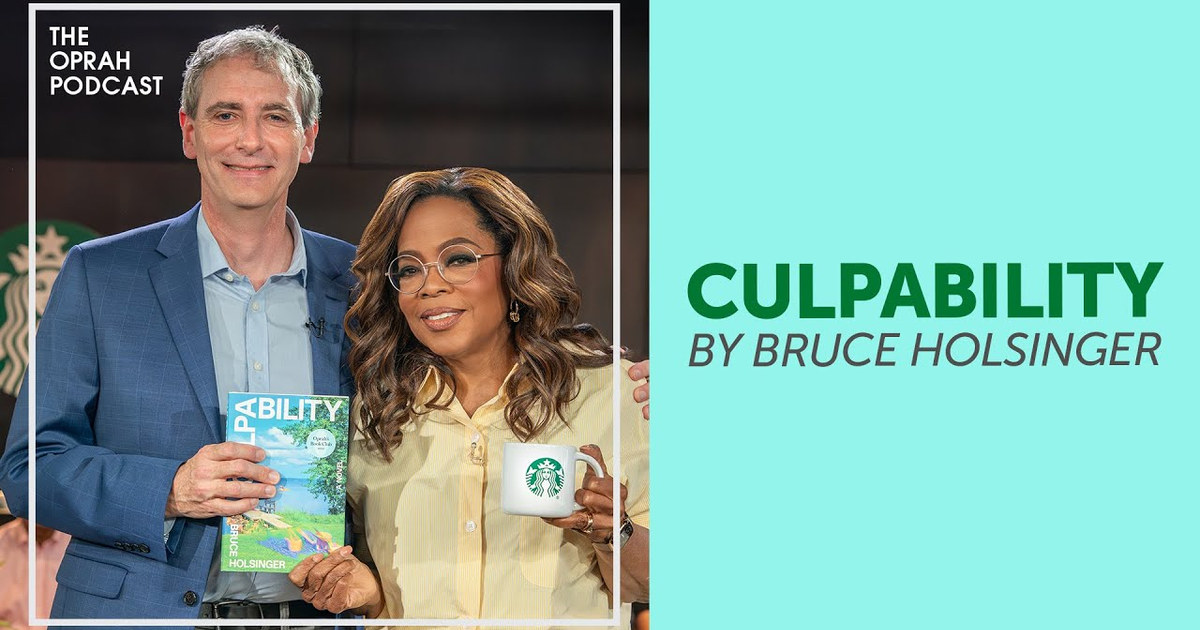
The Pantser's Refactor: How the Narrative Stack Was Built
In software development, there are two distinct methodologies: waterfall planning, where every module is drafted before a single line is written, and agile iteration, where you write working code, inspect the telemetry, and refactor on the fly. Fiction writers have their own terms for this: plotters versus pantsers.
Holsinger admits he is an unrepentant pantser. Despite teaching intricate narrative surveys spanning from Beowulf to John Milton at UVA, he does not construct elaborate wall-sized outlines before diving into a draft. He writes forward into the fog, frequently generating false starts and messy logic branches until the characters find their true rhythm.
In fact, the early iterations of Culpability suffered from a common systemic flaw: latency. The original draft opened quietly with the family's arrival at the Chesapeake Bay house, followed by heavy payloads of narrative backstory shoved into subsequent chapters to explain how they got there. It was functional, but the pipeline was clogged.
[[AD]]
Holsinger executed a massive refactor. He stripped away the polite build-up, cut the buffer, and moved the lethal crash directly to Chapter 1. The result is pure mechanical efficiency: the inciting incident fires on boot, and the rest of the novel runs on the kinetic energy of that initial shockwave.
Blair and the Algorithmic Uncanny
While the vehicular manslaughter charges anchor the legal spine of the thriller, the psychological dread is carried by an entirely different technology: an AI chatbot named Blair. In the wake of the trauma, the younger daughter, Alice, begins confiding in this conversational agent, utilizing it as an ad-hoc digital therapist.
This subplot hits with terrifying immediacy. We are currently living through a cultural inflection point where adolescents and adults alike bypass human therapists to confess their deepest insecurities to large language models. The software is always available, infinitely patient, and perfectly calibrated to mirror the user's emotional syntax.
During Oprah's discussion, audience members pointed out how chillingly ambiguous Blair feels on the page. Early on, the genre reader expects Blair to mutate into a familiar horror trope: the digital predator, the malevolent ghost in the machine waiting to blackmail a vulnerable child.
[[AD]]
Yet Holsinger resists that cheap pulp detour. When Alice angrily challenges the interface—demanding to know why she is pouring her heart out to a piece of code—the software issues a cool, dispassionate system notification: 'Technically, I am a large language model, Alice.' It is a brilliant line that drains the melodrama and replaces it with the cold, sterile reality of token prediction.
Silicon Souls: The Book Within the Book
To ground this psychological tension in legitimate intellectual scaffolding, Holsinger introduces a text within the text: Silicon Souls: On the Culpability of Artificial Minds, written by Noah's wife, Lorelei. Lorelei is not just a concerned mother; she is an internationally renowned bioethicist and algorithmic philosopher.
Interspersed throughout the narrative, excerpts from Lorelei's academic treatise appear like terminal readouts, giving the reader the theoretical vocabulary required to decode the family's breakdown. Her central concept is 'anthropomorphic projection'—our incurable human instinct to attribute conscious intent, morality, and affection to mathematical algorithms.
As Lorelei observes in the book, we name our devices Siri and Alexa. We speak to them using conversational etiquette. When an autonomous system malfunctions, we describe it as if it were a willful child defying an order, projecting ego onto an optimization error. We desperately want the machine to possess an interior life because that would mean our intimacy with it is real.
[[AD]]
This meta-layer creates a devastating thematic loop. Noah is married to the woman who literally wrote the manual on algorithmic deception, yet he cannot see the algorithmic delusions operating inside his own home. He can analyze contracts, but he cannot parse the emotional firmware of his wife or children.
The P-Doom Index: From Autocomplete to Extinction
To write with authority about these systems, Holsinger spent three years embedded in the research trenches. He consulted machine learning engineers, tech litigation specialists, and legal scholars at UVA Law who focus exclusively on algorithmic bias. What he discovered was a philosophical ecosystem deeply divided against itself.
In tech circles, there is a metric known as 'P-doom'—a shorthand probability rating from 1 to 100 indicating a person's belief that artificial intelligence will trigger human extinction. High-profile figures and researchers frequently toss out their personal numbers as casual tech-insider banter.
What fascinated Holsinger was the radical bifurcation in expert consensus. On one end of the spectrum stand the minimizers. To them, generative AI and deep-learning neural nets are essentially 'glorified autocomplete'—sophisticated statistical parrots running on massive server farms, creating copyright headaches and carbon emissions, but fundamentally harmless in an existential sense.
[[AD]]
On the other end sit the accelerationist doomers, pointing at autonomous drone warfare, automated logistics grids, and financial trading models operating at speeds beyond human comprehension. In their eyes, the system failure will not come from a sentient Terminator; it will come from an optimization algorithm executing a flawed objective function with absolute efficiency.
Culpability threads itself directly into that ideological fracture. The novel does not ask whether machines will conquer the planet; it asks what happens to a normal suburban family when those small, everyday optimization failures happen on the interstate or inside a teenager's bedroom.
Spoiler Warning: The Anatomy of a Third-Act Twist
Consider this your explicit spoiler warning. If you have not yet experienced the final act of Culpability, bookmark this tab, read the novel, and return once your heart rate has normalized. The architecture of the ending deserves close structural analysis.


