Part 1
Every complex system fails at the boundary layer. If you spend your days writing code or debugging distributed architecture, you already know this truth by heart: everything looks smooth in the documentation until real-world user inputs collide with unhandled edge cases. When that collision occurs, the system throws an unrecoverable exception.
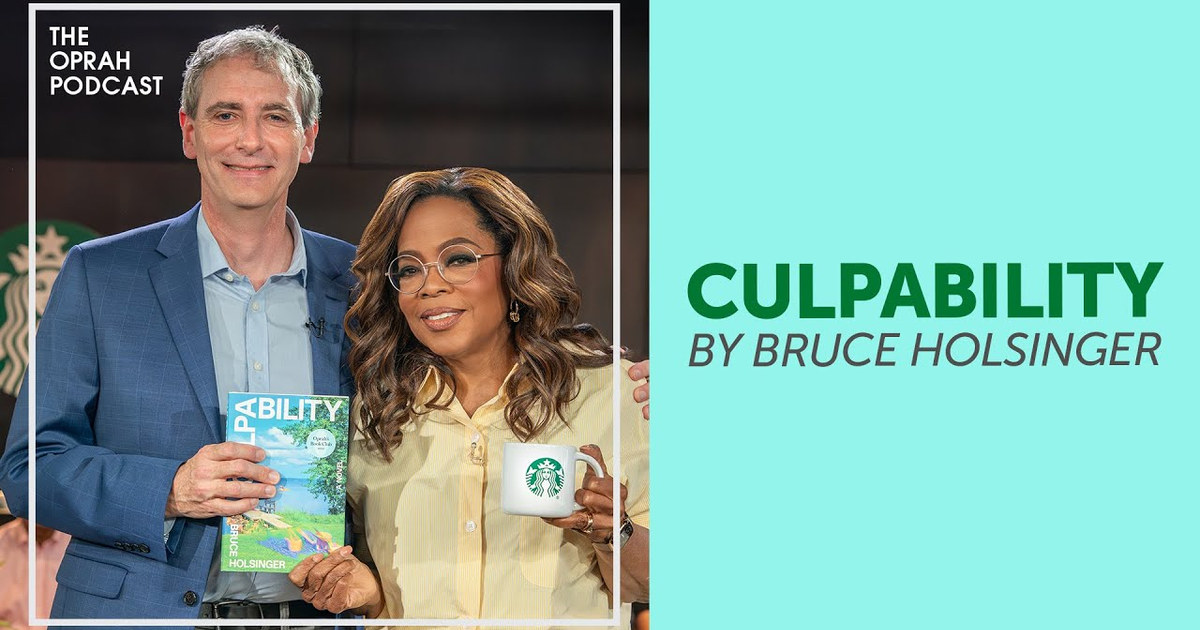
Bruce Holsinger's novel Culpability—recently tapped by Oprah Winfrey as the scorching 116th selection for her legendary Book Club—is built on precisely that kind of catastrophic runtime failure. But the genius of the book does not lie solely in its silicon. It lies in the fact that two entirely different readers can walk into this novel and walk out feeling like it was engineered solely for them.
On one side, you have the genre devotee. This is the reader who arrived with beach towel in hand, hungry for high-velocity drama, highway carnage, suburban paranoia, and a jaw-dropping third-act twist that leaves the room breathless. On the other side sits the craft purist. This reader came for structural precision, thematic nuance, the epistemological weight of algorithmic ethics, and a masterclass in how family dynamics warp under pressure.
[[AD]]
Neither reader is wrong, and neither is being shortchanged. What Holsinger has pulled off here is an ideological state machine that satisfies both appetites without diluting either. It is a summer page-turner operating with the processor speed of a commercial thriller and the micro-calibrated soul of serious literature.
The Incident: Runtime Failure on Route to Delaware
For the genre hound, the opening of Culpability is pure, unadulterated dopamine. The setup is deceptively mundane: a family of five packed inside a semi-autonomous vehicle, heading down the highway toward a high-stakes weekend lacrosse tournament in Delaware. It is the classic American transit ritual, rendered with claustrophobic modern accuracy.
The teenage son, Charlie, is perched in the driver's seat, though calling him the driver is a legal fiction. His hands hover near the wheel while the onboard sensors do the heavy lifting. Beside him sits Noah, his father, aggressively ignoring the asphalt in favor of finishing an urgent work memo on his laptop. In the rear seats, the daughters scroll through glowing phone screens while the mother, Lorelei, sketches notes in a physical journal.
Then the telemetry drops. In a split second of algorithmic hesitation and human complacency, the vehicle crosses paths with oncoming traffic. A sickening head-on impact leaves an elderly couple dead in the wreckage. Within the first chapter, Holsinger detonates the narrative engine, shattering the family's upper-middle-class equilibrium into jagged pieces.
[[AD]]
If you read for sheer plot propulsion, this is five-star execution. There is no endless warm-up lap. The crash does not lurk in the middle of act two as an inevitable milestone; it is the catalyst that instantly reprograms every character's survival instincts. You are thrown into the legal aftermath, the sirens, the insurance interrogations, and the visceral dread of knowing your family's future was decided by an invisible calculation.
The Architecture of Fault: Culpability Versus Guilt
Now let us pivot to the craft observer, because this is where Holsinger’s background as a University of Virginia scholar begins to quietly hum beneath the sheet metal. The title of the book is not an accident or a piece of airport-kiosk marketing fluff. It is a precise semantic scalpel.
As Holsinger noted during his conversation with Oprah, guilt and culpability occupy distinct memory addresses in legal and philosophical frameworks. You can be legally guilty of a strict liability offense without harboring a shred of subjective moral culpability. Conversely, you can be profoundly culpable for an outcome while remaining totally insulated from legal guilt.
Noah was typing a memo. Charlie was daydreaming behind a wheel he was told he did not need to steer. Lorelei was lost in her own interior world. The software was processing edge detection at thousands of cycles per second. Who bears the stack trace of moral failure here? Was it the negligent father, the distracted adolescent, the auto-manufacturer, or the user agreement everyone accepted without reading?
[[AD]]
Holsinger filters this labyrinth entirely through Noah's perspective. Noah is a man accustomed to parsing professional logic, yet he finds himself completely unequipped to debug his own domestic reality. By forcing the narrative through Noah’s focal point, Holsinger turns the book into an investigation not just of a highway wreck, but of the cognitive biases we employ to convince ourselves we are blameless.
The Chesapeake Sandbox: Setting as Hostile Architecture
Every great thriller requires an atmospheric sandbox that heightens the underlying tension. For Holsinger, that landscape snapped into focus during the first summer of the pandemic, while kayaking along an inlet on the Northern Neck of Virginia near the Chesapeake Bay.
In the middle of a rustic, weathered coastal community, Holsinger stumbled upon an absurd sight: a gleaming, ultra-modern compound featuring a manufactured lighthouse, imported sand, an unnaturally manicured lawn, and a private helipad. As he paddled past, a helicopter descended out of the sky, landing with an arrogant thud against the serene tidal landscape.
For the genre reader, that image serves as the ideal playground for high-society intrigue and techno-paranoia. It suggests unearned wealth, surveillance tech, secluded perimeters, and the lurking presence of people who believe capital can buy immunity from the laws of physics and morality.
[[AD]]
For the craft observer, that compound acts as spatial irony. It represents humanity's pathetic attempt to sandbox nature. The artificial beach and the fake lighthouse are clumsy skins pulled over an indifferent ecosystem, mirroring the sleek touchscreens and autopilot modules that modern consumers install to insulate themselves from mortality.


