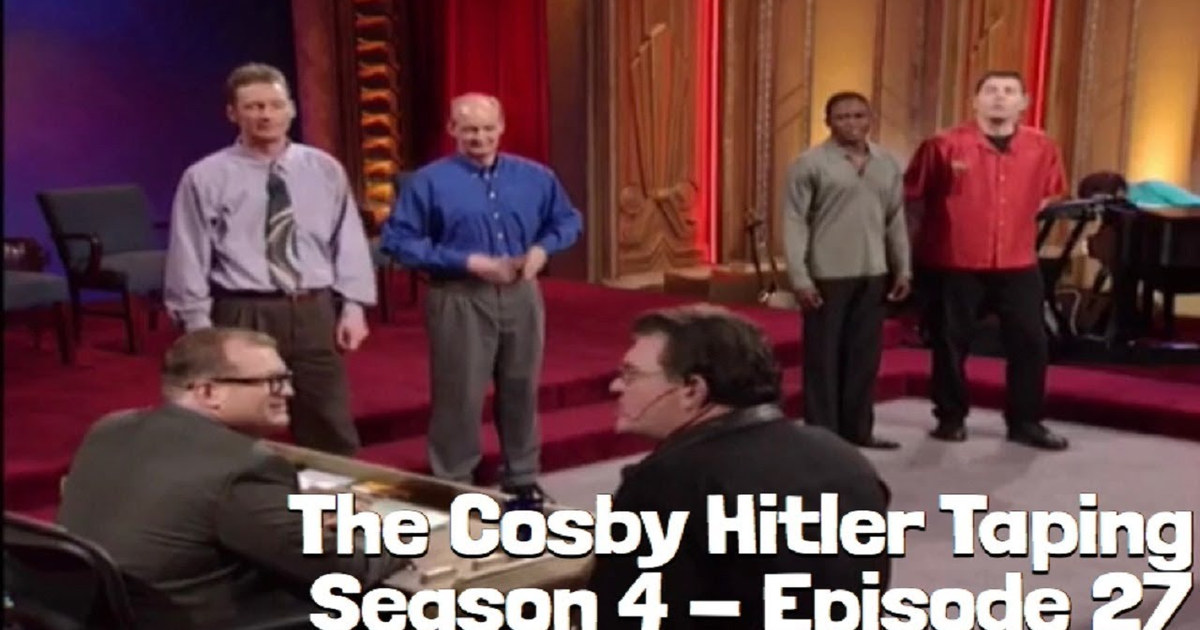
Every time you sit down to watch Whose Line Is It Anyway?, there are really two distinct observers running parallel threads in the room. The first is the genre enthusiast. This viewer boots up the broadcast looking for chaotic television tropes, unhinged network parody, and the sheer dopamine rush of four performers colliding headfirst into unscripted silliness.
Then you have the craft purist. This viewer is tracking low-latency lexical retrieval, sub-millisecond physical blocking, and the strict architectural constraints of long-form comedic games. They are not merely laughing at the jokes; they are watching a four-core processor execute branch predictions under hostile operating conditions without throwing a fatal exception.
The magic of this specific broadcast lies entirely in how it serves both spectators at the exact same clock speed. When an audience member throws an unbroadcastable curveball from the dark, the performers do not crash. Instead, they transform a sanitization filter into an unstoppable runtime loop.
[[AD]]
The Genre Layer: Deconstructing the 1970s Sitcom Engine
For the genre hound, the opening game of Title Sequence is a masterclass in hyper-specific television satire. The prompt asks for an improbable roommate matchup, and after a moment of boundary-testing audience input, Drew Carey locks down the pitch: Bill Cosby and an insurance salesman. Instantly, the machinery shifts into pitch-perfect UPN fall-lineup parody.
Brad Sherwood and Wayne Brady step up to the vocal microphones with house musicians Laura Hall and Linda Taylor laying down the analog groove. The genre tropes arrive fast and thick. You get the syndication cliches, the Saturday 10:00 PM death-slot framing, and the exaggerated vocal cadence of a manufactured sitcom theme song.
Colin Mochrie and Ryan Stiles physicalize the genre tropes in real time behind them. While the lyrics weave annuities with signature Jell-O punchlines and Fat Albert vocal hooks, Mochrie and Stiles pantomime the synthetic, overly broad staging of classic multi-camera sitcoms. If you came strictly for the pop-culture parody, the bit operates at peak network satire.
[[AD]]
The Craft Layer: Real-Time Input Sanitization and Flow Control
Look beneath the surface gag, however, and the systems engineer in you will marvel at Drew Carey's instant input handling. Improv requires accepting suggestions, but live network television imposes strict compliance filters. When an audience member shouts out Adolf Hitler alongside Bill Cosby, the host encounters an immediate edge case: a suggestion too toxic for prime-time broadcast standards.
A lesser emcee halts the momentum to scold the audience or flush the buffer entirely. Carey does something far more elegant: he dryly deflects ('Not that Hitler. Rudolph Hitler.'), establishes a laugh on the rejection itself, and then queries a completely different sector of the room for an occupation. He swaps the offending parameter for 'insurance salesman' without losing clock cycles.
Behind Carey, Laura Hall and Linda Taylor provide dynamic audio scaffolding. They do not merely play static chords; they modulate their cadence based on Brad and Wayne's vocal meter. The vocalists rhymed 'annuities' with 'can it be' without buffering. That is not luck; that is high-bandwidth verbal caching.
[[AD]]
Genre Chaos: Hijacking Scenes From a Hat
Once the format pivots to Scenes From a Hat, the genre enthusiast gets treated to high-velocity character mashups. The game is built for rapid-fire sketches where actors burn through high concepts in ten seconds or less. The prompt asking how the cast of Baywatch would react to an actual emergency delivers instant beach-rescue parody.
Moments later, the prompt pivots to 'If Tarzan and Tonto were roommates.' This is bread-and-butter late-night sketch fuel: clashing golden-age pulp archetypes in a mundane domestic setting. Tarzan handles the domestic logistics, Tonto deals with the horses, and the culture clash executes with snappy, broad comedic beats.
For anyone tracking the surface entertainment, it is pure variety-show heaven. The pacing is relentless, the character physical comedy is razor sharp, and the performers bounce off each other with the natural ease of a veteran touring troupe.
[[AD]]
Craft Engineering: The Banned Variable as a Global State
Now watch what the craft technician notices: the rejected audience input never actually left the stack. In programming terms, Carey tried to discard an illegal variable, but Colin Mochrie and Ryan Stiles secretly declared it as a global constant and kept passing it back into the scope of entirely unrelated scenes.
During the Baywatch setup, Colin strides out to save a victim only to break reality entirely: 'You can do that, but whatever you do, don't make fun of Hitler.' In the Tarzan sketch, Ryan doubles down on the callback: 'Will you go upstairs and tell Hitler to be quiet?' When Carey asks for unlikely souvenir t-shirts, Colin steps up, looks directly into the lens, and drops two words: 'Cosby and Hitler.'
This is callback architecture operating at maximum efficiency. By continually invoking the forbidden suggestion from game one, Mochrie and Stiles exploit dramatic irony. They turn the broadcast standards board itself into an unwitting scene partner, demonstrating how improv turns structural friction into narrative propulsion.
[[VIDEO]]
Compilation and Execution: The Director Hoedown
Everything converges in the climactic game of Hoedown. The genre viewer anticipates the folksy cadence, the rhythmic claps, and the predictable rhyming structure that usually wraps up an episode of Whose Line. Drew takes the suggestion of a Hollywood director, and the stage is set for standard industry roasting.
Ryan Stiles approaches the microphone for the final stanza and pulls off the ultimate compile-time trick. He sets up the standard complaint about screaming directors on studio sets: 'Our director, he really is the boss / For yelling and screaming, he's never at a loss / He's the meanest guy that you will ever see...'
Then comes the payload: 'He should sprout a mustache and move to Germany.' With that single line, Stiles connects the entire episode's running joke back to the very first suppressed prompt of the taping. Both the casual genre viewer and the technical craft purist erupt simultaneously. It is an airtight, perfectly resolved loop.
[[AD]]
When Architecture Meets Pure Entertainment
Whose Line Is It Anyway? endures because it refuses to make viewers choose between mindless joy and mechanical perfection. If you came to watch four hilarious guys act like complete maniacs on national television, the episode delivers on every front.
And if you watch television like a coder auditing an elegant piece of firmware, you walk away stunned by the low-level precision. When live improv is engineered this cleanly, the audience never sees the machinery—they just feel the current.


