Part 2
Gobel admits he spent his time backstage drinking just to survive the anticipation of following them. 'I started drinking before he got the laugh,' Gobel confesses with devastating innocence. 'I figure you ought to get a good early start.' He surveys the sleek dinner jackets surrounding him, notes Martin’s casual perfection and Hope’s tailored sheen, and unleashes the immortal line about the brown shoes. It brings down the house because it isn't just funny—it is the definitive psychological truth of the moment.
Carson leans back in his chair, helpless with laughter. Gobel doesn't speed up; he leans into his deadpan Midwestern rhythm, casually turning his World War II service into an absurdist masterpiece. When Carson asks him about being a wartime pilot, Gobel doesn't boast—he admits he spent the entire global conflict stationed in Altus and Frederick, Oklahoma, flying twin-engine trainers without guns.
'I thought the whole war in Oklahoma,' Gobel declares with utter seriousness, looking into the camera. 'And if you think back—and I’m not mad at anybody—just remember, there was not one Japanese aircraft got past Tulsa.' It is an immaculate piece of comedy writing disguised as casual bar talk, constructed with mathematical perfection and delivered with the flat, unblinking sincerity of an insurance clerk.
[[AD]]
The Anatomy of Carson's Surrender
The brilliance of this broadcast relies on Johnny Carson’s extraordinary willingness to become the collateral damage of his own show. Lesser hosts fight for the steering wheel, talking over their guests, cutting off riffs, or signaling the orchestra to force a transition. Carson does the opposite: he visibly abdicates, holding up his hands, rubbing his temples, and asking the crew aloud, 'What time did I lose control of the show?'
By playing the bewildered victim of an unscripted invasion, Carson gives the performers the greatest gift an emcee can offer—a wall to bounce their absurdity off of. When Carol Wayne arrives toward the finale, speaking in that breathless, porcelain-doll cadence that made her Art Fern sketches famous, Martin and Gobel look at her like an apparition from another dimension. Hope cracks that he thought a cartoon had started, while Carson holds his forehead, muttering that his career is sliding straight down the drain.
Every beat that follows is pure kinetic joy. There are no safe, pre-approved talking points or publicist-screened anecdotes. The panel operates like an old jazz combo where each player takes a solo, trades fours, and occasionally steps on the baseline just to see if the drummer can keep the beat going without dropping his sticks.
[[VIDEO]]
The Lost Currency of Spontaneous Television
Modern talk shows are engineering marvels of focus-grouped safety. Celebrities arrive with rehearsed anecdotes, pre-interviewed by associate producers, designed to be clipped into ninety-second vertical videos for social algorithms. The chaos is curated; the mistakes are staged; the unpredictability is manufactured.
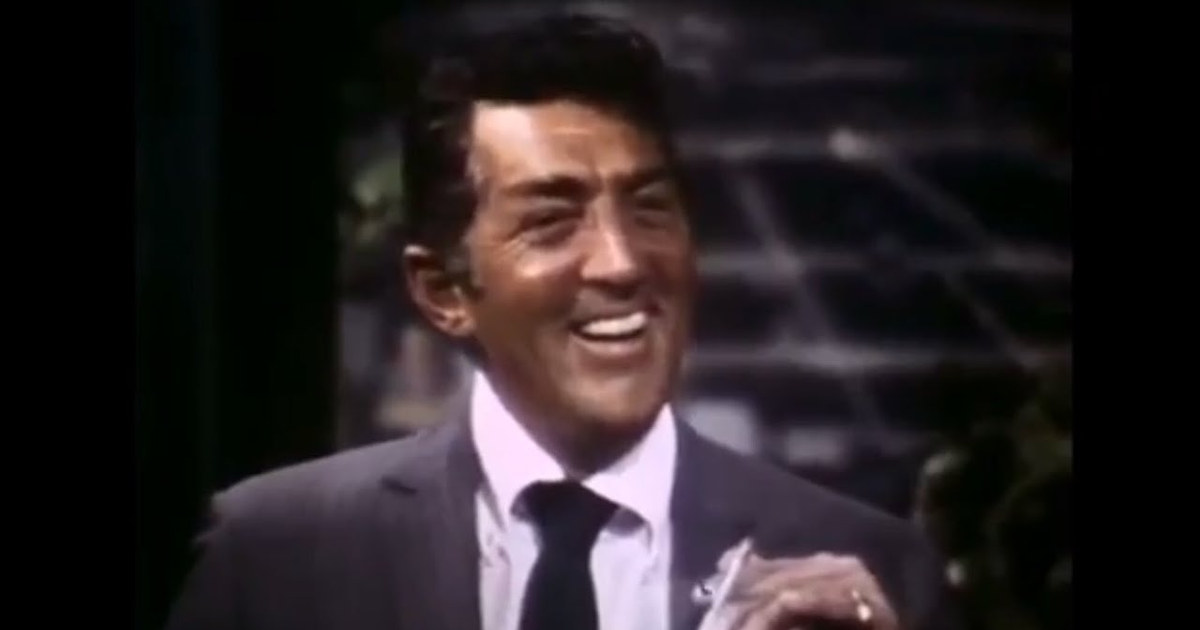
This broadcast from Burbank stands as the ultimate counter-argument. What makes Dean Martin lighting an unscripted match or George Gobel defending Oklahoma airspace so electrifying is the sheer danger of the unchoreographed moment. None of these men were reading copy. They were relying entirely on their instincts, their scars from decades in front of live audiences, and their mutual respect for the laugh above all else.
When you look back at that small, unassuming man perched on the edge of Johnny’s couch, you realize Gobel wasn't really a pair of brown shoes at all. He was the secret architect of the entire miracle. In a room dominated by the smooth bravado of Dean Martin and the relentless precision of Bob Hope, it was the quiet guy from Chicago who delivered the lightning bolt that sealed the night into television history.
That is the enduring thrill of classic television at its peak: you don't remember the set dressing, the promotional film clips, or the commercial interruptions. You remember four men sitting under hot quartz lamps, completely abandoning their scripts, daring each other to be funnier than the sentence that came before.


