Part 1
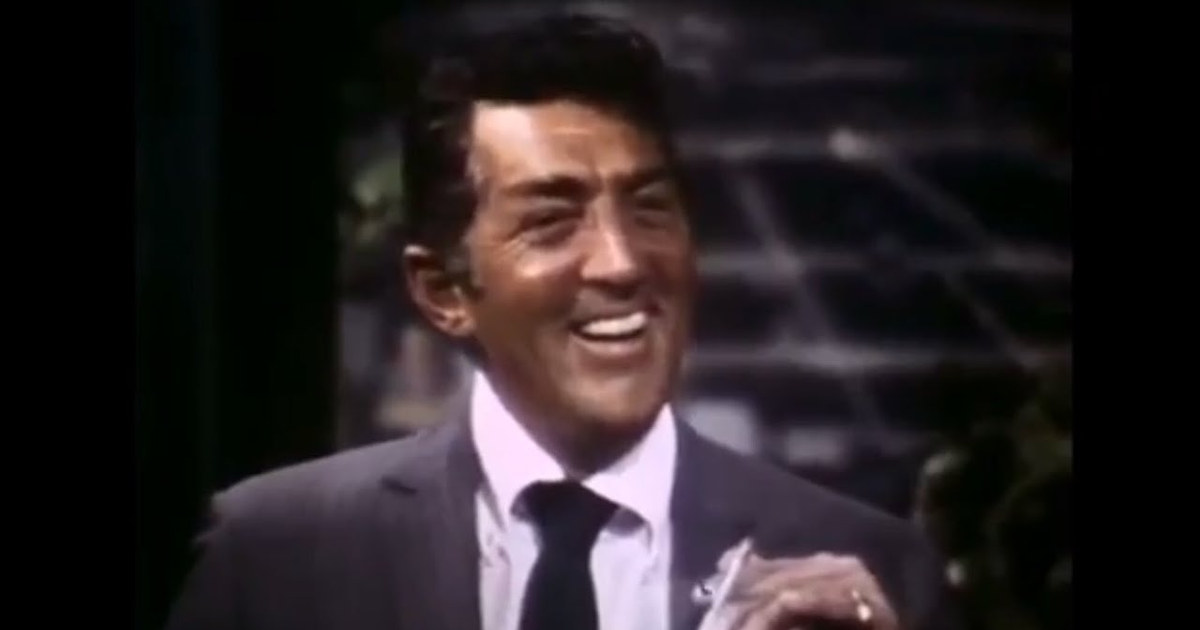
George Gobel sits on the edge of the crushed velour cushion, his hands resting on his knees like an obedient schoolboy who has wandered by mistake into an embassy ballroom, blinking under the merciless glare of the NBC studio lights. To his right, Bob Hope perches with the razor-sharp poise of a vaudeville sovereign, jaw jutting, while Dean Martin slumps back in his immaculate dark suit, swirling an imaginary tumbler, flicking invisible ashes, and regarding the entire universe as a mild, faintly amusing inconvenience. Gobel looks down at his own small, unassuming frame, turns his gaze toward Carson's immaculate desk, and quietly drops the sentence that would outlive them all: 'Did you ever get the feeling that the world was a tuxedo, and you were a pair of brown shoes?'
That quiet self-indictment was delivered inside Studio One in Burbank during one of The Tonight Show's rare West Coast excursions, where Johnny Carson found himself completely stripped of his customary orchestral control. The desk was supposed to belong to the host, the cue cards were supposed to dictate the rhythm, and the commercial breaks were supposed to restore law and order. Instead, the broadcast became an unprecedented pile-up of mid-century entertainment royalty, where every guest who walked through the curtain simply refused to leave, turning television’s most disciplined hour into a living-room free-for-all.
Watching this broadcast today feels less like reviewing a talk show segment and more like excavating the lost ruin of an improvisational empire. It captures a vanishing ecosystem where giants who conquered radio, film, and variety stages collided in real time, testing each other’s timing without a net, without rehearsal, and without the slightest shred of corporate reverence.
[[AD]]
The Opening Volley: Bob Hope and the Myth of Jack Benny
The episode begins with the rhythmic punch of Bob Hope holding court beside Johnny, carrying the scent of Friars Club smoke and seventy-fifth birthday galas. Hope had just wrapped an exhausting marathon evening emceeing a tribute to Jack Benny, an event that ran past one in the morning, yet he moves on camera with the relentless energy of a man wired directly into the studio generator. He talks about Benny not as a relic, but as an ageless institution whose comedic legs outshine every starlet in Palm Springs.
Hope recounts Phil Harris’s legendary assessment of Benny with absolute delight: 'You put a dress on him, and you could take him any place in town.' The banter operates on sheer shorthand, a dialect refined across four decades of military tours, radio transmitters, and studio lots. Hope drops an aside about the disastrous, instantly canceled sketch show 'Turn-On'—the infamous variety experiment pulled off the air mid-broadcast in some markets—treating the industry's greatest disaster as just another punchline to toss across Carson’s blotter.
Carson, wearing a neck brace that he attempts to downplay with dry self-deprecation, plays the indispensable straight man. He knows that Hope is an avalanche that cannot be steered, only ridden. Yet just as Hope finishes laying out the terms of his monologue, the studio's gravitational pull shifts entirely, fractured by the entrance of a man who makes high-speed wit look like desperate labor.
[[AD]]
Enter Dino: The Art of Stumbling with Style
Dean Martin wanders into the frame not like a featured guest arriving on cue, but like a weary hotel guest who took a wrong turn searching for the ice machine. He greets Carson as 'old John,' immediately squinting at the host's neck brace and demanding to know if Carson has to wear that contraption every night. While Hope operates at 120 beats per minute, Martin drags the tempo down to a smoky, laconic 40, leaning across Carson’s desk to inspect the host's paperwork and mocking the very premise of an interview.
Martin treats the television studio like an extension of his dressing room down the hall, casually acknowledging his own signature routine of liquid indulgence. 'People always kid, they say it’s a problem,' Martin murmurs, flashing that languid grin that disarmed censors for decades. He casually tosses out a bawdy rhyming limerick about searching for the perfect girl—'deaf and dumb and oversexed and owns a liquor store'—and Johnny can only bury his face in his hands while the studio audience erupts in gasps and roars.
Nothing about Dean’s appearance suggests preparation. He plugs his upcoming flight to Minneapolis to shoot the disaster blockbuster 'Airport' with Burt Lancaster, only to claim that Lancaster called him demanding a script rehearsal. Martin’s reply to one of Hollywood’s most demanding method actors was characteristically effortless: 'No, you just learn your lines, I’ll learn mine.' That was Dino’s philosophy in eight words—effort is an aesthetic failure; survival depends on keeping your crease pressed and your drink full.
When Hope ribs him about playing golf in Las Vegas during the dead heat of July at 114 degrees, Martin nods pleasantly, confirming that he is the only athlete on Earth who regularly uses a champagne cork for a tee. He wasn't playing a character on that couch; he had distilled his public persona into such pure vapor that reality and performance were entirely indistinguishable.
[[AD]]
The Tuxedo and the Brown Shoes: George Gobel Steals the Crown
Just when Carson thinks the chaos has reached peak density, the curtain parts again, and George Gobel enters the arena. If Hope represents Hollywood royalty and Martin represents Rat Pack cool, Gobel is the cosmic anomaly: a modest, midwestern cherub carrying the droll weariness of a man who knows the cosmos is rigged against him. He takes the fourth seat on the panel, wedged beside these two titans of glamour, and instantly senses his tragic, hilarious irrelevance.


