Part 1
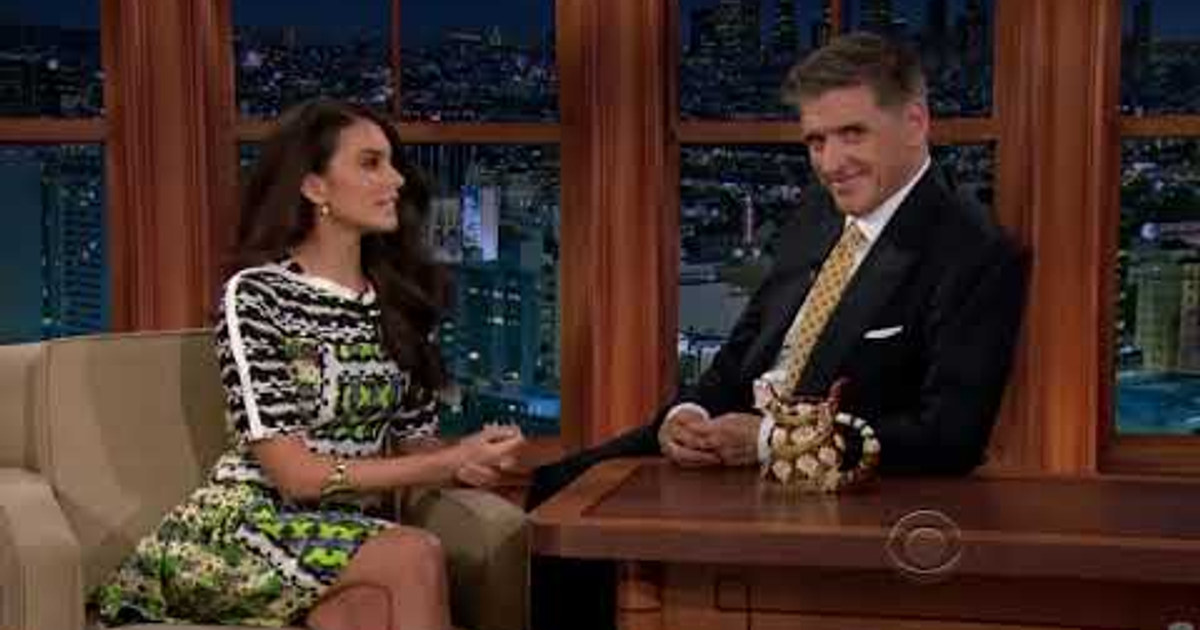
The memory begins with an image that feels less like a talk show segment and more like a discarded line from a Gabriel Garcia Marquez short story: a young woman wakes up alone in the quiet expanse of a bedroom, blinking through the morning light, only to discover that her sheets are carpeted in pale, jagged pistachio shells. There is no burglar, no prankster standing in the doorway with an empty bowl. There is only the bitter, roasted dust on her fingers and the slow, horrifying realization that in the deep, unmonitored chambers of sleep, she had meticulously cracked open hundreds of tough wooden hulls with her bare hands and teeth, devouring the meat and casting the debris across her bed like a sleepwalking bird of prey. It is an absurd, vulnerable, completely unvarnished confession, delivered not in whispered confidence to a therapist, but under the blinding incandescent wash of Studio 56 at CBS Television City, spoken directly across a scratched desk into the grinning face of Craig Ferguson.
That confession, tossed out casually between discussions of natural sedatives and Miami asphalt, captures the exact frequency of Genesis Rodriguez’s appearances on The Late Late Show. In an era when late-night television had ossified into a hyper-rehearsed theater of reciprocal brand promotion—where actors arrived armed with focus-grouped anecdotes designed to be sliced into clean thirty-second digital morsels—Ferguson’s studio operated as a sanctuary of pure, manic improvisation. When Rodriguez sat in the guest chair, dressed to conquer the room, the conventional Hollywood publicity junket instantly dissolved into something anarchic, literary, and entirely alive.
To watch Rodriguez across her multiple visits to the program is to witness an actress weaponizing complete candor against the most unpredictable interviewer in American broadcasting history. She does not arrive to defend a thesis or mechanically recite the logline of her latest studio picture; she arrives to duel. From the instant she glides onto the stage, announcing with effortless swagger that she chose her outfit specifically to seduce him, she flips the power dynamic of the late-night encounter entirely on its head, leaving Ferguson scrambling to match her tempo while the studio band and the mechanized skeleton beside him shudder in collective amusement.
[[AD]]
The Architecture of Unrehearsed Chaos
The brilliance of Craig Ferguson’s format lay in what he systematically stripped away. By tearing up the blue index cards before the camera even zoomed in on his face, Ferguson removed the net that typically protects a celebrity from saying something real. Most guests freeze when the safety rail disappears; they retreat into polite, rehearsed platitudes, terrified of saying something that might disrupt the studio marketing calendar. Rodriguez did the exact opposite: she leaned over the edge and dared him to jump.
Notice how the conversational rhythms work between them. When Ferguson feigns shock at her flirtatious opening salvo—protesting that one cannot simply demand charm without buying dinner first—Rodriguez does not retreat into self-effacing giggles. She holds her gaze, lowers her vocal register, and lets the silence sit just long enough to let the audience know she is steering the vehicle. In her hands, the interview becomes a miniature screwball comedy, reminiscent of Howard Hawks’ best territory, where dialogue moves faster than thought and status flips with every third beat.
Behind them, the studio feels distinctly low-rent and proud of it: the fake fireplace, the painted backdrop of a Parisian skyline that looks like it cost fourteen dollars at a theatrical surplus store, and Geoff Peterson, the mohawked animatronic skeleton operated by Josh Robert Thompson, whose robotic interjections served as the show’s surrealist Greek chorus. Into this cardboard dreamscape steps Rodriguez, bringing all the luminous poise of classic telenovela royalty combined with the razor-sharp comic timing of an improviser who grew up on South Florida pavement.
[[AD]]
Miami Concrete, Inked Skin, and the Hand of God
The geography of Rodriguez’s storytelling is crucial to understanding her magnetic screen presence. She is the daughter of Venezuelan music icon Jose Luis Rodriguez, 'El Puma,' raised in the neon humidity of Miami—a city Ferguson repeatedly characterizes as a sun-drenched fever swamp of backward rollerblading, beachside vanity, and relentless kinetic energy. When the conversation veers into their shared history of Miami body art, the interview transforms from banter into a physical catalog of youthful errors and endurance tests.
Ferguson boasts of his own ink from local legends, but Rodriguez counters with the anatomy of pain: a tattoo etched across the delicate, nerve-rich canvas of her foot. She describes getting the piece done at nineteen—fueled by illicit tequila shots consumed well before the legal threshold—recalling the absolute agony of the needle striking paper-thin skin over bone. There is a novelist’s eye for comedy in her memory of that parlor chair: the instant realization that the pain is unbearable, paired immediately with the devastating aesthetic horror that if she asks the artist to stop midway through, she will be doomed to walk the earth in a perpetual 'sock of shame' to hide the unfinished ruin.
The tattoo itself is the 'Hand of God,' placed upon the foot to protect her steps as she navigates the world. It is an arresting piece of irony given the chaotic paths her stories trace. Ferguson pounces on the religious imagery with his trademark Scottish skepticism, pivoting from theology to organized crime tropes about cement shoes, yet Rodriguez never lets the sacred entirely eclipse the profane. She treats her body’s history as an open ledger of impulsive experiments, where spiritual devotion and teenage bravado collide under the haze of agave liquor.


