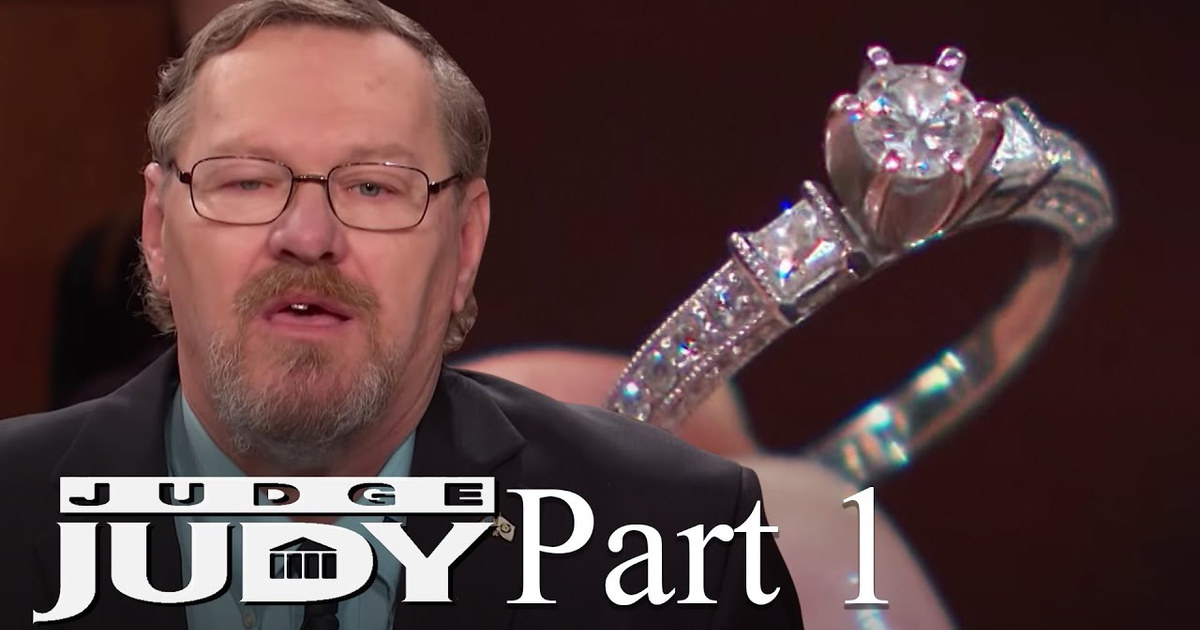
The most compelling drama isn't found on a soundstage in Burbank; it’s found in the rhythmic, high-contrast environment of a courtroom where the truth is lit by the harsh glare of overhead fluorescents. As someone who has spent years behind a camera, I’ve learned that the most effective way to tell a story isn't through a sweeping crane shot, but through the tight, claustrophobic framing of a character under pressure. Judge Judy Sheindlin is the undisputed master of this technique, turning a simple dispute over an engagement ring into a masterclass in visual interrogation.
When we look at the way Judge Judy dissects a case, we aren't just watching a legal proceeding; we are watching a director at work. She understands that the 'reveal'—the moment a lie crumbles—is entirely dependent on the proximity of the lens to the subject's face. By forcing the participants to present physical evidence, she creates a visual anchor that dictates the entire narrative flow of the episode.
In the case of the disputed engagement ring, the drama hinges on a piece of jewelry that serves as the 'MacGuffin' of the entire story. The plaintiff claims the ring is a symbol of a broken promise, but the defendant tries to hide behind a credit card receipt. It’s a classic setup: the defendant thinks he’s controlling the frame by presenting a document, but he fails to realize that the Judge is looking at the 'composition' of his argument, not just the paper.
[[AD]]
The Anatomy of a Confrontation
The scene begins with a classic push-pull dynamic. The defendant attempts to obfuscate the truth by burying the judge in paperwork. From a cinematographer’s perspective, this is a classic 'clutter' technique—trying to overwhelm the viewer with too much visual information to hide the lack of a core truth. He waves receipts, he points to folders, and he tries to dictate the pace of the scene.
Judge Judy, however, cuts through the noise with the precision of a prime lens. She doesn't care about the peripheral receipts; she is focused entirely on the center stone. When she asks, 'How did the stone get in that diamond?' she is effectively zooming in on the only detail that matters. She ignores the 'baloney'—the kitchen utensils, the car payments, the noise—and forces the subject to confront the specific history of the object in question.
The tension here is palpable because the stakes are shifted from money to memory. The diamond, we learn, belonged to the plaintiff’s deceased ex-husband. By re-contextualizing the ring as a vessel for a past life rather than a commodity, the Judge strips the defendant of his leverage. It’s a brilliant pivot that changes the entire 'lighting' of the argument.
[[AD]]
The Power of the 'Hard Cut'
One of the most fascinating aspects of this exchange is the Judge's refusal to let the defendant finish his deflection. In film, we call this a 'hard cut.' She interrupts him exactly when he tries to pivot to his own financial contribution. By doing this, she maintains the 'master shot' of the truth, preventing the defendant from editing the story to suit his narrative.
She identifies the discrepancy between the mounting and the stone with the eye of a jeweler. She knows that a $999 receipt for a mounting doesn't account for the value of a center stone. Her ability to read the 'metadata' of the situation—the quality of the diamond, the history of the setting—is what makes her the ultimate authority in the room. She isn't just listening; she’s auditing the visual evidence.
When she finally declares, 'I absolutely believe her,' it’s the climax of the scene. The defendant has been 'de-focused'—his argument is blurry, his facts are out of alignment, and the Judge has successfully framed him as the antagonist of his own story. It’s a satisfying conclusion because it feels earned through the sheer force of her investigative gaze.
[[AD]]
Beyond the Ring: The Search for Substance
As the segment winds down, the Judge pivots to the counterclaim. The defendant tries to pivot back to the 'clutter'—the speakers, the household items—but the Judge shuts it down with a single, sharp command. She is only interested in what matters. She knows that to keep the audience’s attention, you have to cut the filler.
This is a lesson for anyone in the creative arts: if you have a story to tell, don't waste time on the 'tupperware' of your script. Focus on the 'diamond'—the emotional core that drives the characters. If you can identify that, you don't need to worry about the rest of the noise.
[[VIDEO]]
What to Watch For
Next time you watch a courtroom drama, pay attention to the framing. Look for who controls the 'space' in the room. Is the judge letting the witness ramble, or are they tightening the shot? The best storytellers are the ones who know exactly when to cut, when to zoom, and when to let the silence do the heavy lifting. Stay tuned for our next breakdown, where we analyze the 'lighting' of high-stakes depositions.


