Part 1
The sound cuts through the studio chatter with a crisp, manic rhythm: tap-tap-tap-a-tap, sharp as enamel on glass, rhythmic as a locomotive gearing up in the Smokies. Dolly Parton sits on the 20th Century Fox lot under heavy California key lights, flicking her acrylic fingernails against one another. To anyone else wandering past the stage, it is just restless kinetic energy—a singer fidgeting between takes. But in Dolly’s ear, the plastic clatter doesn’t sound like boredom. It sounds like a typewriter carriage hurtling toward the right-hand margin. It sounds like paper rattling through platens. It sounds like an army of underpaid women marching straight into the modern world.
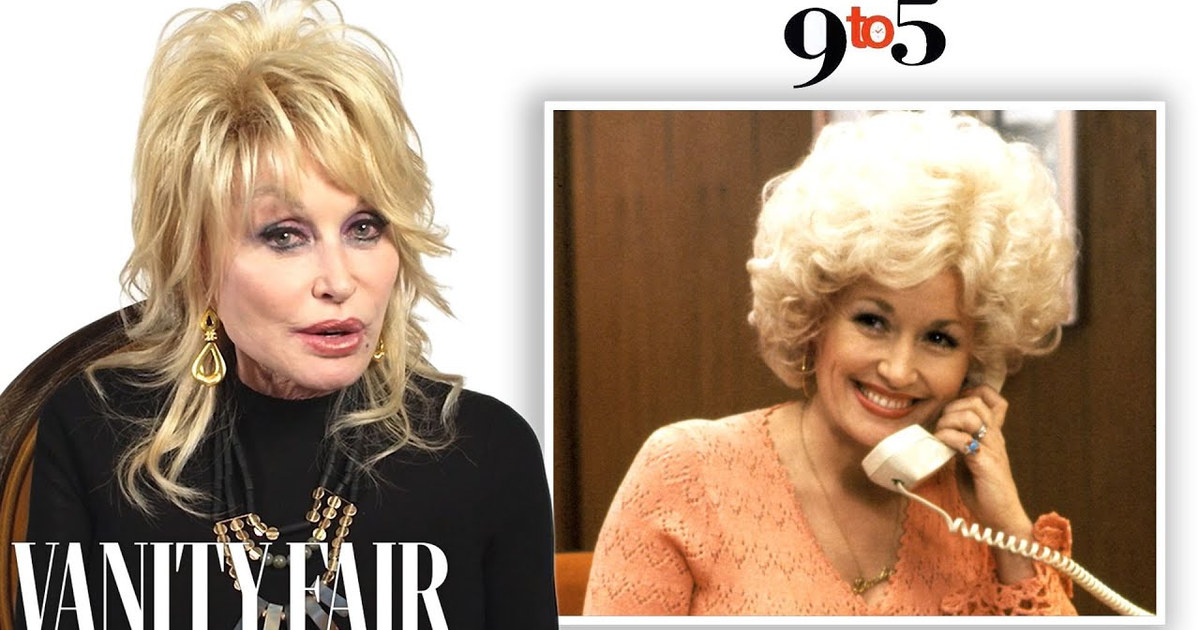
The year is 1980, and Dolly is stepping onto a Hollywood movie set for the very first time with Jane Fonda and Lily Tomlin for 9 to 5. She didn’t arrive in Los Angeles just to say lines written by screenwriters or play the decorative bombshell. Her agreement was clear from day one: if she signed on to star, she owned the right to write and record the theme song. Sitting between camera setups, watching script supervisors rush past with clipboards, she transformed that tiny, improvised fingernail percussion into the heartbeat of an anthem that would blow the roof off American pop culture.
That microscopic burst of inspiration on a soundstage reveals everything you need to know about the genius of Dolly Parton. She does not merely participate in art; she absorbs her immediate environment like sunlight, turns raw friction into gold, and walks away holding the master tapes. To understand how that nail-clicking trick conquered the box office, you have to look back at the trail of fire she blazed long before Hollywood ever dialed her number.
[[AD]]
The Nashville Crucible: Dumb Blonde and the Monument Era
Before there were soundstages and private jets, there was Fred Foster’s office at Monument Records. When young Dolly cut her first full-length album, Hello, Dolly, she was stepping into an industry that saw rural women primarily as ornaments. But Dolly possessed an unmistakable songwriting sharpness that caught Foster’s eye immediately. She was young, fiercely country, and walking into rooms filled with legendary session pickers who had seen it all.
She remembers the gut-twisting nerves of those early tracking dates—not because she doubted her voice, but because she wanted the seasoned players behind the glass to respect her pen. She wrote her own material, pitched her vision, and refused to play small. When she cut 'Dumb Blonde,' landing her first certified top ten record, she delivered a manifesto disguised as a danceable honky-tonk number: just because she was blonde didn't mean she was anybody's fool.
That track blew through country radio like wildfire, catching the ear of Porter Wagoner, the undisputed king of syndicated country television. Wagoner’s longtime female co-star Norma Jean was leaving the show to marry and move to Oklahoma, leaving a massive vacancy in the most watched country program in the country. Dolly was already causing a stir around Music City as the bold new girl in town. When Porter summoned her to his office, Dolly walked in assuming he wanted to buy a few of her songs. Instead, he made her an offer that would reshape American television.
[[AD]]
Fire and Ice: The Porter Wagoner Years
When Dolly stepped onto Porter Wagoner's stage, the dynamic was electric. Wagoner was a seasoned showman in rhinestones; Dolly was a powerhouse of pure vocal energy and songwriting craft. Their duets clicked instantly, turning their weekly segment into mandatory viewing for millions of households across the nation. But beneath the televised smiles, a ferocious creative collision was brewing every single week.
They were two titanic personalities locked in creative combat—what Dolly describes as pure fire and ice, echoing the volatility of Sonny and Cher. Dolly had promised Porter she would stay for five years, making it plain from the start that she never intended to remain anyone’s sidekick. She was not a decorative 'girl singer' meant to harmonize on the chorus and fade into the background. She was a fully realized solo artist waiting for takeoff.
That five-year promise stretched into seven turbulent, brilliant years. The friction between them was undeniable, but so was the mutual artistic elevation. In the crucible of tour buses and grueling television tapings, Dolly learned how to produce, how to command a stage, and how to hold her ground against industry heavyweights who weren't used to women saying no.
[[AD]]
The Dry Cleaning Tag: Writing 'Coat of Many Colors'
Great songs don’t wait for polished desks; they demand to be captured in transit. One afternoon on the tour bus, Porter climbed aboard carrying fresh stage costumes from the local cleaners. A cardboard dry-cleaning tag fluttered from the hanger wire. Dolly stared at that scrap of paper, and a flood of childhood memory broke through a wall she hadn’t realized she was guarding.
She grabbed a pen and began scribbling lines directly onto that cleaning tag, immortalizing the little coat her mother stitched from rags and the schoolyard cruelty that followed it. It was a private wound transformed into universal poetry. When she showed it to Porter, he knew immediately they had something extraordinary. The song became a runaway classic, an album-of-the-year contender, and eventually the foundation for books, holiday specials, and television films.
The recognition that followed—including major CMA nominations—validated what Dolly had always known in her bones. The songs born from genuine struggle, written with dirt-under-the-fingernails honesty, possessed an undeniable staying power that outlasted any temporary industry trend.


