Part 1
The Two Audiences: Genre Fans and Craft Enthusiasts
There are two kinds of people who watch Cheaters. The first kind leans forward when the voiceover growls, "From cheater surveillance cameras, you are about to view actual true stories filmed live documenting the pain of a spouse or lover caused by infidelity." They came for the confrontation. The second kind leans back and watches the edit. They notice the cut on the word "pain," the way the music swells exactly when a PI's headlights swing into frame, the fact that a public park can be made to look like a stage set for a Greek tragedy. If you're reading this, you're probably both. I know I am.
I'm a hobbyist programmer. I spend my weekdays writing code, debugging systems, and thinking about architecture. I spend my weekends watching reality TV and taking notes like it's a code review. That's not a joke. When I watch Cheaters, I'm watching two things at once: the genre machine and the engineering underneath it. This article is for the viewer who wants both, and who refuses to apologize for either.
Cheaters has been on the air since 2000. It was created by Bobby Goldstein and produced by Goldstein's company, and it has survived longer than most scripted dramas, most sitcoms, and most of the cultural trends it was born alongside. The format is simple: a suspicious partner contacts the show, the show's private investigators follow the suspected cheater, cameras roll, and then the host confronts the couple. That's the genre. But the craft is in how that simple loop is assembled, shot, scored, and paced. It's a machine. And like any good machine, it rewards close inspection.
The episode I want to use as our test case features a host named Peter Panky. If you know Cheaters, you know the show has had a rotating chair at the host's desk. Tommy Grand was the original host, then Joey Greco took over and became the face most people associate with the series. Peter Panky is part of the newer generation, and his energy is different. He opens with, "What up, world? It's your boy Peter Panky. We got a fire episode of Cheaters tonight." That's not Joey Greco's slow-burn menace. That's a different register entirely. And it matters, because the host is the interface between the genre and the audience. He's the API. He takes the raw data of the investigation and exposes it in a format the viewer can consume.
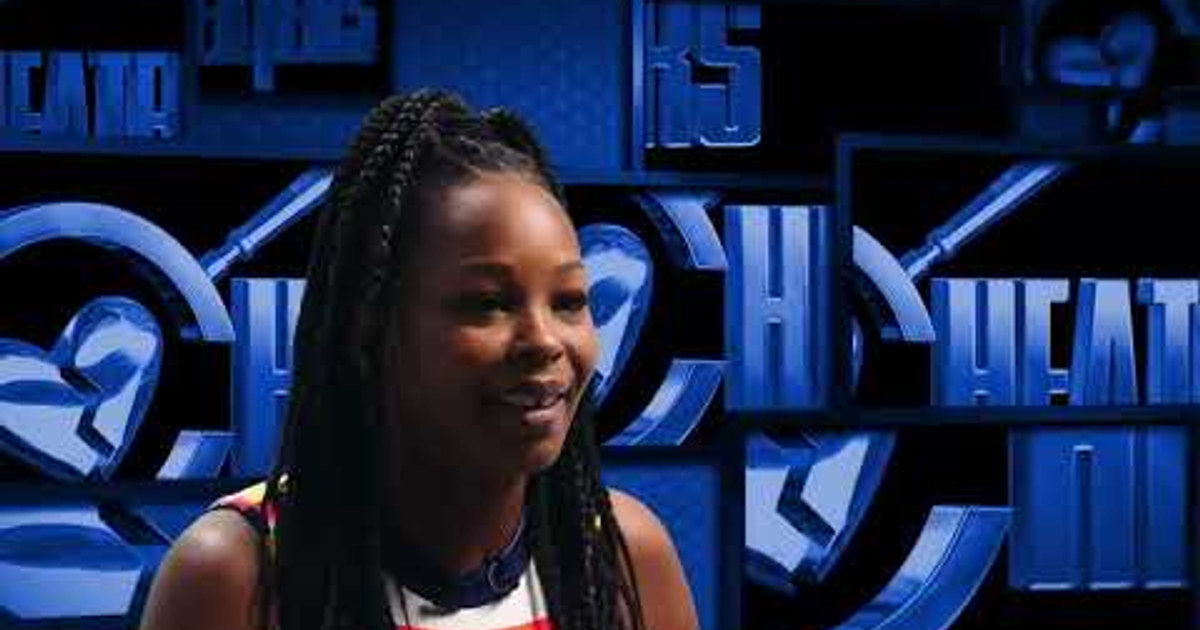
In this episode, the subject is Jay Goodwin, a wife who suspects her husband, Jerick Goodwin, is cheating. The voiceover tells us Jerick is 36, a store manager, and "accused of performing price checks on other women's inventory." That line is a perfect example of what I mean by genre craft. It's a pun. It's stupid. It's also doing three jobs at once: it tells you his job, it tells you the accusation, and it tells you the show's tone. You're not watching 60 Minutes. You're watching a show that will make a retail joke while a marriage falls apart. If that offends you, you're in the wrong theater. If it fascinates you, welcome.
Jay says she fell in love with Jerick because of the little things. "He'll see my body language and get it. Like if I'm having a bad day, he'll get me flowers, or if he know my day was long, he'll rub my bag." She says, "The little things count all the time. And I needed that at the moment in my life. I needed him." Then the suspicion: "We're not communicating like we used to. He tells me everything. Well, used to tell me everything. Now I can't get a straight answer." That's the inciting incident. In screenwriting terms, it's the moment the protagonist's world stops working. In engineering terms, it's the bug report. Something is wrong. The system is not behaving as expected. Time to instrument the system and collect data.
The instrumentation is the PI investigation. "Getting the green light, Chad's detectives set a perimeter around the home the suspect shares with his wife, Jade. Hours into the investigation, PI spots suspect Jerick Goodwin exiting their home. The festuned fellow trapes to his truck before accelerating away. A few miles down the road, Goodwin arrives at a bus stop and picks up an unknown female. After making the transfer, the tusome arrives at their next stop, a public park. Suspect Goodwin politely opens the door for his companion, and the clandestine couple loafs lacadasically inside. Agents capture footage of the pair hobnobbing in front of the Disneyesque playset. The couple shares a lengthy, loving embrace, then exits to get Cinderella home before the magic ends."
Read that again. That's not a transcript. That's a screenplay written by someone who loves words. "Festuned fellow." "Tusome." "Loafs lacadasically." "Disneyesque playset." "Cinderella." This is the voiceover as performance art. It's also a masterclass in narrative construction. The voiceover isn't just describing what happened. It's interpreting it. It's telling you how to feel. It's the narrator in a noir film, except the noir is a parking lot and the femme fatale is a guy named Jerick who works at a store. The genre fan hears a story. The craft enthusiast hears a writer having the time of their life.
And then there's the surveillance footage itself. The show uses cameras the way a documentary uses archival material, except the footage is generated by the show's own investigators. That's a feedback loop. The show creates the evidence it then presents as evidence. That's not a criticism. It's an observation about how reality TV works as a system. The PI is a sensor. The camera is a logger. The edit is the query. The host is the dashboard. The confrontation is the alert. If you've ever built a monitoring stack, you already understand Cheaters.


