Part 2
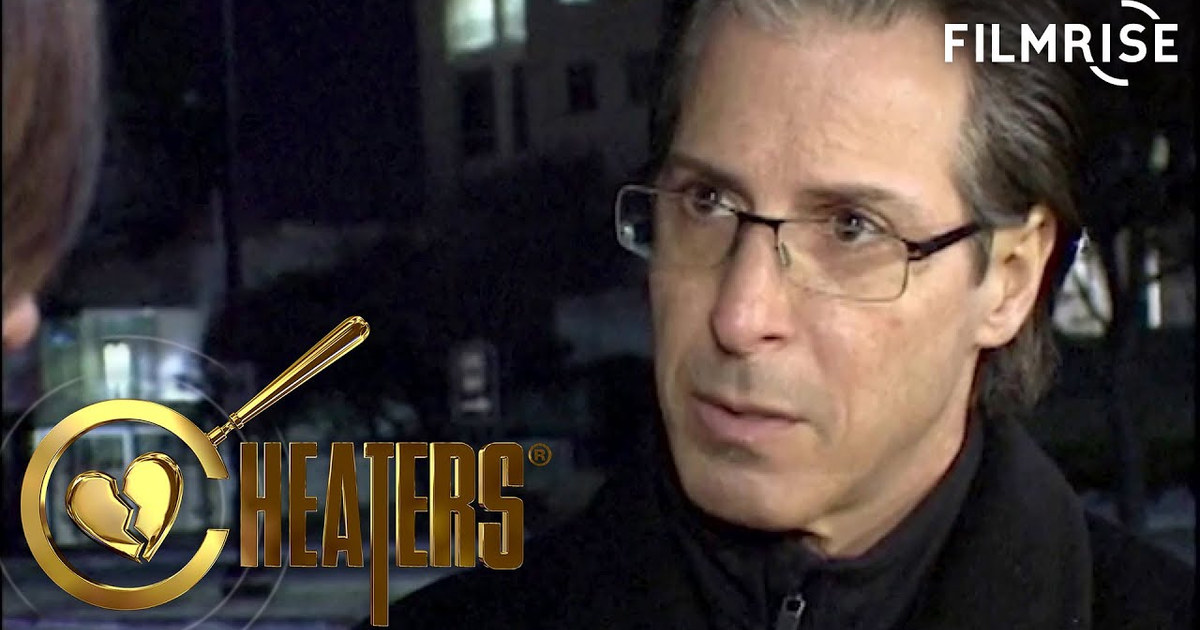
That is the look. Not a look. The look. The accidental, impossible-to-fake, available-light noir of a camera fighting a city at night. Modern true crime shows spend millions trying to recreate this with LED panels, haze machines and a DaVinci grade. Cheaters got it by pointing a PD150 at a strip mall.
The practical result is that the show looks different from episode to episode, because the city is different. A parking lot in one town has sodium vapor. A bowling alley in another has mercury vapor. A residential street has porch lights and headlights. The camera never wins. It just records the loss. And that inconsistency is the signature. A controlled look would feel like a reenactment. This feels like a night shift.
The Framing Doctrine: Focus Hunting, Exposure Flapping, Iris Stepping
The framing doctrine is where the cinematography becomes detective work. At maximum zoom, manual focus hunting is not a bug. It is a tell. The operator is trying to keep a lock on a face that is moving through a crowd, behind a windshield, under a streetlight. The focus breathes. It overshoots. It snaps back. You feel the operator's hand on the barrel. You feel the uncertainty of the surveillance.
Auto-exposure flaps when headlights cross the frame. The iris steps as the suspect walks under and out of a streetlight. A face goes from blown-out to muddy to a silhouette in two seconds. A reality show would fix that in post. Cheaters could not. The camera is reacting, not controlling. And that reactivity is the genre's engine. It says: this is happening now, and no one is smoothing it out for you.
When the operator pushes in, the image softens. When he pulls out, the exposure settles. When the target turns, the autofocus hunts and the frame goes to soup. Those are the moments that make the footage feel like evidence. A locked-off, perfectly exposed shot would feel like a reenactment. A hunting, flapping, iris-stepping shot feels like a document.
Contrast that with polished true crime today. The reenactments are shot on full-frame sensors with vintage glass, lit with softboxes, graded to look like faded Kodachrome. The surveillance footage is recreated with rigs and grain overlays. The flaws are fabricated. The fact that the industry now manufactures the flaws Cheaters got for free is the proof. The flaws became the aesthetic.
And that is why the show still looks like a documentary even when it is clearly a production. The camera is always slightly behind the moment. It is always reacting. It never has the perfect angle. That is the visual grammar of a stakeout, and it is almost impossible to fake without actually being in a parking lot at midnight with a 20x zoom and no lighting kit.
The Cinematic Lineage: Rear Window to Heat to Blow-Up
Cheaters sits in a real cinematic lineage, even if it arrived there by accident, on a syndicated budget, in a van. Alfred Hitchcock's Rear Window (1954) is the obvious ancestor: a man with a long lens, a neighbor, a moral problem. Hitchcock understood that watching is not passive. It is an act. It changes the watcher. Cheaters, whether it knew it or not, turned that into a weekly format.
Then there is Gordon Willis's near-silhouette, long-lens voyeurism on Francis Ford Coppola's The Conversation (1974). Willis shot Harry Caul's surveillance work as if the camera were ashamed of itself — high angles, long lenses, shadows that swallow faces. The Conversation is about a man who records other people and loses himself in the tape. Cheaters is about a host who confronts other people and never loses himself at all. But the visual grammar is the same: distance, compression, the uneasy intimacy of the zoom.
Michael Mann's Heat (1995) took the downtown surveillance section and made it sleek — the long lenses on the rooftops, the stakeout vans, the city as a grid of targets. Mann's camera is cool and professional. Cheaters is hot and messy. But both understand that surveillance is a choreography. The perimeter car, the handoff, the slow roll — that is Mann's language, run through a camcorder.
[[AD]]
Heat is also a story about professionals watching professionals. The cops are as locked into their routines as the robbers. Cheaters has no such symmetry. Its private eyes are watching amateurs — people who do not know they are being watched. That asymmetry is the show's secret weapon. The target is not a criminal mastermind. The target is a waitress walking to her car. And the camera treats her like a subject in a wiretap.
Michelangelo Antonioni's Blow-Up (1966) is the philosophical parent. A photographer enlarges a picture until the grain becomes the subject, and the photograph stops being evidence and becomes interpretation. Cheaters does that every episode, just less consciously. The surveillance footage is grainy, blurry, ambiguous. The show asks you to read it. The zoom is the enlargement. The confrontation is the interpretation. The truth is always a little out of focus.
Cheaters is not as good as any of those films. It is not trying to be. But it is in the line. It took the ethics of Rear Window, the paranoia of The Conversation, the choreography of Heat and the ambiguity of Blow-Up and shot them on MiniDV with a host named Joey Greco. That is not a knock. That is an origin story.


