Part 3
The episode cuts that call against surveillance footage, and the contrast is the entire argument. On one track, a woman making a plan. On the other, a woman eating dinner under mariachis and smoothing a man's hair. The show never tells you how to feel about the juxtaposition. It just lays two strips of tape side by side and lets the edit do the prosecuting.
Then the evidence meeting. The operatives gather everything and sit Pete down with Joey Greco to walk him through it frame by frame — the exit from the apartment, the pickup, the cafe, the hair, the mariachi rendition, the stop at the light, the other Tex-Mex night, the other brief exchange. It is a screening room scene in a show with no sets. The only production value is a table, a folder, and a man's face. That is enough.
[[AD]]
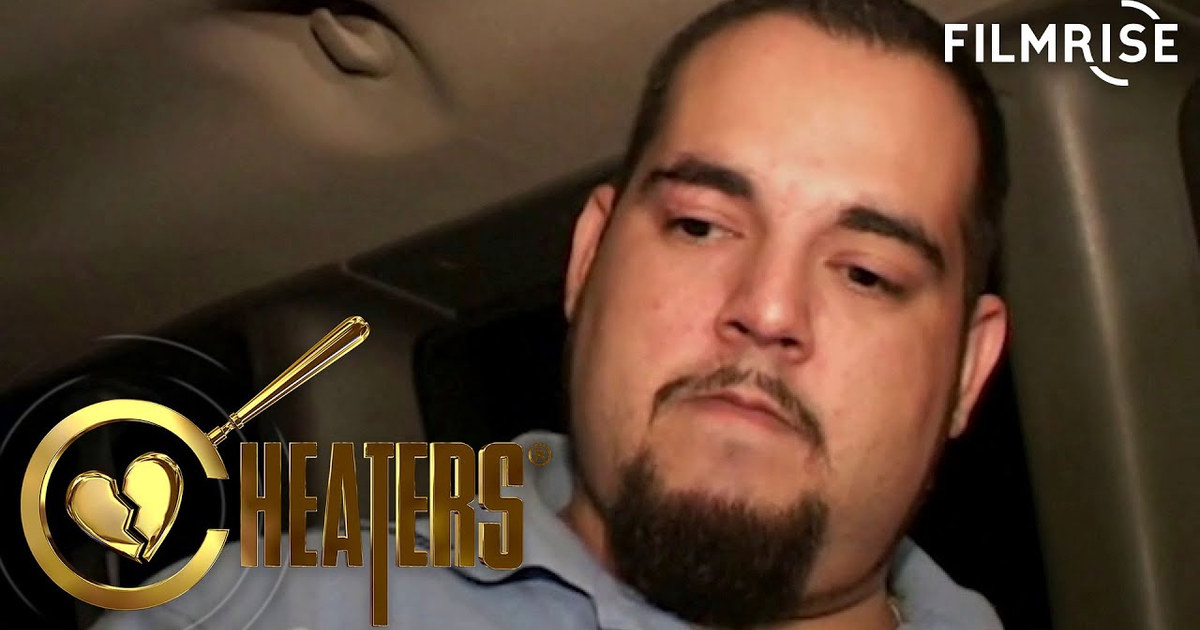
And that face is the hardest thing in this entire format to shoot. Reaction coverage. You can put a long lens on a cheating girlfriend all day long. You cannot fake what happens to a person when they finally see the woman they love opening a car door for somebody else. Pete says he cannot believe it. He says it twice. He is not performing. He is doing arithmetic in real time, and the camera is close enough for you to read the carry.
The Confrontation: One Patio, Two Cameras, Zero Coverage
Then, the patio. From the van, the team calls the detective, the detective reports the suspect is downtown, and the whole operation rotates toward the Original Mexican Restaurant and Grill. Is that her right there? Yeah. Security, I need you out of the way. Then a door opens on a woman who believed she was having dinner.
Note the geography problem. This is a public patio at night, which means low light, mixed color temperature from string lights and interior practicals and streetlamps, and civilians in every direction. There is no blocking. There is no second take. There is a camera, maybe two, and a group of people about to get extremely loud in a place where strangers are eating enchiladas. That the sequence is legible at all is a minor miracle of muscle memory.
What's this? Having dinner. We're just trying to have some dinner. With my friend. With your friend? I thought you had to work. The opening exchange is nearly quiet. Then the trapdoor opens and everything after it happens at volume. Nobody gets a clean reaction shot from here on. The frame is a crowd now — security stepping through, shoulders in everybody's business — and that is exactly why you believe it.
[[AD]]
Then Nicole throws the show's own thesis back at it. She says the relationship was just him paying for this. All you do is pay for this. That is the line that reframes the entire episode. Not because it is fair — it is not, and Pete's answer is immediate — but because it is the only moment in the hour when anyone on screen says out loud what the format actually costs. Somebody did pay. He paid for the surveillance, he paid for the dinners, and he is about to pay for the patio.
She also calls it an invasion of my privacy. And here the show has no comeback, because there is not one. The investigators answer with common human dignity — if she was unhappy, there was a better way to say so. True. Also a dodge. Every frame of this episode exists because somebody else funded a camera to live in her blind spot. The format is built on that tension and it never resolves it. It just keeps rolling.
And then it goes where these always go. GUYS, GUYS, GUYS. Somebody comes up out of a chair. There is a shove, a swing, a body through furniture, and a man telling another man he is lucky he only took a dip. Security closes the gap. You can have her, man. Are you okay? Give the keys. Let's get back in the van. Cool out for a second.
Here is what a camera does in a real fight: nothing graceful. Nobody racks a lens. Nobody finds a clean angle. You get whatever the operator's feet and reflexes hand you — a drifting wide shot with a lot of ceiling in it and somebody's elbow in the corner of frame. That is not a failure of craft. That is craft under the worst conditions available, and it stays watchable because nobody's hand ever leaves the record button.
[[AD]]
The Aftermath
After the confrontation, Pete ties up loose ends. He wastes little time ridding his life of the reminders. He says that in due time he will rejoin the dating scene — but only after several months with nobody but his beloved canine. That is the ending this show hands its sympathetic subjects. Not a victory. A cleared apartment and a leash.
Nicole's statement is the one that hangs around after the credits. She admits she really messed up a good situation, one that operated without a hitch. And then she explains it: she missed the intimacy that once existed with Pete, and she latched on to the closest person willing to offer attention. That is not a villain's monologue. That is a diagnosis.


