Part 6
The legacy runs from Geraldo Rivera and Morton Downey Jr. through Jerry Springer and Maury Povich — tabloid confession TV where the host is the judge, the jury, and the lighting department. Greco inherited that throne and dressed it in a trench coat. But here's what separates him: he never breaks. Springer bounced. Maury pointed. Greco stands in a parking lot at 2 a.m. with a wireless lav and a 50mm and delivers the verdict like a man reading a wire report. That's craft.
Now read the disclaimer. Word for word: the show is 'dedicated to the faithful and presented to the false hearted to encourage their renewal of temperance and virtue.' And then, in the same breath, 'investigative charges may apply.' That is the best joke on television and also its actual ideology. This is Victorian framing — temperance, virtue, renewal — bolted onto a show that films people cheating in Honda Civics. It's a morality play structure. The faithful are the audience. The false hearted are the subjects. The camera is the pulpit. And the 'investigative charges may apply' line is the tell: this isn't just entertainment, it's a legal threat dressed as a sermon.
The modern true-crime boom kept the morality play and quietly dropped the honesty about what it was doing. HBO's The Jinx (2015, directed by Andrew Jarecki) is a masterpiece of the form, but it never tells you it's a morality play. Netflix's Wild Wild Country (2018), Don't F**k with Cats (2019), Tiger King (2020) — all of them have better cameras, bigger budgets, and worse access. They're glossy. They're prestige. They're shot on Arri Alexas with colorists who cost more than Cheaters' entire season. And they're less honest about the fact that they're selling you a verdict.
Cheaters reruns on Tubi, Pluto TV, Amazon Freevee, and YouTube remain the purest version of the form. Why? Because the show never pretended to be anything other than what it was. It told you up front: we are dedicated to the faithful, we are presented to the false hearted, and we are going to film you. The Victorian language is the disclaimer and the ideology at the same time. That's a magic trick the prestige boom never figured out.
Now the ethics, and I want to be careful here because this is where the show gets ugly and where I'm not going to invent anything. Consent and release paperwork is standard on any production like this — subjects sign releases, and the show's legal department exists for a reason. But the presence of children in the frame is a different question. Sylvia's son is referenced, not shown, in the transcript I have. The show treats the collateral damage — a nine-year-old asking why his father sleeps in the other bedroom — as a B-roll beat. That's the cost. I'm not accusing anyone of a crime. I'm not staging an allegation. I'm saying the show's editorial choices treat family damage as content, and that's worth naming.
There are claims about the show's production history and a well-known on-camera altercation involving the host. Those are reported and unverified. I'm not going to repeat them as fact. What I will say is that the show's craft — the long lenses, the available darkness, the stakeout grammar — is separate from its ethics, and you can admire the former while being uneasy about the latter. That's the honest position.
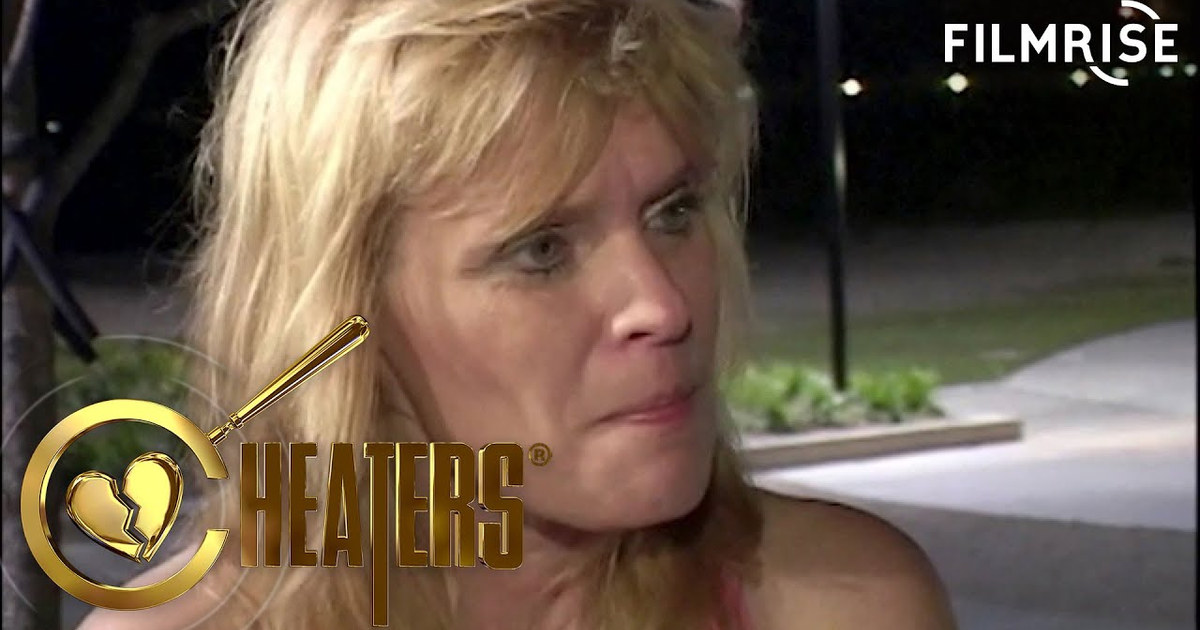
Here's the cinematographer's eye coming back one last time. The reveal episode is the only part of the show shot with any control at all. An interview setup. A key light. A bounce. A subject who knows the camera is there. And it's the weakest photography in the entire series. Compare that to the stolen footage we spent two sections admiring — the 400mm from the far curb, the sodium vapor in the parking garage, the two-hour wait in available darkness. That footage has tension because the camera is not supposed to be there. The reveal episode has none of that. It's conventional television production, and conventional television production is where Cheaters goes to die.
So here's your what-to-watch-for checklist, delivered as promised. Watch the white balance in the garage sequence — the sodium vapor pushes the shadows green and the show never corrects it, which is why the footage feels like evidence instead of entertainment. Watch how long the operator holds after the second kiss — that extra beat is the difference between documentation and judgment. Watch who is holding the camera and where they stand relative to the subject's eye line — the operator is almost never at eye level, which is why the subjects always look slightly caught. Watch the leftovers bag in the restaurant parking lot — it's in frame for a reason, and the reason is that the show wants you to see the mundane details of a life being documented. And watch how the edit treats a nine-year-old's question about which bedroom his father sleeps in — that's the moment the morality play stops being a joke and starts being a mirror.
Whatever you think Cheaters is — trash TV, tabloid exploitation, a guilty pleasure — the camera work is doing more than the host ever will. Joey Greco is the face. The long lens is the thesis. And the show's look is at its weakest the moment it becomes a conventional television production, because the whole point was that it was never supposed to be one. The stolen footage is the art. The reveal episode is the paperwork.
Next time, we're going to look at what happened when the whole surveillance grammar got stolen wholesale by fiction — from found footage to screenlife, from The Blair Witch Project (1999) to Unfriended (2014) to Searching (2018) and the entire genre of movies that pretend to be evidence. The stakeout grammar didn't die with Cheaters. It got a bigger budget and a better agent. And we're going to trace exactly how that happened, frame by frame.


