Part 4
Then digital caught up. David Fincher and Harris Savides shot Zodiac in 2007 partly on the Thomson Viper, the early 24p digital cinema camera, and partly on the consumer-grade Panasonic DVX100. That split was the entire point. The grainy, low-resolution digital texture made the killings feel like something recovered from a drawer, not staged for a screen. 'Digital vérité' became a vocabulary overnight.
Michael Mann is the prestige borrower of the whole idea. Collateral in 2004, shot by Dion Beebe and Paul Cameron largely on the Viper FilmStream, took Los Angeles at night and let the available light do the work — the city's sodium and neon smeared across Tom Cruise's shoulders like a wound. Two years later, Miami Vice pushed digital noise up into the sky and made grain itself part of the weather.
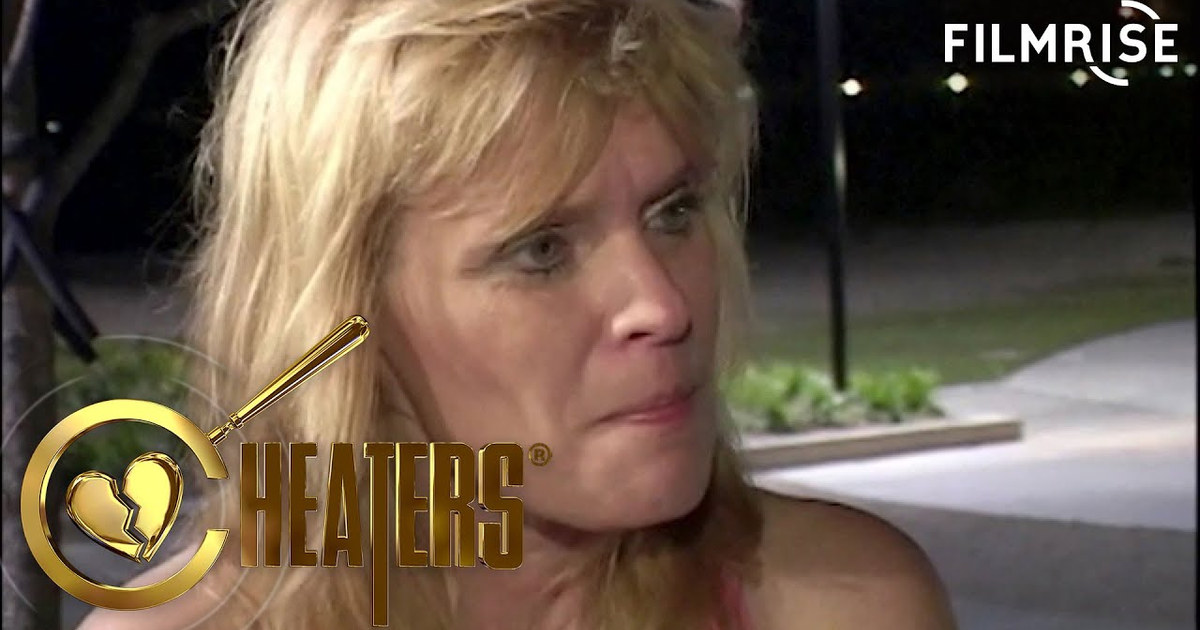
Here is the part people miss. Cheaters got to this look first — by accident, by budget, and by the fact that a surveillance team cannot ask a cheating husband to stand still while somebody swings a 4x4 bounce card into place. Prestige cinema spent the next two decades catching up to a parking garage.
One honest note, because I am not going to sit here and pretend I inventoried the van. I do not know what this specific crew carried, and I would not claim to. What I can say is what the era's standard field kit looked like: a small-sensor camcorder, a long zoom, a body that had to be pushed hard to see anything at all after dark. Everything I say about the image, I am reading off the image. Inference, not insider information.
Two Hours of Nothing Is a Suspense Technology
Now the part nobody gives the show credit for. Nearly two hours pass between Michelle Younger walking in with takeout and the two of them walking out holding hands. The show leaves almost all of it in. No music stings, no slow push-in, no cutaways to the client crying at home. Just a garage, a timer, and a parking space.
That is a craft decision, and it is the most underrated one on the show. Chantal Akerman built an entire monument to it in 1975 with Jeanne Dielman, 23 quai du Commerce, 1080 Bruxelles — 201 minutes of a woman doing chores in real time, the camera locked down, the tension rising out of sheer duration until peeling potatoes becomes unbearable. Nothing happens. Everything happens.
Jonathan Glazer took it further in The Zone of Interest in 2023, with Łukasz Żal shooting from roughly ten fixed cameras placed around the house and never once moving them. The horror lives entirely in what the frame refuses to look at. Kyle Edward Ball did the same thing on a shoestring with Skinamarink in 2022 — static digital frames of a dark hallway, and the waiting becomes the monster.
Nicolas Winding Refn pushed it into series form with Too Old to Die Young in 2019, shot by Diego García, where characters hold still and stare at nothing for minutes on end. Slow is not a flaw. Slow is a weapon.
[[AD]]
Cheaters deploys that weapon by pure structural necessity, which makes it more interesting, not less. The viewer knows something is going to happen. The camera knows nothing. So the two hours become a countdown with no numbers on it, and you sit in the passenger seat of a car you cannot see, next to an operator you will never meet, watching a door.
What +18dB of Gain Actually Does to a Face
Let us talk about the noise, because the noise is doing character work. Push a small-sensor camera hard — think north of +18dB of gain, the kind of setting you only reach for when there is literally no light left — and this is what happens. Chroma noise arrives in blocky, digital patches of magenta and green rather than film's elegant silver grain. Specular highlights smear and bleed instead of clipping cleanly. Shadows get crushed so flat that detail stops existing, and a black jacket becomes a black hole.
On a soundstage that is a defect. In a parking garage at midnight it is a fingerprint. Every face in that footage is being reconstructed by the camera's noise reduction as much as it is being recorded, which means what you are watching is not quite a person. It is a person plus the effort required to see them. That gap is where the drama lives.
Which explains an entire modern aesthetic. Sean Price Williams chased the same texture from the opposite direction on Good Time in 2017, shooting with the Safdies in a grain-forward, ugly-beautiful register that people regularly mistake for digital noise. Josh and Benny Safdie then built Uncut Gems in 2019 around Darius Khondji's long-lens anxiety — faces compressed, cropped, overheard, never comfortably framed.
Trace it back and the family tree runs straight through the cheap seats. The Blair Witch Project in 1999, Hi8 tape and a 16mm camera and a legendary marketing budget. Oren Peli's Paranormal Activity in 2007, shot on a consumer camcorder in his own house for a reported fifteen thousand dollars. Ilya Naishuller strapping GoPros to stuntmen for Hardcore Henry in 2015.
Every single one of those productions is chasing a feeling that a camera in a parking garage got for free in 2001. The look was never the problem. The look was the whole budget line item these films spent money to buy back.


