Part 3
[[AD]]
So what do we watch for? Watch the focus hunt. Watch the white balance drift. Watch the neon skirt catch the DJ’s magenta wash and turn into a warning flare. Watch the shoes change in the truck. Watch the phone call intercut and listen to the tinny audio that says more than any scripted line ever could. This is cinematography by accident, and it’s more honest than most films you’ll see this year. Next up: the confrontation. When the camera becomes a character, and the unwatchable becomes unmissable.
The Confrontation: When the Camera Becomes a Character
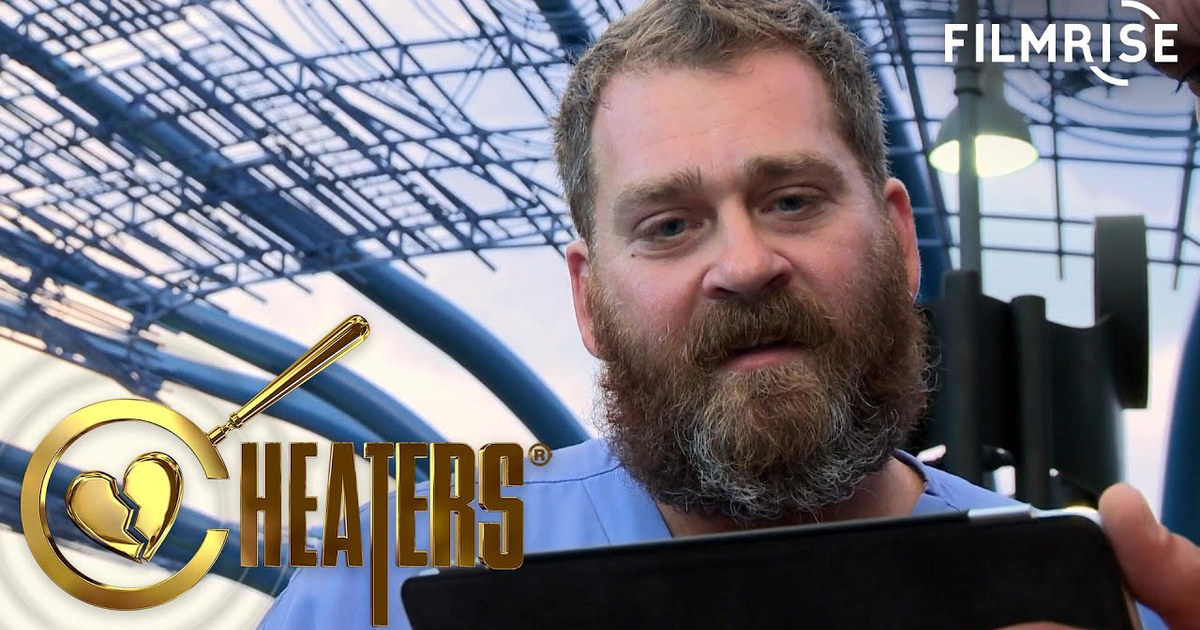
Clark Gable leads Jimmy into the review room. The air is thick. Jimmy shifts in his chair, trying to settle his nerves. Clark walks him through the evidence: Wendy, the bar, the dancing, the unknown gentleman, Nora sitting in another man's lap, the kiss in the parking lot. The footage rolls. Jimmy's face is a study in controlled collapse. The camera cuts between the screen and Jimmy's reaction. This is the emotional climax, and it's shot like a reaction video.
The visual grammar here is pure surveillance aesthetics: split-screen, cutaways, the cold eye of the lens. It's reminiscent of the reality-TV confessionals of 'The Real World' (MTV, 1992–present), where raw emotion meets the unblinking camera. But it also echoes the documentary style of 'Capturing the Friedmans' (2003, Andrew Jarecki), where home video and interrogation footage collide to devastating effect. In 'Cheaters', the camera is both witness and provocateur.
Then comes the confrontation. The camera crew follows Jimmy to the bar. Nora is sitting with an unknown gentleman. Jimmy approaches. The other man says, 'This ain't the first time we've been together.' The argument escalates. Nora says, 'You're never home. You're always out dancing.' Jimmy says he's saving lives. The camera shakes, auto-focus hunts, the operator tries to keep both subjects in frame. It's the cinematographic challenge of shooting a confrontation: handheld, shaky, auto-focus hunting, the operator trying to keep both subjects in frame. Compare to the Dardenne brothers' 'Rosetta' (1999, shot by Alain Marcoen) — the same urgency, but with a script.
After the confrontation, Clark asks the other man if Nora told him she was married. He says no — she told him her name was Candy. This detail is the kind of thing a screenwriter would invent, but it's real. It's the kind of detail that makes you realize the camera doesn't blink, and that's the whole point.
The final exchange between Jimmy and Nora: 'We worked too hard for this over 20 years.' 'We were working too much.' 'I wanted kids, you just couldn't.' 'You think we didn't try?' The camera holds on them, awkwardly, in the parking lot. The operator doesn't know where to look. It's a masterclass in discomfort, a moment that captures the raw, unscripted truth of a marriage unraveling.
The Jessup tapes are a reminder that the most powerful cinematography isn't always the most beautiful — sometimes it's just the most present. The camera doesn't blink, and that's the whole point.
So next time you watch a reality show, pay attention to the camera work. The zoom, the shaky frame, the awkward angle — that's not a mistake. That's the truth, captured on a 1/3-inch sensor.


