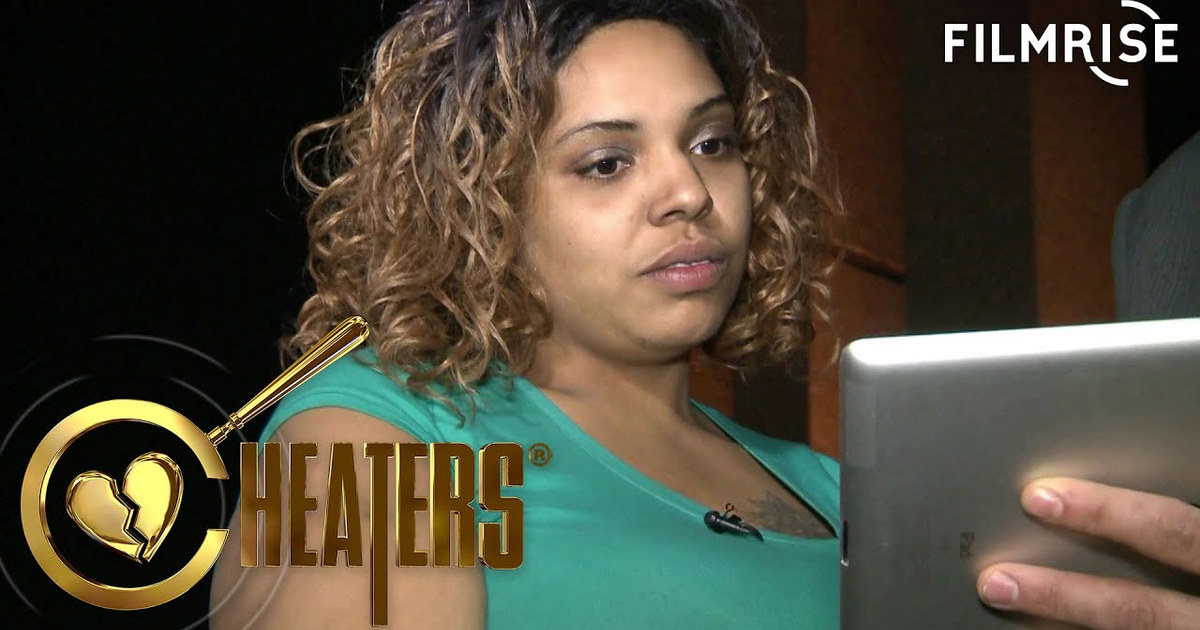
Part 2
That's the key. These behaviors — the spank, the chain, the kiss — are not performative. Maurice doesn't know he's being filmed. He's not playing to an audience. He's not trying to look good for a reality TV camera. He's just being himself. And that's precisely why the footage is so damning. Lindsay's words in her confessional could be dismissed as jealousy or paranoia. But the surveillance footage proves her suspicion was right. It gives her — and us — a concrete truth that no amount of talking-head testimony could provide.
This is the same power that drove the true-crime boom of the mid-2010s. Netflix's *Making a Murderer* (2015) captivated audiences with hours of interrogation footage and police surveillance. HBO's *The Jinx* (2015) famously used a hot mic moment to deliver its most shocking revelation. And shows like *48 Hours* and *Dateline* have long relied on surveillance tapes to anchor their narratives. But *Cheaters* predates all of that. It premiered in 2000, years before the surveillance-as-truth turn in nonfiction TV. In its own low-rent way, it anticipated the entire aesthetic.
Of course, there's an ethical problem here. The footage is obtained without Maurice's knowledge or consent. That's a real violation of privacy. The consensus says that makes the show exploitative trash. And yes, it does. But that doesn't mean the footage isn't truthful. In fact, its truthfulness is inseparable from its violation. The very fact that Maurice didn't know he was being filmed is what makes the footage so revealing. If he had known, he would have behaved differently. He might have been careful, guarded, performative. Instead, we see him as he really is — and that's a kind of honesty you rarely get on television.
[[AD]]
So the next time you dismiss *Cheaters* as just trash, remember the surveillance footage. It's not pretty. It's not ethical. But it's the most truthful thing on TV.
Dismantling the Consensus, Part 3: The 'Trashy' Participants Are the Most Relatable People on TV
Here's the thing about Lindsay. You know Lindsay. She's the woman from the Cheaters episode who looks into the camera and says, with total calm, 'Puerto Ricans, we are very aggressive, and when it comes to a Puerto Rican female and her man, we're very aggressive and very crazy about that.' The internet turned that into a meme. A punchline. Another reason to laugh at the people who sign up for this show. But watch it again. Really watch it. That's not a trash-TV soundbite. That's a thesis statement about love, culture, and jealousy, delivered by someone who has clearly thought about it more than most prestige-TV writers.
[[VIDEO]]
Lindsay isn't performing. She's explaining. She's telling you exactly who she is and why she reacts the way she does. She's naming a cultural expectation — that a Puerto Rican woman protects her relationship fiercely — and then she's owning it. 'I'm gonna go off on both of them,' she says. 'I'm gonna be both their asses.' That's not random rage. That's a precise emotional contract: you betray me, I respond. And she's not hiding behind therapy-speak or ironic detachment. She's just telling the truth.
Compare that to the antiheroes we spent two decades calling complex. Tony Soprano, The Sopranos, 1999–2007, HBO. Walter White, Breaking Bad, 2008–2013, AMC. These are men who lie, cheat, kill, and destroy their families — and we write essays about their moral ambiguity. We call them Shakespearean. We teach college courses on them. Tony strangles a man with his bare hands and we call it a character study. Walter lets a girl choke to death and we call it a turning point. But Lindsay, a working-class woman on a syndicated reality show, says she's going to yell at her cheating boyfriend and the woman he's with, and we call her trash.
That's not a double standard. That's a class filter. The prestige antihero gets a writers' room and a budget. Lindsay gets a camcorder and a detective. But the emotion is the same. Suspicion. Rage. The desire to confront the people who hurt you. Tony Soprano spends six seasons in therapy trying to manage his anger. Lindsay just tells you she's angry. Which one is more honest?
And let's talk about who these participants actually are. Cheaters has always drawn from working-class communities, and disproportionately from Black and Latino families. That's not an accident. That's who gets cast. And that's who gets mocked. When people call the show 'trashy,' they're not just describing the production values. They're describing the people. The word does a lot of work. It says: these lives are not worth taking seriously. These emotions are not complex. These people are not like us.
But Lindsay is not a stereotype. She's a specific person describing a specific betrayal. She notices the details. She tells you her boyfriend Maurice is a barber. She tells you he says he's at work but he's not there. She tells you he won't answer his phone during the week. She tells you that on weekends he used to see her at nine, then it became one, then two in the morning. She tells you she smells different perfume. She tells you something's moved in his place. That's not a caricature. That's detective work. That's a woman paying attention.
Now, credit where it's due: the show's editing sometimes leans into ugly tropes. The dramatic music, the slow-motion reveals, the way the camera lingers on reactions — it's not innocent. It's built to make you laugh or gasp. And sometimes that means playing into the worst assumptions about the people on screen. That's a real flaw. I'm not going to pretend it isn't.


