Part 3
[[AD]]
Then the apartment window. The camera tilts up. We see a silhouette cross the blinds. The operator zooms in tight — maybe 200mm, maybe more — and holds on the window for a beat. No faces. No dialogue. Just two shapes moving behind frosted glass. That's the art of the reveal: you show enough to confirm the betrayal, but not enough to satisfy the audience. The imagination fills in the rest. Alfred Hitchcock called that 'the bomb under the table.' Here, the bomb is a closed curtain.
Lighting is where this sequence gets genuinely impressive, and I don't say that lightly. Nighttime surveillance is a nightmare. You've got sodium-vapor streetlights pumping out that ugly orange 589nm spike, you've got LED security floods with a greenish cast, and you've got deep shadow everywhere else. The operator is shooting wide open — probably f/2.8 or f/1.8 — and riding the exposure manually because auto-exposure will blow out every streetlight into a white blob. The trick is to expose for the highlights and let the shadows crush. That's exactly what Dion Beebe did on Collateral (2004), Michael Mann's digital-noir masterpiece shot on the Viper FilmStream camera. Beebe and Mann leaned into the blown-out streetlights and the grainy, high-ISO texture. They made Los Angeles look like a city lit by dying fluorescent tubes. Cheaters can't afford a Viper, but the principle is the same: embrace the noise, protect the highlights, and let the darkness do the storytelling.
Watch the moment Sean exits the apartment building later that night. She's backlit by a single porch light. The operator holds the shot, and the exposure is perfect — her face is a half-stop under, just enough detail to read her expression, while the light behind her blooms into a soft halo. That's not luck. That's a camera operator who knows how to ride the iris ring like a focus puller rides a follow-focus. It's the kind of shot Roger Deakins would nod at, even if he'd want a bigger sensor.
Now the pacing. Seven days of surveillance condensed into maybe four minutes of screen time. That's ellipsis, and it's the oldest trick in documentary editing. You shoot hours of nothing — a parked car, a closed door, a cigarette break — and then you cut to the money shot. The editors here use a subtle time-lapse feel: a shot of the sun setting, a shot of the streetlights flickering on, a shot of the same parking spot now empty. It's the same grammar Cops (1989–) perfected in the late '80s and The First 48 (2004–) turned into an art form. Both shows understand that waiting is boring, but the anticipation of waiting is electric. Cheaters leans harder into the melodrama, but the bones are identical.
And then the kiss. Sean and Jermaine walk out of the building together. They stop by his car. She leans in. It's a quick peck at first — almost friendly. Then she goes back for more. A deep kiss. Hand on his neck. His hand on her waist. The camera is still on that long lens, still from the car, still through the windshield. The operator zooms in — slow, steady, no snap. The frame tightens until it's just their faces, lit by the glow of a distant streetlamp. It's intimate. It's invasive. It's exactly the shot the show needs.
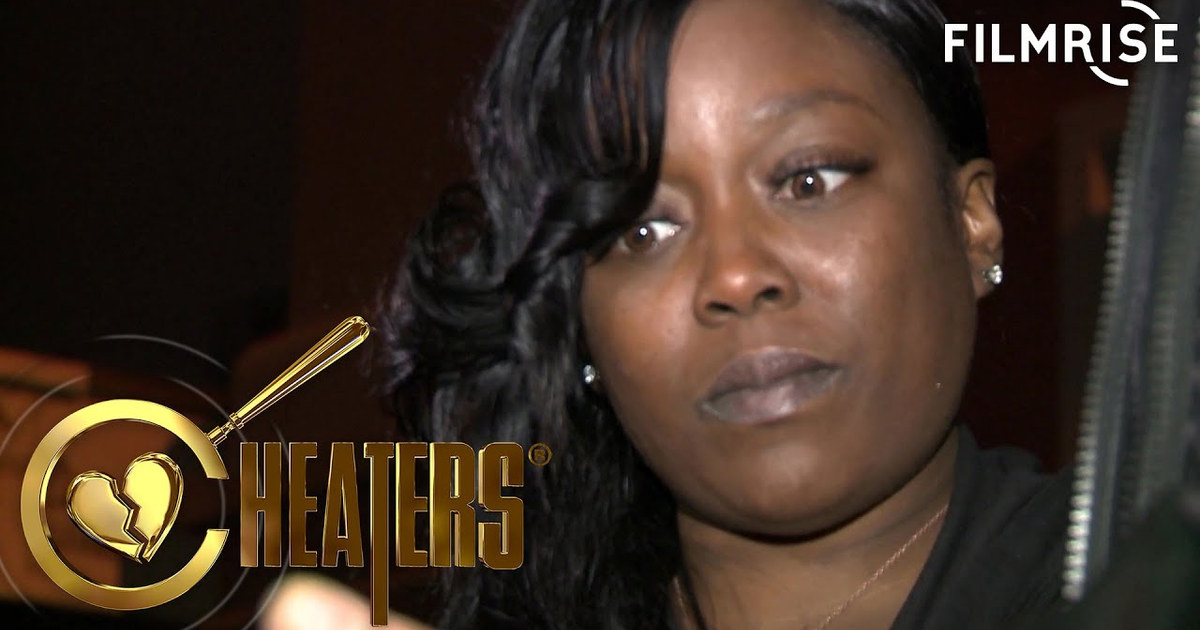
This is where the emotional impact lands. Ebony Monroe, back at the production office or in a follow car, is watching this feed live. The show will later cut to her reaction shots — the hand over the mouth, the tears, the slow shake of the head. Those close-ups are the payoff. The kiss is the evidence; the reaction is the verdict. Without Ebony's face, the kiss is just two people saying goodbye. With her face, it's a knife twist. The editors know this. They hold on her a beat too long. That's the point.
Clark Gable — the host, not the Gone with the Wind legend — will eventually walk up to Jermaine with a microphone and a camera crew, and the confrontation will begin. That's the structure of every Cheaters episode: surveillance, reveal, confrontation. But this transcript ends before that moment. We're left on the kiss. The deep kiss. The one that says everything Ebony already feared. The confrontation is coming. The cameras are already rolling. But for now, we sit in the dark with the operator, the long lens, and the quiet hum of a car engine.
What to watch for in the next part: how the confrontation is filmed. Will they use multiple cameras — a handheld for the reaction, a long lens for the wide? Will the operator stay in the car or move in? And then the bigger question, the one that haunts every episode of this show: what does it mean to turn private pain into public spectacle? The kiss was captured from a distance. The heartbreak will be captured up close. And the lens never lies — it just decides what to show.


