Part 2
For the genre fan, the Chelsea Phillips episode is a classic. High school sweethearts, a house, a dream of marriage, and a suspected cheater who wants to be a writer but hasn't written anything in a year. It's the kind of story that writes itself. For the craft enthusiast, it's a case study in how to build a narrative with limited resources. The show doesn't have a *Succession* budget. It doesn't have the cinematic polish of a *Mindhunter* episode directed by David Fincher. But it has something else: a formula that works. And it executes that formula with a consistency that any programmer would admire.
Think about it like this. *Cheaters* is a long-running piece of software. It has a core loop: suspicion, investigation, confrontation. It has a user interface: Clark Gable. It has a terms of service: the disclaimer. And it has a dedicated user base: people who watch for the genre and people who watch for the craft. The show doesn't try to be everything to everyone. It knows its niche. And within that niche, it's remarkably efficient. The Chelsea Phillips episode is a perfect example. It gives you the emotional setup, the investigation days, and the inevitable confrontation. It's a complete package.
But here's where it gets interesting. The genre fan and the craft enthusiast aren't always separate people. Sometimes they're the same person. You can watch *Cheaters* for the drama and still notice the way the show uses music to manipulate your emotions. You can cheer when Chelsea confronts J.R. and still appreciate the fact that the show's producers knew exactly where to place the cameras. That's the beauty of a show like this. It's not high art, but it's well-made. And it's well-made in a way that rewards both kinds of viewers.
So as we move forward, keep both audiences in mind. The genre fan wants the payoff. The craft enthusiast wants the process. *Cheaters* gives you both. And in the next section, we'll dig into the genre craft: the surveillance, the suspense, and the theatrics that make the show so addictive. But before we get there, let's just appreciate the fact that a show hosted by a guy named Clark Gable (not that one) has managed to turn infidelity into a formula that works. That's not just entertainment. That's engineering.
Genre Craft: Surveillance, Suspense, and Theatrics
If you came to *Cheaters* for the genre, you know the drill: a wronged partner, a private eye, a tail, and a confrontation that goes from zero to nuclear in under a minute. But here’s the thing—the show’s genre mechanics are also its craft. The surveillance footage isn’t just evidence; it’s the engine of suspense. And the way the editors cut between angles is basically a state machine transitioning on events. Let’s break down how this episode builds its case, beat by beat.
[[AD]]
The episode centers on Chelsea Phillips, who suspects her high school sweetheart, J.R. Sales, of cheating again. She’s been burned before—he had a woman in high school—and now he’s never home, always “writing” but never actually writing. Chelsea hires the Cheaters detective agency to get the facts. What follows is a masterclass in reality-TV surveillance: tailing J.R. to a restaurant, watching him with a woman named Nicolette, and finally catching them kissing. The show doesn’t just tell you he’s cheating; it shows you, frame by frame, like a debugger stepping through code.
The first act of surveillance is classic *Cheaters*. The camera team follows J.R. to a restaurant. We see him meet Nicolette. They talk, they laugh, they lean in. The editing cuts between long-lens shots from across the street and tighter angles from inside the restaurant. It’s voyeuristic, yes, but it’s also efficient storytelling. You don’t need dialogue to understand what’s happening. The body language says it all: the way he touches her hand, the way she smiles at him. This is the genre promise fulfilled—you’re seeing something you’re not supposed to see.
[[VIDEO]]
But the real kicker comes later. Chelsea provides interior cameras from her own home. Why? Because J.R. is caught on camera removing photos—presumably of Chelsea—from the house. That footage is gold. It’s not just about the affair; it’s about the cover-up. The show uses this to build a narrative of deception. He’s not just cheating; he’s erasing evidence. The interior cameras add a layer of intimacy and betrayal. You’re watching him in their shared space, dismantling their life together, one photo at a time. It’s cold, calculated, and the show knows it.
Then there’s the kiss. The surveillance team catches J.R. and Nicolette kissing. It’s the money shot. The show milks it with a dramatic voiceover and a “coming up” teaser that promises the confrontation. The voiceover is pure genre: “You are about to view actual true stories… documenting the pain of a spouse or lover caused by infidelity.” It’s theatrical, almost biblical. And it works. It sets the stakes. You’re not just watching a cheating scandal; you’re watching a morality play.
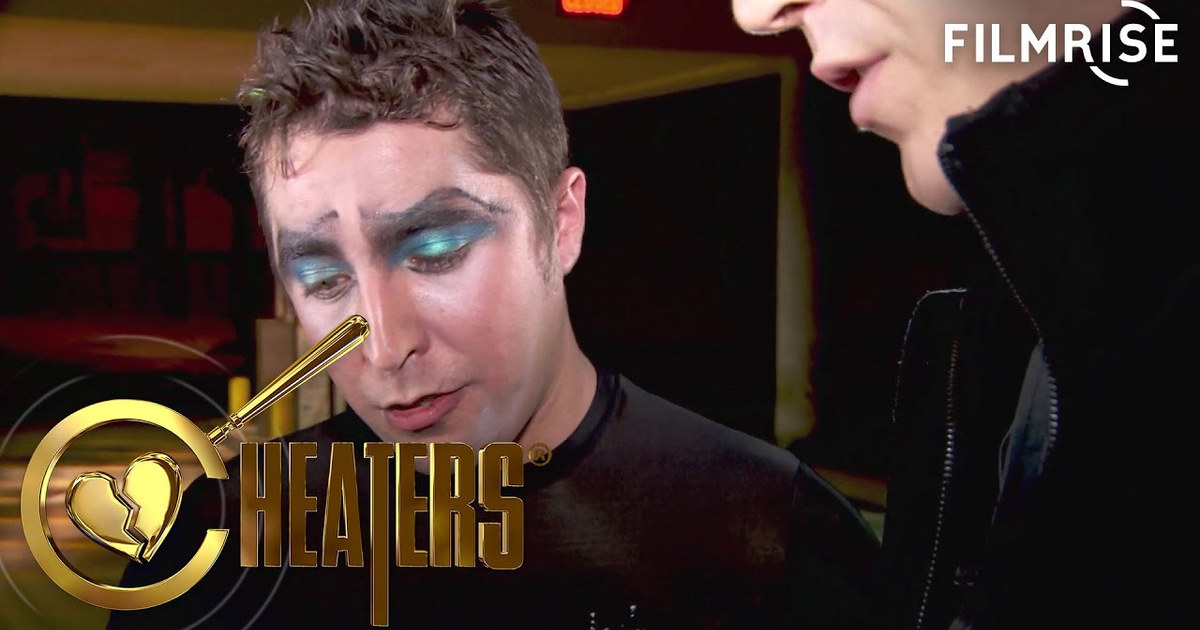
The confrontation happens at Lakewood Theater. And here’s where the genre goes full absurdist. J.R. and Nicolette are at the theater, and they’re dancing to “Time Warp” from *The Rocky Horror Picture Show*. Yes, that *Rocky Horror Picture Show*—the 1975 cult classic directed by Jim Sharman, starring Tim Curry, Susan Sarandon, and Barry Bostwick, runtime 100 minutes. The song “Time Warp” is iconic, and its inclusion here is a pop culture nod that heightens the scene’s absurdity. You’ve got a cheating scandal unfolding at a midnight movie screening, with people doing the pelvic thrust. It’s surreal, and the show leans into it. The confrontation is chaotic: Chelsea screams, “What the hell are you doing?” J.R. stammers, “Why am I explaining?” It’s raw, messy, and undeniably entertaining.


