Part 3
[[AD]]
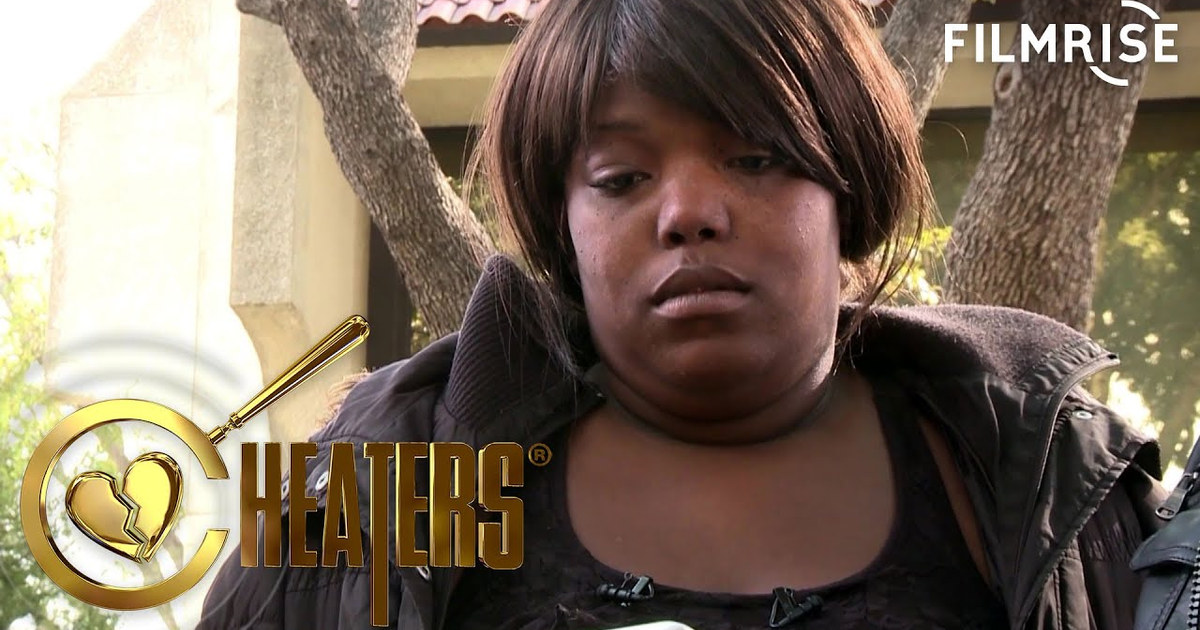
Compare the testimony structure to MTV's Catfish (2012–present), where hosts Nev Schulman and Max Joseph translate suspicion into televised proof. On Catfish, the worried partner brings the feeling; the hosts bring the receipts. The show's whole engine is the gap between what someone suspects and what the screen can confirm. Antoinel is doing that same work in real time, except she has no Nev, no Max, no laptop glowing with a reverse-image search. She has only her own voice and the camera's patience. "I can feel it that he's cheating on me," she says. "I can feel it." That is the pre-verification phase of every Catfish episode, delivered without a safety net.
Cheaters belongs to a lineage that includes Cops (1989–), America's Most Wanted (1988–2012), and the true-crime boom of Netflix's Making a Murderer (2015) and HBO's The Jinx (2015). All of these shows sell the same promise: footage equals truth. The camera is not just a recorder; it is a lie detector. Antoinel's intuition is the human version of probable cause. It is what gets you a warrant in the court of television. She doesn't need to prove anything to us. She needs to prove it to the show, and the show needs her to say it out loud so the eventual footage can either vindicate her or turn her into the punchline. Either way, the episode works.
The branding tells you everything. "Cheaters Detective Agency's Private Eyes." The investigation-day structure. The field agents. The planted camera. This is procedural television dressed as romance. Cheaters is produced by Bobby Goldstein Productions, and Goldstein himself created the show in 2000. The title card promises "actual true stories filmed live documenting the pain of a spouse or lover caused by infidelity," and then it delivers that pain in the same rhythm as a police ride-along. The private eyes are not metaphors. They are employees. The camera is not a witness. It is a weapon.
[[VIDEO]]
Here is the novelist's point. Antoinel is a character who thinks she is a witness. She believes she is describing reality, but she is actually performing narration. Her language — "he knows when he walks in it's like he barely says something to me" — is the kind of domestic detail fiction writers spend pages earning. The way a person stops saying hello. The way a body becomes a closed door. The way a phone under a pillow turns into a symbol of everything unsaid. In a novel, you would build three chapters to get a reader to feel that. On Cheaters, it arrives free, because the camera is always already on. The show doesn't have to earn the intimacy. It just has to point and shoot.
That is why Antoinel's testimony is both unreliable and essential. Unreliable because she is a person in pain, and pain is a narrator that edits. Essential because without her voice, the footage would be meaningless. A car in a parking lot is not a story. A hug is not a betrayal. It becomes one only when someone like Antoinel stands over it and says, "This is what it cost me." She is the human subtitle for the surveillance tape. She is the reason we care about the pixels.
The show knows this. That is why it gives her so much room to talk before the investigation begins. The first act of a Cheaters episode is almost always a monologue like hers — a list of grievances, a catalog of changes, a theory of the crime. It is the reality-TV equivalent of a detective's opening statement. And like any good opening statement, it is designed to make you lean in, not because you believe every word, but because you want to see if the evidence backs it up.
Antoinel's intuition is not a superpower. It is a narrative device. It is the thing that turns a random Tuesday into a stakeout. It is the reason the private eyes get in the van. And it is the reason we keep watching, even when we know the ending. We are not here for the proof. We are here for the moment when the proof meets the feeling. That is the real drama of Cheaters. Not the cheating. The knowing.
In the end, Antoinel is not just a wronged partner. She is a co-author. She writes the script that the cameras will later illustrate. And like all great unreliable narrators, she makes us believe her even as we doubt her. That is her power. That is her curse. And that is why we cannot look away.
Day Three: The Recurring Car, the Hug, and the Fiction of the Finale
On the third day, the camera catches him again. Ken steps out of the apartment, crosses the main road with that same unhurried stride, and the same unknown vehicle glides to the curb. He leans in, hugs his “Paramore” — the woman Antoinel has never met but already hates — and disappears inside. Hours later, at lunchtime, he walks to the Corner Gas Station where his carpool partner waits. The pattern is the plot. It’s not a twist; it’s a rhythm. And like any good novelist will tell you, rhythm is character.
What the transcript doesn’t show is the confrontation. The footage cuts before the host — the one and only Clark Gable — springs his ambush. You know the format. You’ve seen it a hundred times. The screen goes black, the music swells, and somewhere off-camera, a man in a suit is waiting to hand a woman a tissue and a microphone. The absence of that moment is the loudest thing in the episode. It’s the held breath before the scream.


