Part 2
Antoinel's testimony is the emotional core of the episode, but it's also the most unreliable part. She says she can feel it. She says she knows. She says he's cheating. But what she's really describing is a change in behavior — a withdrawal of affection, a new secrecy, a pattern of avoidance. Those are real things. They hurt. But they're not proof. They're a story she's telling herself. And the show takes that story and makes it literal. It sends a camera crew to a cell phone shop and waits for a kiss. When the kiss happens, her story becomes true. Not because the kiss proves infidelity, but because the camera makes it mean something. The arm grab is the sentence. The kiss is the punctuation. And Antoinel's pain is the ink.
This is what *Cheaters* understands about human nature: we don't want evidence. We want confirmation. We want the camera to show us what we already believe. Antoinel believes Ken is cheating. The camera shows her a kiss. Therefore, he is cheating. The logic is circular, but it's also satisfying. It's the same logic that drives *Room Raiders*, where a stranger's judgment of your ex's bedroom becomes a verdict on their character. It's the same logic that drives *Tool Academy*, where a bad boyfriend's televised humiliation becomes proof that he was always a tool. These shows don't discover truth. They manufacture it. And we watch because we want to believe that the truth can be manufactured — that if we just point a camera at the right moment, everything will make sense.
But the arm grab resists that logic. It's too small. It's too ambiguous. It's too human. Ken doesn't sweep the woman into a passionate embrace. He doesn't whisper sweet nothings. He grabs her arm and gives her a quick kiss, the way you might thank a coworker for covering your shift. It's the kind of gesture that could mean everything or nothing. And that's what makes it so devastating. The camera catches it, freezes it, replays it, and turns it into a symbol. But the symbol is hollow. The kiss behind the counter is not a confession. It's a sentence the camera completes — and the completion is a lie.
The show's benediction — 'dedicated to the faithful and presented to the false-hearted' — is a piece of pulp scripture. It divides the world into two camps: the faithful, who deserve our sympathy, and the false-hearted, who deserve our scorn. But the arm grab blurs that line. Ken is not a monster. He's a twenty-five-year-old salesman who made a mistake. Antoinel is not a saint. She's a woman in pain who hired a camera crew to prove she was right. And the camera itself is not a judge. It's a machine that turns moments into narratives. The real false-hearted here might be the one who points the lens and calls it truth.
So hold on that gesture. The arm grab. The quick kiss. The fluorescent hum. The wall of phone cases. The woman posing as a customer. The man who doesn't know he's being watched. This is the seed of the episode. Everything else — the confrontation, the tears, the host's benediction — grows from this single frame. And like all seeds, it contains a contradiction. It is both evidence and illusion. Both truth and fiction. Both a kiss and a sentence. The camera completes the sentence. But we are the ones who decide what it means.
Woman Intuition: Antoinel's Testimony as Unreliable, Essential Narration
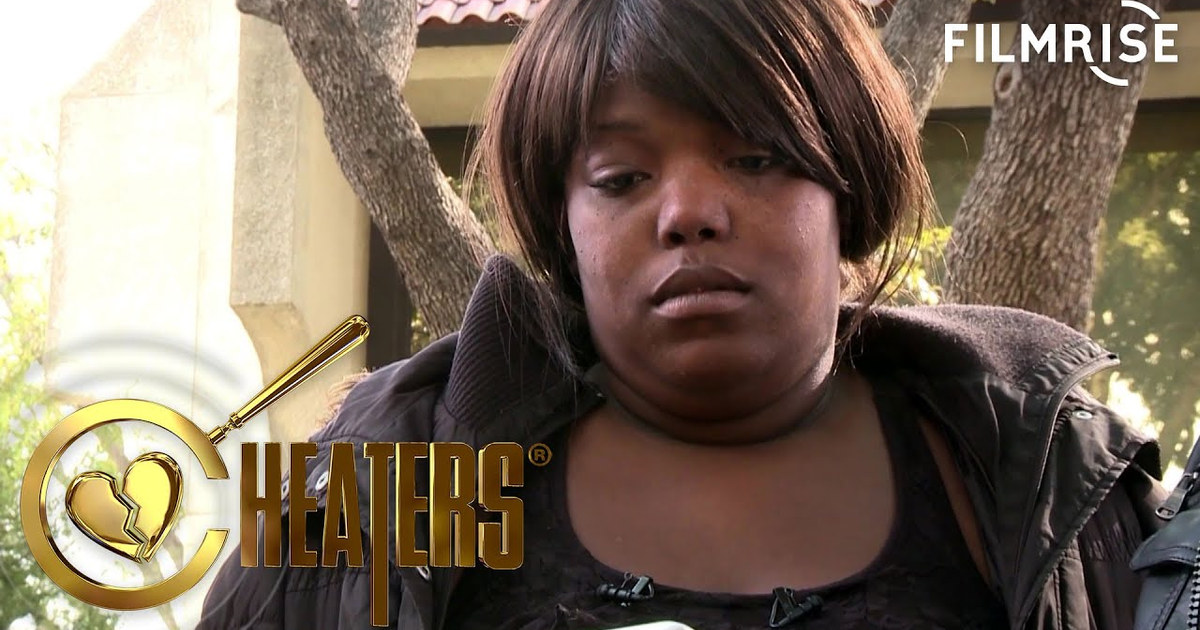
Antoinel Slaven sits in the frame and does what every great first-person narrator does: she builds a world out of small, damning objects. The phone goes under the pillow. The late shifts start appearing where none used to be. The arguments get engineered like trapdoors. In bed, his body rolls away from hers, and she reads that roll the way a novelist reads a sentence — as a decision, not an accident. "It's like woman intuition or something," she says, and the line lands not as a cliché but as a thesis statement. She is telling us how she knows. She is also, without meaning to, telling us how this show works.
Listen to the evidence list as she lays it out. "He used to love me, he used to hug me, now when he gets off of work he's too tired to make love." "He hides his phone, he has a lock on it, and we never was like that." "He sleeps with it under his pillow. When his phone rings he hurry ups and leaves the room." "He just he sings fidgety when I get near his phone." "He's going to work and he's getting off late and he never used to get off late." "It's almost like he gets mad, he gets attitude, and that's his reason for leaving. It's almost like he starts arguments so that he can leave." "Get in the bed, won't hug you and kiss you, you know, he gets in the bed and rolls right over." "It's like he has my heart in his hands and he's breaking it every day." This is not a rant. It is a deposition. She is building a case out of domestic detail, and every detail is admissible.
In the reality-TV grammar of the 2000s and 2010s, the wronged partner is both narrator and suspect. She is the one we trust to tell us what happened, and she is the one we are trained to doubt because the camera is already rolling. Antoinel's monologue is the purest version of this contract. She is not just describing her boyfriend. She is auditioning for the role of reliable witness in a genre that has never fully trusted anyone. The show needs her to be right. It also needs her to be just uncertain enough that we keep watching.


