Part 2
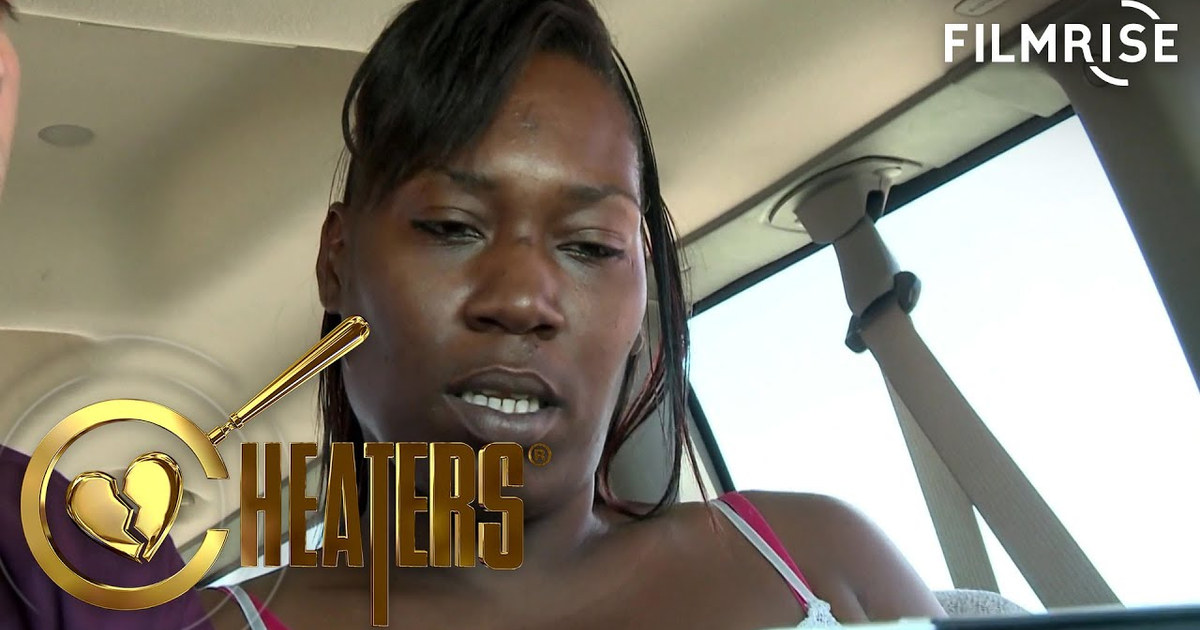
The show’s narrator sets the tone: ‘From cheater’s surveillance cameras, you are about to view actual true stories, filmed live, documenting the pain of a spouse or lover caused by infidelity.’ It’s a warning and a promise. You are about to see something real. But ‘real’ is a slippery word. The show is edited, scored, narrated. It’s shaped into a story. And we, the audience, are shaped by it. We learn to see infidelity as a spectacle, as a problem to be solved by cameras and confrontations. We learn to distrust, to suspect, to spy. And we learn to enjoy it.
In the end, *Cheaters* doesn’t answer the question it poses. It can’t. Because the question isn’t about the show—it’s about us. Do we watch because we care about the Jennifers of the world, or because we can’t look away from the car crash? Do we want justice, or do we want a show? The show’s genius is that it lets us have both. We can tell ourselves we’re on the side of the faithful, that we’re rooting for the truth, that we’re not just here for the drama. But the drama is the point. And that’s the uncomfortable truth at the heart of *Cheaters*.
[[AD]]
So the next time you see that trailer—the screaming, the car alarm, the blurry slap—ask yourself: why are you watching? The answer might say more about you than about Joseph ‘G-Nut’ Walker. And that’s exactly what the show wants. Because *Cheaters* isn’t just a show about infidelity. It’s a mirror. And we’re all looking into it.
What the Camera Sees (and What It Misses)
The camera is a liar. Not because it fabricates, but because it selects. On Cheaters, the surveillance footage is the star witness, and like any star witness, it has an agenda. The show doesn’t just observe Joseph “G-Nut” Walker’s movements over seven days; it builds a case, brick by damning brick, until the verdict is a foregone conclusion. And that’s the point. Cheaters isn’t a whodunit. It’s a how-could-you, delivered with the breathless certainty of a tabloid headline.
[[VIDEO]]
Day one. The operatives assemble outside the home Joseph shares with Jennifer. A few hours in, he exits, walks to a bus stop, and waits. Fifteen minutes later, a dark sedan pulls up. He climbs in. The camera follows. They stop at a convenience store, where an unknown woman—her arm already around his waist—buys food with him. They eat in a park. They drive back to his neighborhood, where she gets out to switch seats. He pulls her into a hug, kisses her, and slaps her behind. Then he walks the short trek back to Jennifer. The pattern is set.
Day four. Same routine. He leaves, the sedan is waiting. This time they go to a car wash. They chat, hug, kiss. The woman is now identified as Francis Boudreaux. She sits on the trunk while he playfully paws at her. After a few hours, they drive back. She lets him out around the corner. He slaps her behind again. Day seven. Bus stop, pickup, park. They grab beers from the trunk, dance, flirt, rub on each other. And then the phone call: Jennifer asks where he is. He says he’s working overtime in DeSoto, doing concrete. He tells her he loves her. She says it back.
It’s all there. The bus stop, the convenience store, the park, the car wash. The repeated slap on the behind, a gesture so casually proprietary it’s almost worse than the kissing. The lie about DeSoto. The camera sees everything. But here’s what it misses: why Joseph might be unhappy. What Jennifer’s life is like beyond this betrayal. Whether the slap is affection or habit. Whether the overtime lie is cruelty or cowardice. The camera doesn’t ask. It only records. And in recording, it condemns.
This is the surveillance aesthetic that true-crime documentaries have weaponized for decades. Think of The Jinx (2015), Andrew Jarecki’s HBO series, where Robert Durst’s own words—caught on a hot mic—become the noose. Or Wild Wild Country (2018), the Netflix docu-series that assembles archival footage into a portrait of a cult’s rise and fall. Both use the camera as an instrument of revelation, building a case from fragments. But they also leave room for doubt. The Jinx lets Durst ramble; Wild Wild Country lets the Rajneeshees speak. Cheaters doesn’t. It’s a verdict delivered before the confrontation, a guilty plea extracted by editing.
The host, Clark Gable—yes, named after the Hollywood star, a deliberate irony that the show never acknowledges—narrates the footage to Jennifer. He doesn’t just present evidence; he guides her reaction. “They’re right there,” he says, as if she can’t see for herself. His voice is calm, almost paternal, but it’s a form of emotional manipulation. The show doesn’t just reveal; it directs. It tells Jennifer what to feel, when to gasp, when to cry. Compare that to the talk-show confrontations of Ricki Lake (1993–2004), where guests screamed and threw chairs, or to Intervention (2005–present), where the camera sits quietly as families stage an ambush. Cheaters splits the difference: it’s a talk show with a detective’s badge, an intervention with a narrator who won’t shut up.
And that’s where the named comparison comes in. Errol Morris’s The Thin Blue Line (1988) used reenactments to question truth—to show how easily a story can be shaped, how slippery memory is, how the camera can lie by telling the truth. Cheaters does the opposite. It uses footage to foreclose doubt. There’s no ambiguity, no alternative reading. Joseph is guilty. Jennifer is the victim. Francis is the other woman. The camera sees everything, but it also sees nothing—it never asks why Joseph might be unhappy, or what Jennifer’s life is like beyond this betrayal. It’s a closed loop, a verdict without a trial.


