Part 3
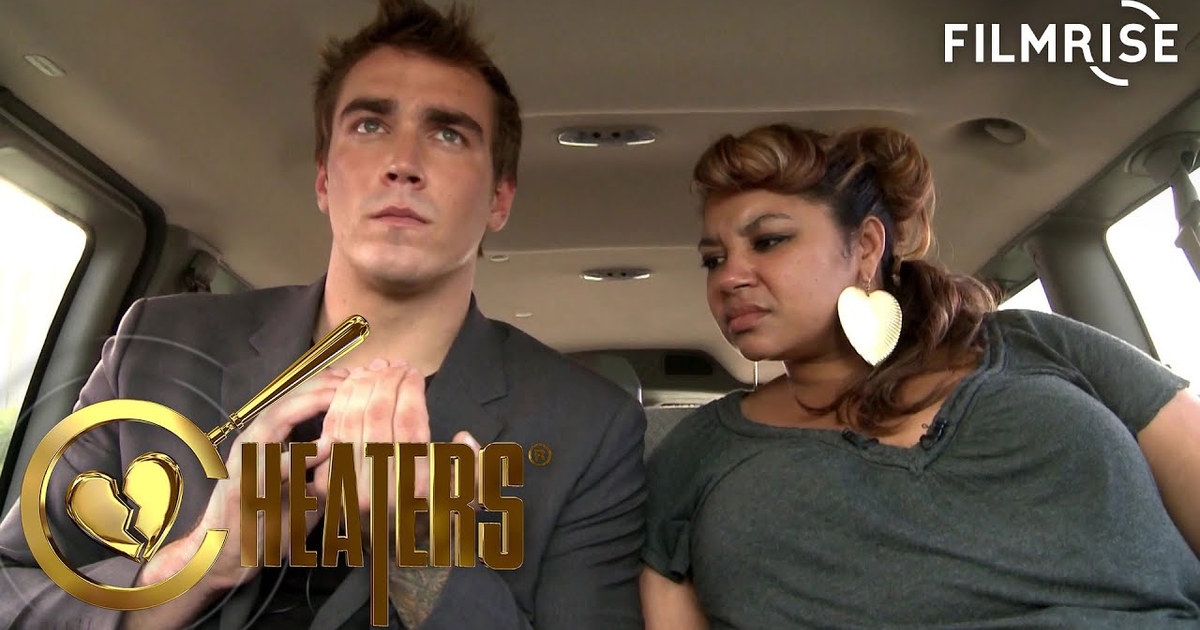
Take Priscilla Mayberry. She’s not a meme. She’s a woman who let cameras into her unraveling relationship because she needed answers. “I’m angry because of the love that I have and I’m getting treated wrong,” she says, her voice cracking. That line isn’t a punchline. It’s a thesis statement for every faithful partner who ever sensed the shift—the late nights, the missing money, the silence where conversation used to live. Priscilla isn’t a character. She’s a stand-in for anyone who has ever loved someone who stopped showing up.
[[AD]]
The show gives voice to the faithful. That’s easy to forget when the editing leans into chaos. But *Cheaters*—created by Bobby Goldstein, who also serves as the off-camera narrator—has always framed itself as a service for the wronged. The opening disclaimer calls it “dedicated to the faithful and presented to the false-hearted to encourage their renewal of temperance and virtue.” It’s a mission statement wrapped in a tabloid bow. And in a genre that often rewards villains, *Cheaters* at least pretends to care about the victims.
But let’s not kid ourselves. We’re not watching for justice. We’re watching for the moment the door opens, the accusation lands, and the mask slips. That’s the same thrill that made *The Jerry Springer Show* (1991–2018) a daytime juggernaut. Springer’s stage was a circus of paternity tests and thrown chairs; *Cheaters* swapped the studio for parking lots and apartment complexes, but the DNA is identical. Both turn private pain into public ritual. Both let us feel superior for an hour. And both raise the same uncomfortable question: are we bearing witness, or are we gawking?
The legacy of *Cheaters* is everywhere. It’s in the parody accounts, the reaction GIFs, the endless YouTube compilations. It’s in the DNA of later reality shows that mine relationships for drama—*Temptation Island* (2001–2003, revived 2019), *Love Island* (2015–present), even the reunion specials of *The Real Housewives* franchise (2006–present). The show didn’t invent surveillance as entertainment, but it perfected the formula: ordinary people, extraordinary meltdowns, and a camera that never blinks. Director Bennett Miller’s *Capote* (2005, 114 min) explored the ethics of watching someone else’s pain for art; *Cheaters* does it for ratings, and we tune in anyway.
Critics have a point. The show has been accused of exploitation—paying subjects, staging confrontations, and editing for maximum humiliation. It’s been criticized for reinforcing stereotypes about jealousy, gender, and class. And the ethics of surveillance as entertainment are murky at best. When we watch a woman discover her partner’s betrayal in real time, are we complicit? The show’s defenders say it’s a public service; the detractors say it’s a freak show. The truth is probably somewhere in between, which is exactly where most of us live.
Here’s the reframe: we are all detectives now. Our phones are our surveillance cameras. Our social media feeds are our evidence logs. We check locations, read DMs, screenshot stories, and build cases in our heads before we ever ask a direct question. *Cheaters* didn’t create this behavior—it just made it explicit. The show is a mirror held up to a culture that has turned suspicion into a hobby and proof into a currency. We don’t need a private investigator; we have a group chat.
So maybe the real investigation isn’t into the cheaters. It’s into our own appetite for this kind of content. Why do we need to see the confrontation? Why does someone else’s heartbreak feel like validation? The answer isn’t pretty, but it’s honest. *Cheaters* is a guilty pleasure because it lets us off the hook. We’re not the ones being betrayed; we’re the ones who get to watch. And in a world where everyone’s a detective, that’s the ultimate alibi.
Next time, we’ll look at how *Cheaters* handles the fallout—and whether anyone ever finds closure. Because the cameras eventually stop, but the questions don’t.


