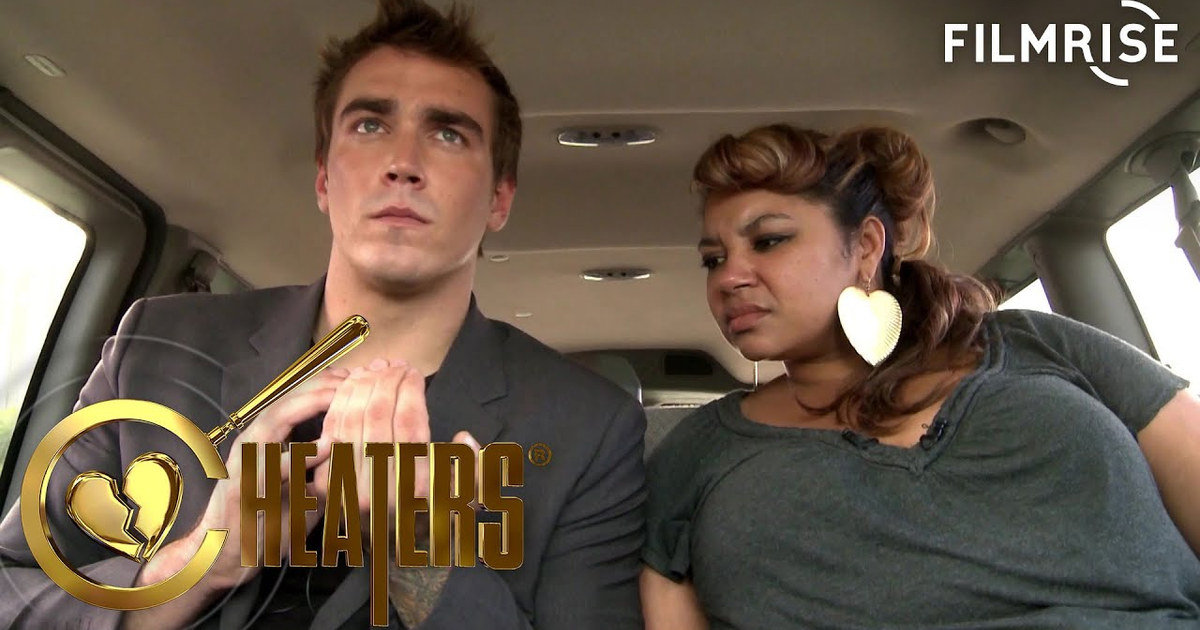
Part 1
The Phone Call That Holds the Whole Episode
One phone call. That’s the whole episode. The rest is just evidence.
Priscilla Mayberry dials. D picks up. She asks the question every betrayed partner eventually asks: “Hey, you’re not cheating on me, are you?”
He doesn’t miss a beat. “Why, why you say that? No, I ain’t.” Then he pivots. “You know what kind of job I got. It required me to be out. I’m just trying to make some money for us, man. You know I wouldn’t cheat on you, babe. You know, I love you.”
That’s the thread. Pull it, and the whole episode unravels.
This is Cheaters. The syndicated reality series that’s been running since 1999. You know the format. Surveillance footage. A narrator with a voice like gravel and velvet. A confrontation that always ends with someone sprinting down a sidewalk. The show’s intro says it’s “dedicated to the faithful and presented to the false hearted.” That’s the pitch. But the real product is the moment a lie gets caught on tape.
In this episode, the lie is D’s. He’s 32. A tattoo artist. He and Priscilla have been together three years. Lived together for two. Then the bills started falling behind. Receipts for movies, groceries, eating out — none of it making it home. “Where are these groceries going if you’re at work every day?” Priscilla asks the camera. Good question. The surveillance team answers it.
But first, that phone call. Because the call is where D stops being a boyfriend and starts being a performer.
Listen to the rhythm. Priscilla: nervous, apologetic. D: smooth, defensive, then offensive. He doesn’t just deny. He builds a case. “You know what kind of job I got.” Translation: your suspicion is unreasonable. “I’m just trying to make some money for us.” Translation: I’m the good guy here. “You know I love you.” Translation: stop asking questions.
By the end, she’s the one apologizing. “Okay. Well, you know, I’m sorry. Maybe it’s just me. Maybe I’m just tripping.” He closes with “Don’t think negative, man.” Then “I’ll see you later, babe. We’ll talk about it.”
That’s a masterclass in gaslighting, cut to fit a 30-minute TV block. And Cheaters knows it. That’s why the narrator drops the call right in the middle of the surveillance timeline. We’ve already seen D on day two, hugging a woman outside a coffee shop, then pulling her onto his lap. Day five: pizza, kissing, leftovers. Day seven: convenience store, holding hands. The phone call lands like a punchline. He’s telling Priscilla he loves her while Jenny’s hand is in his.
The show’s been doing this since before most of its subjects had smartphones. Cheaters premiered in 1999, created by Bobby Goldstein. It’s been syndicated ever since, a staple of late-night TV and streaming platforms like Tubi and Pluto TV. The format hasn’t changed much: real people, real surveillance, real meltdowns. The host, Clark Gable — no, not that one — introduces each case with a straight face. “I’m Clark Gable, and this is Cheaters.” Then the detectives go to work.
What makes this episode different? The phone call. Most Cheaters segments build to the confrontation. The cheating is a given. The drama is in the reveal. But here, the phone call is the reveal. It’s the moment we see the lie in real time. Not just the act, but the performance. The way D says “babe” like a shield. The way Priscilla folds. The way the truth is already sitting in the surveillance footage, waiting to be played back.
And that’s the art of the lie. It’s not just denying. It’s making the other person doubt their own eyes. D does it in under a minute. He doesn’t have to explain the receipts. He doesn’t have to account for his time. He just has to sound hurt enough, busy enough, loving enough. “You know I wouldn’t cheat on you, babe.” The “babe” is the tell. It’s too easy. Too rehearsed. But Priscilla wants to believe. So she does.
We’ll come back to this call. Because everything that follows — the surveillance, the confrontation, the sprint — is just the echo of that one conversation. The phone call is the seed. The rest is the fallout.
For now, remember the rhythm. Ask. Deny. Deflect. Apologize. That’s the beat. And D hits every one.
Next: how Cheaters builds the case. The stakeouts. The coffee shop. The pizza joint. The convenience store. The detectives don’t just catch D. They assemble a timeline. And when they play it back for Priscilla, the phone call will sound a lot different.
Cut to the Surveillance: How Cheaters Builds the Case
Day two. A coffee shop. D rolls up, grabs his java, and posts up on the patio. Twenty minutes later, a woman walks in. Big hug. Laughs. Then she sits on his lap. Kiss. Kiss goodbye. The camera doesn't blink.
That's the first beat. And it lands like a cold open in a thriller. But this isn't a movie. It's Cheaters — the reality show created by Bobby Goldstein in 1999. And it's been perfecting the art of the televised lie for over two decades.
[[AD]]
The show's structure is a three-act tragedy. Act one: the suspicion. Act two: the surveillance. Act three: the confrontation. We're in act two now. And act two is where Cheaters does its dirtiest work.


