Part 2
So when you watch Andrea Rosales confront Tommy, and the camera is struggling to keep up, and the sun is blowing out half the frame, and the audio is clipping because the operator is too close to the argument — remember: that's not a mistake. That's the whole point. Cheaters is the most honest documentary on television because it never pretends to be anything but a surveillance camera with a narrator. And that honesty is its genius.
[[AD]]
Andrea's Story: The Emotional Core and the Camera's Cold Eye
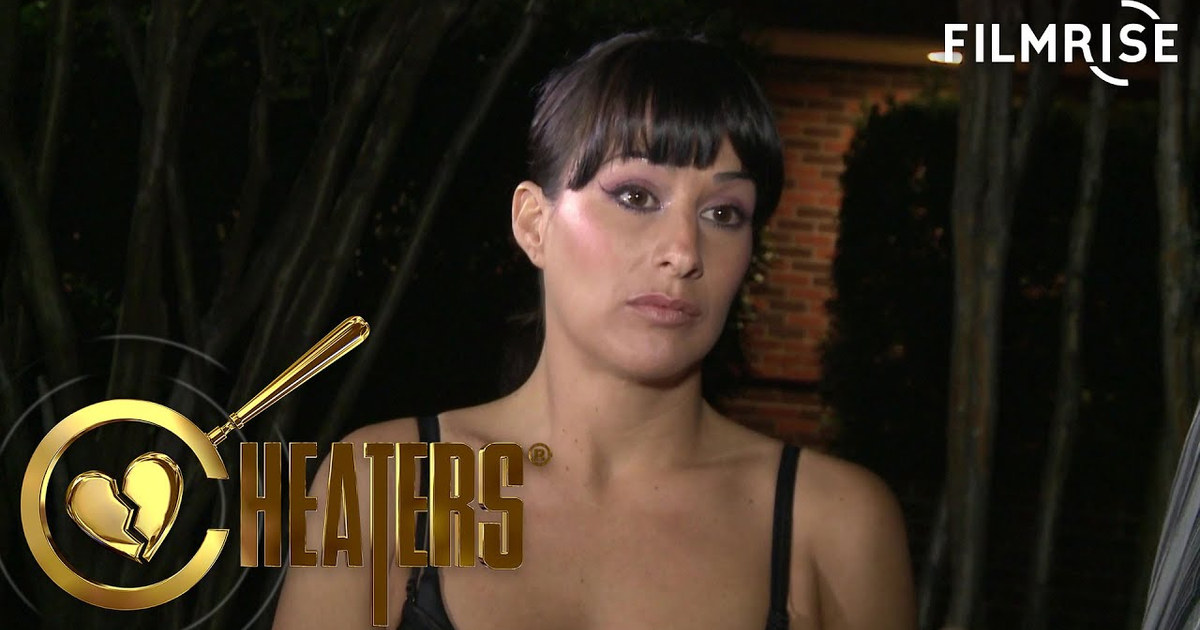
Andrea Rosales sits in a chair that seems to swallow her. The naturalistic lighting is unforgiving: a flat, on-camera key with no bounce card, no fill, and a window blazing behind her left shoulder. The result is a face half in shadow, half blown out — the kind of exposure a one-man-band operator gets when he's also running audio and can't reposition a reflector. Yet that technical limitation becomes the visual signature of Cheaters: raw, unvarnished, and accidentally perfect for a show about betrayal.
She describes how she met Tommy. "I was walking out of a lounge... I thought there was a chair underneath the cushion and there wasn't and I busted my butt pretty hardcore. And he didn't laugh at me. He just got up, helped me out, bought me a drink, and we've just kind of connected ever since." It's a meet-cute worthy of a rom-com, but the camera doesn't romanticize it. The lens — likely a stock zoom at f/4 — holds her in a medium close-up that feels more like a deposition than a love story.
That visual austerity is the point. In observational cinema, the camera is a fly on the wall; here, it's a fly that hasn't been fed. The lack of polish forces us to focus on Andrea's words, not the production value. And her words cut. "I don't have time for this. This is not a game to me. You don't want me to get gangster. You don't want me to go off. You don't want that old me to come back out." She's not performing for the lens; she's trying to hold herself together while the lens records every micro-expression.
[[VIDEO]]
Contrast that with Tommy's later evasion. When confronted, he deflects, minimizes, and never matches her emotional transparency. The camera catches his shifty eyes, his half-smiles, his inability to sit still. It's a masterclass in how lighting and framing can expose a liar without a single word of narration. The same flat key that made Andrea look vulnerable makes Tommy look guilty.
But the real gut punch comes from the surveillance sequences. Day 2: Tommy drives to an apartment complex, picks up an unknown woman. Day 3: they go to a restaurant in the arts district. Day 6: a bar on the east side. The camera is positioned from a parked car, often shooting through windshields or foliage — a long lens, probably a 70-200mm at f/2.8, compressed and distant. The voyeuristic framing is unmistakable: we are peeping, and we know it.
The surveillance team captures a "linger hug" and a kiss. These aren't dramatic reveals; they're mundane, almost boring. And that's what makes them devastating. The camera's cold, distant eye turns emotional betrayal into clinical evidence. There's no music, no slow-motion, just the ambient hum of a hidden microphone and the whir of a zoom lens. It's the opposite of a soap opera — and it hurts more because of it.
Narrator Clark Gable (not the actor) delivers his lines with deadpan precision: "Andrea's intuition is on high alert." His voice is the only warmth in the frame, and even that is ironic. He's the detached observer, the voice of the surveillance state, guiding us through the wreckage with the calm of a docent at a museum of broken hearts.
This approach — naturalistic lighting, long-lens surveillance, observational cinema — places Cheaters in a lineage with HBO's The Jinx (2015) and Netflix's Wild Wild Country (2018). Both use archival footage and hidden cameras to build a case, but Cheaters did it first, and with a fraction of the budget. The show's visual language is a precursor to the true-crime boom, proving that a shaky, poorly lit shot can be more powerful than a polished reenactment.
In the end, Andrea's story isn't just about infidelity; it's about the camera's role in documenting pain. The cold eye doesn't judge, but it doesn't console either. It just watches. And sometimes, that's the most devastating thing of all.
What to Watch For: The Legacy of Cheaters' Visual Language
Day 6. The surveillance van is parked across the street from Tommy's apartment. Again. The same cracked curb, the same flickering sodium vapor streetlamp, the same low-angle shot from the passenger seat of a Ford Econoline. Tommy exits his building. Again. He checks his phone. Again. He walks left. Again. The repetition is the point. In the edit, the show cuts these near-identical beats together like a visual refrain, and what emerges isn't just evidence — it's a motif. The camera doesn't flinch. It doesn't get bored. It just watches, and watches, and watches, until the mundane becomes damning.
That's the thing about Cheaters. It's not just a reality show. It's a visual grammar that prefigured the entire true-crime boom by a decade. Long before Netflix's Making a Murderer (2015) or HBO's The Jinx (2015) made surveillance footage and reenactment cool, Cheaters was already doing it — with a Sony DCR-VX1000 and a prayer.


