Part 1
The Thesis: Cheaters Is a Masterclass in Accidental Documentary Realism
Cheaters is the most honest documentary on television because it never pretends to be anything but a surveillance camera with a narrator. That's the whole thesis. Everything else — the confrontations, the host's trench coat, the shaky zooms — is downstream of that one visual contract.
I've shot second unit on enough sets to know when a show is faking it. Most reality TV is shot like a car commercial: Arri Alexa, cine primes, a gaffer bouncing HMI off a 12x12 silk, a colorist in a dark room pushing teal into the shadows. Cheaters does none of that. And that's why it works.
Take the 2000 syndicated episode featuring Andrea Rosales. She's a woman who suspects her boyfriend Tommy, a 37-year-old salesman, is stepping out. The host — in that flat, almost bored baritone — opens with the show's mission statement: 'From cheater's surveillance cameras you are about to view actual true stories filmed live documenting the pain of a spouse or lover caused by infidelity.'
Read that again. 'Surveillance cameras.' 'Filmed live.' 'Actual true stories.' That's not a tagline. That's a visual contract with the audience. It tells you exactly what you're about to see: not a polished narrative, but raw footage captured by a detective agency. The show's creator, Bobby Goldstein, built the entire enterprise around that promise. The Cheaters Detective Agency isn't just a plot device — it's the in-universe production entity, the fictional (or not-so-fictional) outfit that supposedly shot the footage you're watching.
Compare that to The Bachelor, which premiered on ABC in 2002 and is still going. That show is lit like a perfume ad. Soft key, warm rim, shallow depth of field, a color grade that makes everyone look like they're bathed in golden hour. It's beautiful. It's also a lie. The Bachelor pretends to be a documentary about finding love, but it's shot like a feature film. Cheaters never makes that mistake.
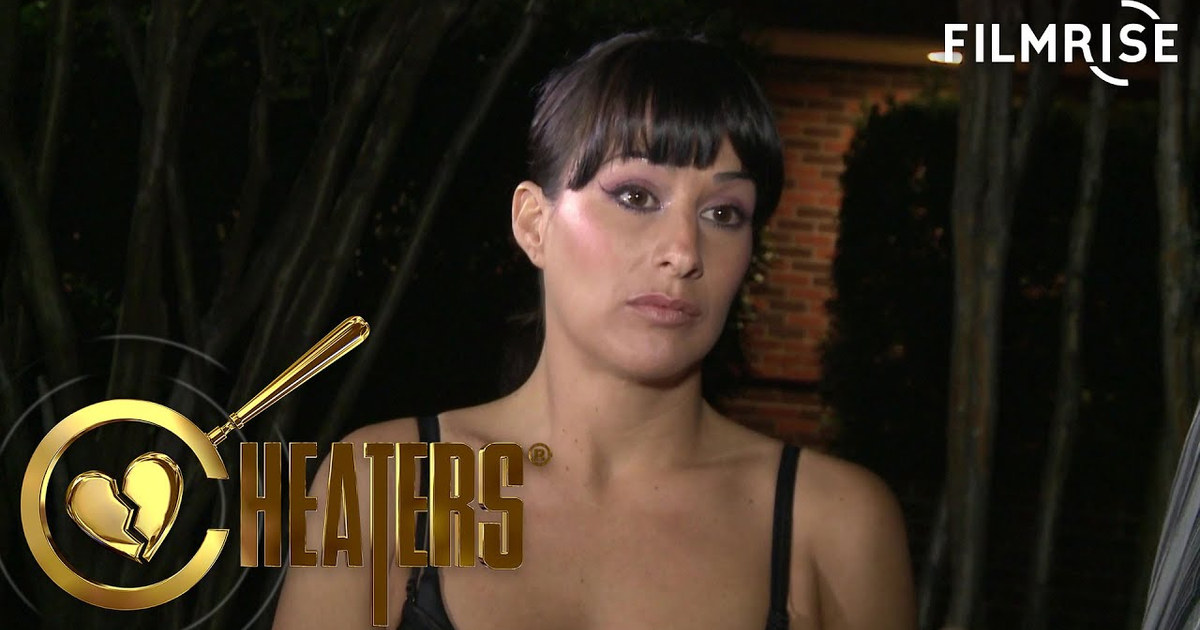
The visual grammar of Cheaters is brutally simple. Long lenses — think 100mm to 200mm zooms on 2/3-inch CCD camcorders. That's the classic run-and-gun setup: a Sony or Panasonic ENG camera with a built-in zoom, no prime lenses, no follow focus, no matte box. You're not racking focus with a wireless follow focus unit. You're grabbing the servo zoom and praying the autofocus holds. The result is that unmistakable reality-TV look: slightly soft, slightly noisy, with that video-ish motion cadence that screams 'local news.'
Lighting? There is no lighting kit. Available light only. If the confrontation happens in a parking lot at 2 p.m., you get harsh top-down sun and raccoon shadows. If it happens in a dimly lit bar at 11 p.m., you get gain noise and blown highlights from the neon sign. A cinematographer friend of mine calls it 'the anti-DP aesthetic.' No bounce, no negative fill, no diffusion. Just the world as it is, captured by a guy who probably learned on a camcorder in the '90s.
And the camera work? Handheld. Always handheld. Not the smooth, gimbal-stabilized handheld of a Marvel movie. I mean the jittery, breathy, operator-is-walking-behind-the-subject handheld. You can hear the footsteps in the audio. You can see the frame drift when the operator gets excited. It's the visual equivalent of a panic attack, and it's perfect for this show.
Now, here's where the thesis gets interesting. Cheaters started in syndication in 2000. It later moved to VH1 and MTV, where it found a whole new audience of irony-loving millennials. But the visual style never changed. Even when the budget got bigger, the show kept the same 2/3-inch CCD look, the same long lens, the same available light. Why? Because the look is not a bug. It's the whole point.
Think about what that visual contract does to the audience. When you see a glossy, cinematic reality show, your brain knows it's produced. You're watching a product. But when you see grainy, shaky, poorly lit footage, your brain flips a different switch. It says: this is evidence. This is a document. This is real. The show's aesthetic is a credibility engine. It's the same reason bodycam footage feels more 'true' than a police procedural. It's the same reason The Blair Witch Project (1999, directed by Daniel Myrick and Eduardo Sánchez, 81 minutes) scared people who would never flinch at a slick slasher. The look itself is an argument.
And that argument is: we are not entertainers. We are surveillance. We are the private eyes. We are the camera you're not supposed to see. The host's intro — 'From cheater's surveillance cameras you are about to view actual true stories filmed live' — is the entire visual contract in one sentence. It's not just telling you what you're about to see. It's telling you how to watch it. Don't watch this like a soap opera. Watch it like a stakeout video. Watch it like evidence.
This is why Cheaters, for all its trashy reputation, is actually a masterclass in accidental documentary realism. It's not trying to be Frederick Wiseman. It's not trying to be Cinema Verité. It's trying to be a detective agency's raw footage, and it succeeds because it never tries to look like anything else. The shaky zooms, the blown-out windows, the muffled audio — these aren't failures of craft. They're the craft. They're the visual language of a show that understands something most reality TV forgot: if you want people to believe you, don't make it pretty. Make it look like it was shot by a guy with a camcorder and a grudge.


