Part 2
[[VIDEO]]
Then there's the high angle. When the couple leans in close, Ebony resting her head on Kyle's shoulder, the camera tilts down. This isn't a neutral eye-level observation. A high angle looking down on the couple positions the viewer as judge. It's a god's-eye view, and it says: we see you. In cinematography, high angles often signify vulnerability or moral judgment. Think of the overhead shots in David Fincher's Zodiac (2007, 157 min), where the killer is often seen from above, as if fate is watching. Here, the high angle turns a romantic moment into evidence. Every touch is catalogued.
The close-ups of physical touch are where the telephoto lens earns its keep. A long lens compresses space, flattens the image, and isolates the subject. When Kyle's hand lands on Ebony's back, the shot is tight—just the hand, the fabric, the motion. We don't need to see their faces to understand the intimacy. The telephoto also allows the camera to shoot from a distance, undetected. That's crucial for a show like Cheaters, where the subjects are unaware. But it also creates a specific aesthetic: shallow depth of field, blurred background, and a hyper-focused foreground. It's the same technique used in sports photography to isolate a quarterback's throw, or in nature docs to capture a lion's kill. Here, it captures a betrayal.
Now, intercut with this surveillance footage is a phone call between Kyle and Kennethia. Kyle tells her he's 'about to go have a couple of cigars' and 'probably have a couple drinks.' Meanwhile, we see him on the patio with Ebony, kissing her goodbye. The audio and visual juxtaposition is pure dramatic irony. We know the truth; Kennethia doesn't. This editing choice isn't just about storytelling—it's about emotional manipulation. The show wants us to feel Kennethia's pain and Kyle's deceit simultaneously. It's a technique borrowed from narrative film, like the intercut phone calls in Steven Soderbergh's Traffic (2000, 147 min), where conversations overlap to show converging lives. Cheaters uses it to show diverging ones.
Compare this to Cops (1989–), the long-running reality show that pioneered the ride-along format. Cops is shot with handheld cameras, often at eye level, with a raw, vérité style. The goal is immediacy—you're in the back of the squad car. Cheaters, by contrast, is more cinematic. It uses tripods, long lenses, and carefully composed shots. The close-ups are tighter, the angles more deliberate. Where Cops wants you to feel the chaos, Cheaters wants you to feel the calculation. It's the difference between a documentary and a thriller.
The Mexican restaurant scene is a masterclass in visual storytelling. Every frame is designed to make you complicit in the surveillance. The natural frames, the over-the-shoulder shots, the high angles, the telephoto close-ups—they all serve a single purpose: to turn a private moment into public evidence. And when the phone call plays over it, the irony cuts deep. You're not just watching a cheating scandal; you're watching a cinematographic trap being sprung.
What to watch for in the next section: the confrontation. That's where the lighting changes, the sound design goes haywire, and the careful compositions of the surveillance footage give way to chaos. The camera becomes a participant, not just an observer. And that's when Cheaters truly earns its reputation.
[[AD]]
The Confrontation: Lighting, Sound, and the Art of Chaos
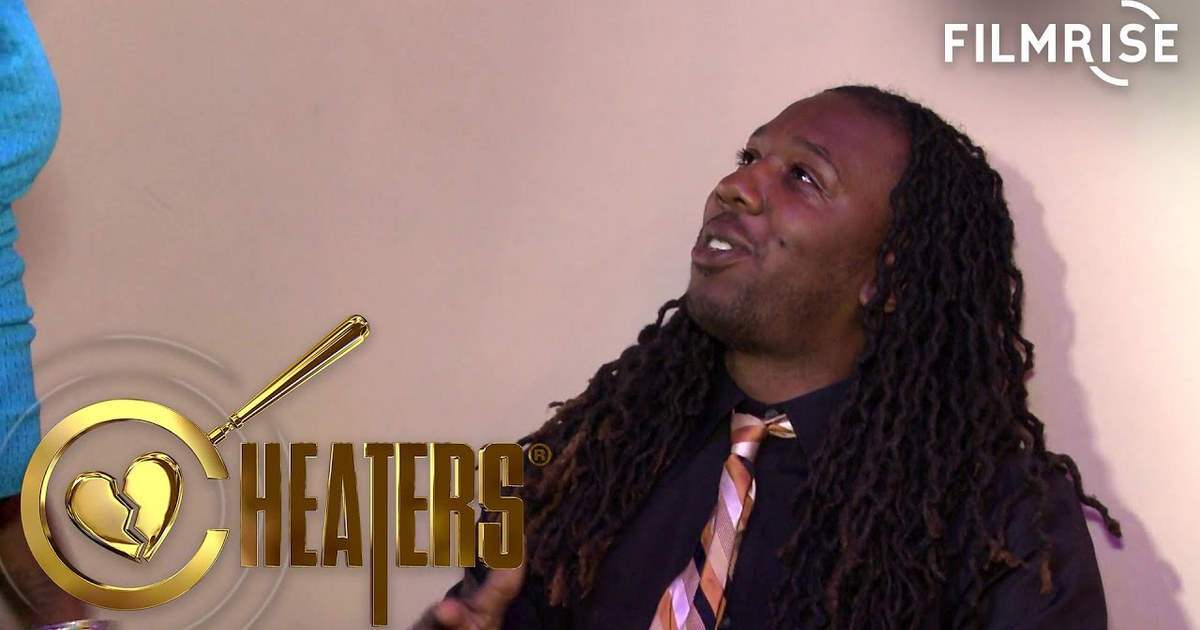
Day eight. The House of Cigars. This is where the surveillance ends and the ambush begins. As a cinematographer who's shot second-unit on everything from gritty indies to polished network dramas, I can tell you: this is the money shot. And it's a masterclass in controlled chaos.
The setup is pure guerrilla filmmaking. Multiple camera operators, likely wielding DSLRs with wide-angle lenses—think 24mm or 35mm primes—to capture every angle in a cramped indoor space. No room for tripods. No time for rehearsals. Just handheld, run-and-gun coverage that puts you right in the middle of the meltdown.
The lighting? A nightmare. Mixed sources: tungsten from overhead fixtures, fluorescent from the bar, neon signs bleeding magenta and green into the frame. The camera operators are constantly adjusting exposure on the fly. Blown highlights on faces, crushed blacks in the corners—it's not pretty, but it's real. And that raw, unpolished look? That's the point. It feels like you're there, not watching a glossy production.
But the real magic is in the sound. On-camera mics pick up the ambient chatter, the clink of glasses, the sudden rise in voices. A boom mic—if they can swing it—captures dialogue amid the chaos. The sound design layers in dramatic music, but it never overpowers the raw emotion. It heightens tension without turning it into a soap opera.
Compare this to reality TV confrontations like Jerry Springer (1991–2018) or Maury (1991–). Those shows rely on studio lighting, multiple cameras, and a live audience. Cheaters takes the same DNA and injects it with cinematic techniques. The handheld camera, the natural lighting, the location sound—it's all designed to make you feel like a fly on the wall. And it works.
So what can we learn from this? Watch the camera angles. Notice how the operators frame the confrontation—tight on faces during accusations, wide when the chaos spills over. Pay attention to the lighting. The blown highlights aren't accidents; they're the result of a camera operator making split-second decisions to keep the action in frame. And listen to the sound. The mix of ambient noise and dramatic music is a delicate balance, one that manipulates your emotions without you even realizing it.
In the end, Cheaters isn't just a show about infidelity. It's a case study in how to capture raw, unscripted drama with the tools of cinema. And for any aspiring cinematographer, it's a reminder that sometimes the best shots come from embracing the chaos.


