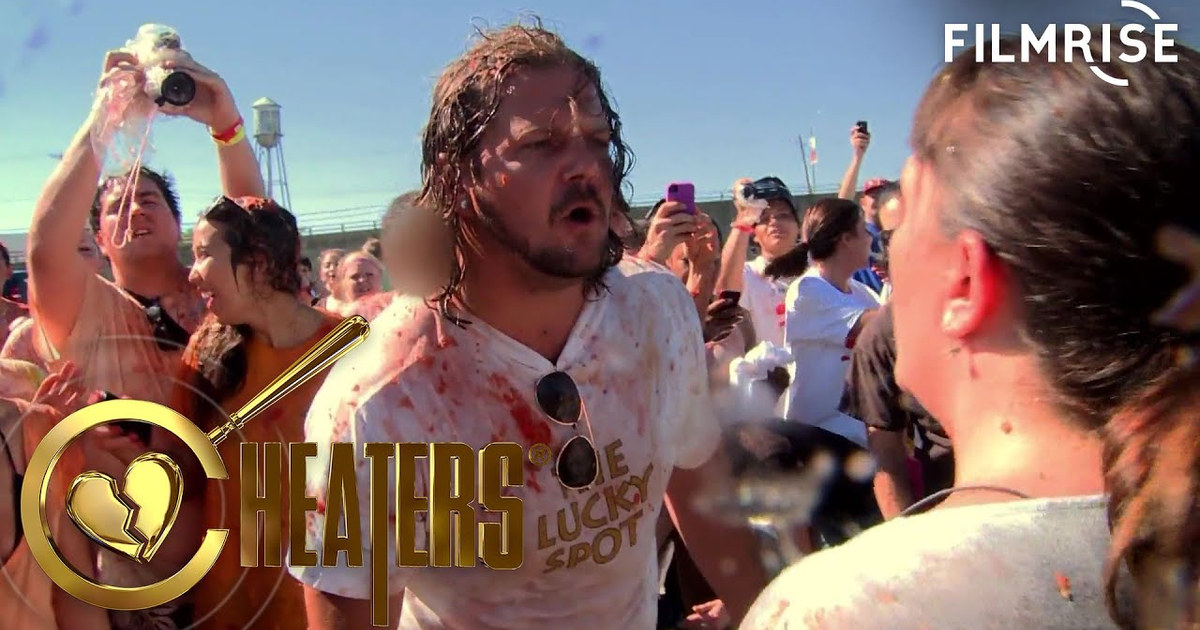
Part 1
The Surveillance Aesthetic: How Cheaters Weaponizes Lo-Fi Video
Cheaters is not just a reality show; it's a masterclass in using low-fidelity surveillance aesthetics to manipulate audience empathy and judgment. As a cinematographer who's shot second-unit, I can tell you: the degraded image is the message. From the opening frames, we're not watching a show—we're watching "evidence." And that evidence is deliberately ugly.
The show opens with a warning: "From cheater's surveillance cameras... you are about to view actual true stories filmed live." The footage is grainy, high-contrast, often black-and-white or washed in green night-vision. It mimics real security cams—the kind you see in parking garages and convenience stores. This isn't accidental. By degrading the image, the show primes viewers to accept what follows as unvarnished truth. It's a visual contract: this is raw, this is real, this is not Hollywood.
But here's the thing—Hollywood invented this look. Think of Michael Powell's Peeping Tom (1960, 101 min), where the killer's camera is a weapon. Or Michelangelo Antonioni's Blow-Up (1966, 111 min), where a photographer enlarges a grainy park photo to uncover a murder. And Francis Ford Coppola's The Conversation (1974, 113 min), where Harry Caul's surveillance audio is so lo-fi it becomes a Rorschach test for paranoia. Cheaters borrows that grammar wholesale. The difference? Cheaters wants you to trust the grain, not question it.
Let's break down the visual language. First, the opening sequence: those degraded clips are often shot with cheap consumer cameras or actual security cams, then color-graded to look even worse. The high contrast crushes shadows, so faces become masks. The grain adds noise, so details blur. This is the opposite of prestige TV's clean 4K. It's punk. It's VHS. And it works—because our brains associate poor image quality with authenticity. We think: if it looks this bad, it must be real.
Now, the stakeouts. This is where the show's DP (likely a rotating crew of field producers) earns their keep. On Day 3, we get golden-hour shots of Justin Bell meeting Christie at a gas station. The light is warm, low-angle, almost romantic—except it's shot from a distance, through a long lens. The sun flares across the frame, but the composition is tight, isolating the two. It's beautiful and damning at once. That's the surveillance aesthetic: make the illicit look cinematic, then remind us it's stolen.
Then Day 5: the bar and grill. Harsh fluorescent interior. Greenish tint. Shadows under the eyes. This is the opposite of golden hour—it's the ugly truth of indoor infidelity. The lighting is flat, unflattering, clinical. It says: this is what cheating really looks like. No romance, just bad lighting and bad decisions. The contrast with the Cheaters detective agency office is stark. The office is lit with soft, even key lights—almost sitcom-bright. It's the calm before the storm, the "professional" space where truth is manufactured.
Lens choice matters here. The field crews almost certainly use long telephoto zooms—think 70-200mm f/2.8, maybe a 100-400mm for the really distant stuff. That compression flattens space, pulling subjects out of the background and stacking them like layers in a painting. It isolates them. It makes them feel watched. Compare that to the wide-angle, handheld look of the confrontations. On Day 6, the lake scene, the camera is shaky, close, almost claustrophobic. We're no longer observers; we're participants. The tripod is gone. Stability is gone. The message: truth is messy.
And then there's Clark Gable—the host, not the Gone with the Wind star (though the name is a deliberate echo). His direct-to-camera addresses are lit flat and even, like a news anchor. No grain, no contrast, no ambiguity. He's the calm, authoritative narrator, the one who tells us what we're seeing. His lighting is the visual equivalent of a voiceover: it reassures us that someone is in control. But is he? The show's genius is that it gives us both: the chaotic field footage and the composed host. We want to believe Gable. We want to believe the grain. That's the manipulation.
So when you watch Cheaters, don't just watch the cheating. Watch the image. Watch how the show uses lo-fi video to make you feel like a detective, a judge, a jury. It's not just entertainment; it's a visual argument. And like any good argument, it's built on a foundation of carefully chosen evidence—and carefully chosen pixels.
Editing the Evidence: Pacing, Sound, and the Construction of Guilt
The bar is loud, but you don't hear it. Christie twirls on her stool, hair whipping across a neon sign, and Justin's hand lands on her backside with a swat that reads like a signature. The camera holds. It holds long enough for you to feel the heat rise in your own face. That pause isn't an accident. It's an edit point, a breath, a deliberate beat that lets the audience react before the show moves on. In that moment, Cheaters stops being a documentary and becomes a courtroom where the verdict is already decided.
I've shot second-unit on reality shows, and I can tell you: the edit is where the story gets built. The raw footage is chaos. The edit is the argument. And in this episode, the argument is that Penny's hope is a setup, and Justin's guilt is a punchline. Let's break down how they cut it.
The Rhythm of the Reveal: Quick Cuts and Dramatic Irony
Watch the sequence where Penny sits in her living room, leg still healing from the mosh-pit disaster, and says, 'I hope to God he's not.' The edit doesn't let that sentence breathe. It slams directly into surveillance footage of Justin and Christie at the bar, his hand on her waist, her laugh cutting through the frame. That's a hard cut, no dissolve, no fade. It's the visual equivalent of a slap. And it's designed to make you feel smart. You know something Penny doesn't. That's dramatic irony, and Cheaters wields it like a cudgel.


