Part 3
[[AD]]
Cheaters has been running since 2000. It has been syndicated across platforms, packaged and repackaged, and it spawned an actual detective agency — the Cheaters Detective Agency, advertised inside the show itself. That detail matters. This isn’t just television. It’s a business that sells private pain as public proof. “Exercise your right to be informed,” the voiceover says. Investigative charges may apply. You can hire the cameras. You can buy the confrontation. The truth, apparently, is a service.
And that service has a lineage. Michael Powell’s Peeping Tom (1960, 101 minutes) is the film that understood this first. Carl Boehm plays Mark Lewis, a focus puller who murders women while filming their faces, the camera literally mounted on a tripod that doubles as a weapon. Powell was destroyed by critics at the time — the film effectively ended his career in Britain — because he showed the audience something unbearable: that the act of watching can be an act of violence. Cheaters doesn’t kill anyone. But it does understand, whether it admits it or not, that pointing a lens at a person’s worst moment changes that moment forever. The camera is not neutral. It is a participant.
Compare that to the modern true-crime boom. Netflix and Hulu have turned other people’s worst days into content — the disappearance, the murder, the betrayal, the trial. The appetite is insatiable. Cheaters is the low-rent ancestor of that appetite, the same impulse without the prestige sheen. It says the quiet part out loud: you are about to view actual true stories filmed live documenting the pain of a spouse or lover caused by infidelity. That’s not a warning. It’s a promise.
So what does Ariel actually want? She says she wants the truth. But watch her language. She doesn’t ask “did he cheat?” She says “I don’t know what it is.” She says “something’s not right.” She is not looking for a fact. She is looking for a verdict. A fact is a kiss in a van. A verdict is thirty years were real or thirty years were a lie. Surveillance can deliver the first. It cannot deliver the second. No camera can.
This is the ethical knot at the center of surveillance entertainment, and Cheaters has been pulling it tighter for a quarter century. The show’s format is a machine: suspicion goes in, footage comes out, confrontation follows. The footage is real. The pain is real. But the meaning is manufactured. Editing, scoring, narration — “accused of serving up extra helpings to another woman” — all of it shapes what you see before you see it. The show doesn’t discover the story. It produces it.
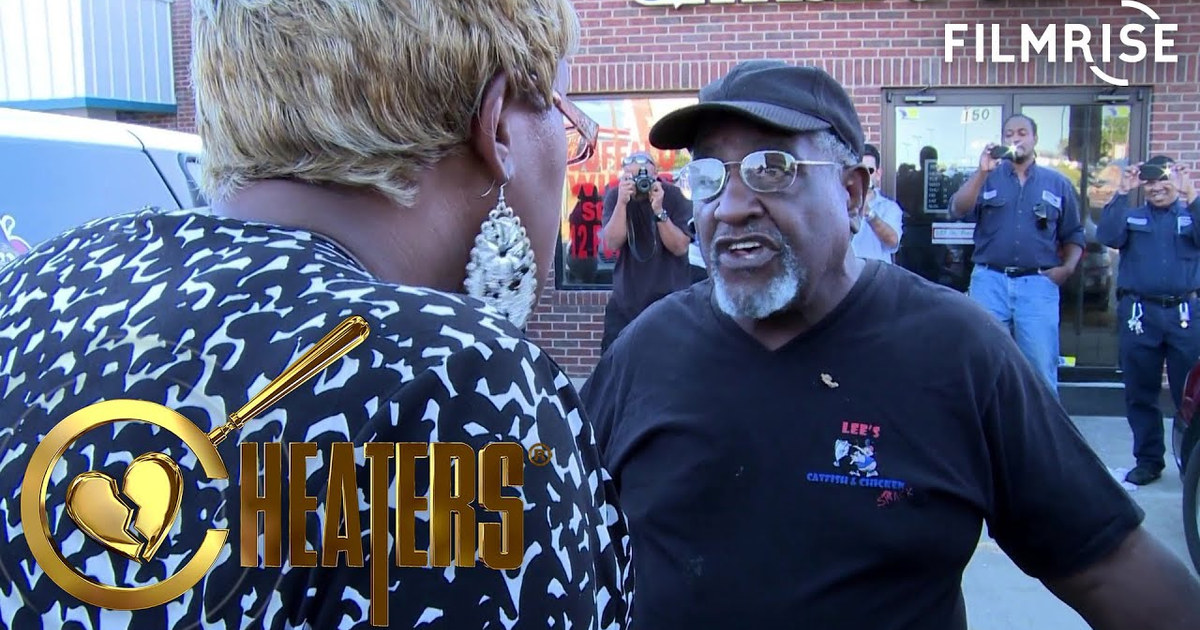
And Ariel is not a character. She’s a person. She’s 30 years into a relationship with a 69-year-old restaurant cook named Virgil, and she has handed her most private uncertainty to a production company that will turn it into an episode. Whatever the cameras find, she will have to live with it. The show will move on to the next case. She will not.
There’s a scene in Peeping Tom where Mark watches his own childhood footage, his father’s experiments in fear, and you realize the camera has been a weapon since before he was born. Cheaters has its own version of that inheritance. It didn’t invent surveillance as spectacle. It inherited it from tabloid TV, from Cops (1989–present), from the entire architecture of reality programming that treats human breakdown as a renewable resource. It just made it transactional. You can call the detective agency. You can pay for the proof.
But here’s the thing the show can never show you: the moment after. The cameras cut. The confrontation ends. The episode airs. And Ariel is left with a kiss on tape and a question that still has no answer. Was it a one-time mistake? Was it nothing? Was it everything? The footage doesn’t say. It can’t. It shows you a van, a pair of boots, a door opening. It cannot show you what thirty years meant. That meaning lives somewhere the lens can’t reach.
The show ends with evidence, not resolution. That’s the cost. You get the proof, and you lose the ambiguity that might have let you keep living. Ariel came in saying “I hope it’s not true.” She leaves with something worse than not knowing: knowing just enough to never be sure again.
The camera never lies. But it never tells the whole truth either. It gives you a frame and calls it a window. It gives you a moment and calls it a life. And when the confrontation finally comes — when Virgil sits across from Ariel and the agents close in and the theme music swells — someone will walk away changed. The question is whether the change was worth the proof. That’s what we’ll find out next.


