Part 2
[[AD]]
Day four. The same woman. This time, Virgil meets her again. They kiss. They hug. They walk hand in hand to a dimly lit area behind the building. They disappear for about 20 minutes. Then they re-emerge. The narrator, in a voice that oozes certainty, declares that 'duplicity is clear.' But is it? What did they do behind the building? Talk? Smoke? Kiss? Something more? The camera doesn't follow them. It waits. And when they come back, the narrator tells us what we're supposed to think. But the footage itself is silent on the matter.
This is where the show's narration does the heavy lifting. It doesn't just describe; it interprets. It tells us that what we're seeing is 'passion born of elderly puppy love.' That's a poetic phrase, but it's not evidence. It's a story imposed on the images. And once that story is in your head, it's hard to see anything else. The kiss becomes a betrayal. The hand-holding becomes a secret affair. The 20 minutes behind the building become a tryst. But the camera never said any of that. We did.
Day five. Virgil closes the restaurant. He meets the woman again. They drive separately to a super center. They park in an obscure area. She climbs into the back seat of his van. About an hour later, she opens the van door, puts on her boots, adjusts her hair. Virgil cleans up. They make out by her car. This is the most damning footage yet. But even here, the camera doesn't show us what happened inside the van. It shows us the before and after. The boots, the hair, the cleanup. These are details that suggest something happened. But they don't prove it. They're circumstantial. They're suggestive. They're exactly the kind of thing that makes for great television and terrible evidence.
[[VIDEO]]
And then there's the phone call. Virgil, apparently unaware he's being recorded, says, 'I was just trying to find out what was going on.' It's a strange thing to say. It could be a confession. It could be a cover story. It could be the truth. The camera doesn't know. The narrator doesn't tell us. We're left to decide. But the show has already decided for us. The music swells. The dramatic pauses land. The verdict is in: guilty.
This is not a new problem. Filmmakers have been wrestling with the ambiguity of evidence for decades. Akira Kurosawa's Rashomon (1950, 88 minutes) is the classic example. Four people describe the same event — a murder in a forest — and each account contradicts the others. There is no objective truth, only competing narratives. The camera in Rashomon doesn't solve the mystery; it multiplies it. Similarly, Brian De Palma's Blow Out (1981, 108 minutes) follows a sound recordist who captures a car crash on tape and spends the rest of the film trying to reconstruct what happened. The more he listens, the less he understands. The evidence doesn't clarify; it obscures.
Cheaters operates in the same murky territory, but it pretends it doesn't. It presents surveillance footage as if it were self-explanatory, as if the images speak for themselves. But they don't. They require interpretation. And the show's interpretation is always the same: the suspect is guilty, the partner is a victim, and the truth is exactly what we suspected all along. It's a comforting narrative. It's also a fiction.
The cameras capture Virgil sitting with a woman. They capture a kiss. They capture a van. They capture a phone call. But they don't capture intent. They don't capture love. They don't capture the thousand small reasons why a 69-year-old man might seek comfort outside a 30-year relationship. They capture surfaces. And we, the audience, are left to fill in the depths. That's not investigation. That's projection.
So what do the cameras actually capture? They capture moments. Fragments. Pieces of a life that may or may not add up to betrayal. They capture what happened, but not why. And in the gap between what and why, the show inserts its own story. It's a story that sells. It's a story that satisfies. But it's not necessarily the truth. And that's the real scandal — not that Virgil might be cheating, but that we're so eager to believe the worst based on so little.
The Truth We Demand and the Cost of Getting It
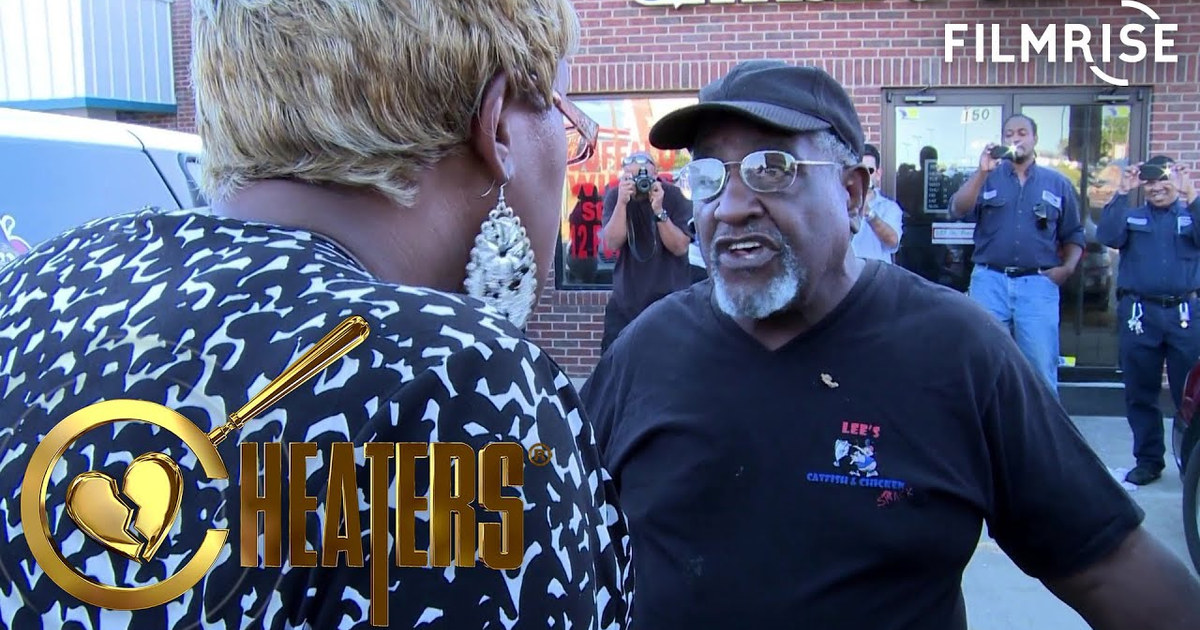
Back to Ariel. She sits in that interview chair and says the thing that should stop you cold: Virgil is “the any woman would want.” Thirty years. Always there. Over-helpful. And now — tired. Changed. A new job at Lee’s Catfish and Chicken Shack that he doesn’t need, because he’s retired. “It’s like it’s a whole different person,” she says. She doesn’t know. She suspects a one-time mistake, maybe. She hopes it isn’t true. She knows something is going on. And she has come to Cheaters for an “objective examination.”
Here is the trap. The show promises objectivity. The format guarantees a confrontation. Those are not the same thing. An objective examination would follow the evidence wherever it leads, including to the conclusion that nothing happened. A confrontation is a predetermined climax. The cameras are already rolling. The agents are already briefing. The perimeter is already set around the catfish and chicken joint. By the time Ariel says “I hope it’s not true,” the verdict has already been scheduled.


