Part 1
The Question Cheaters Asks Without Knowing It
You have probably seen the trailer. You know the rhythm: a suspicious partner, a hidden camera, a confrontation in a parking lot. Cheaters, the syndicated reality series created by Bobby Goldstein in 2000, has been serving that formula for over two decades. It is loud, messy, and irresistible. But beneath the shouting and the shaky footage, the show is asking a much bigger question: does surveillance reveal truth, or does it manufacture it?
That question is not new. It is the same one Francis Ford Coppola explored in The Conversation (1974), where Gene Hackman's Harry Caul learns that the tapes he makes distort as much as they document. It is the question lurking behind every episode of Cops (1989–) and MTV's The Real World (1992–), shows that turned private conflict into public spectacle. Cheaters, whether it knows it or not, is the latest link in that chain.
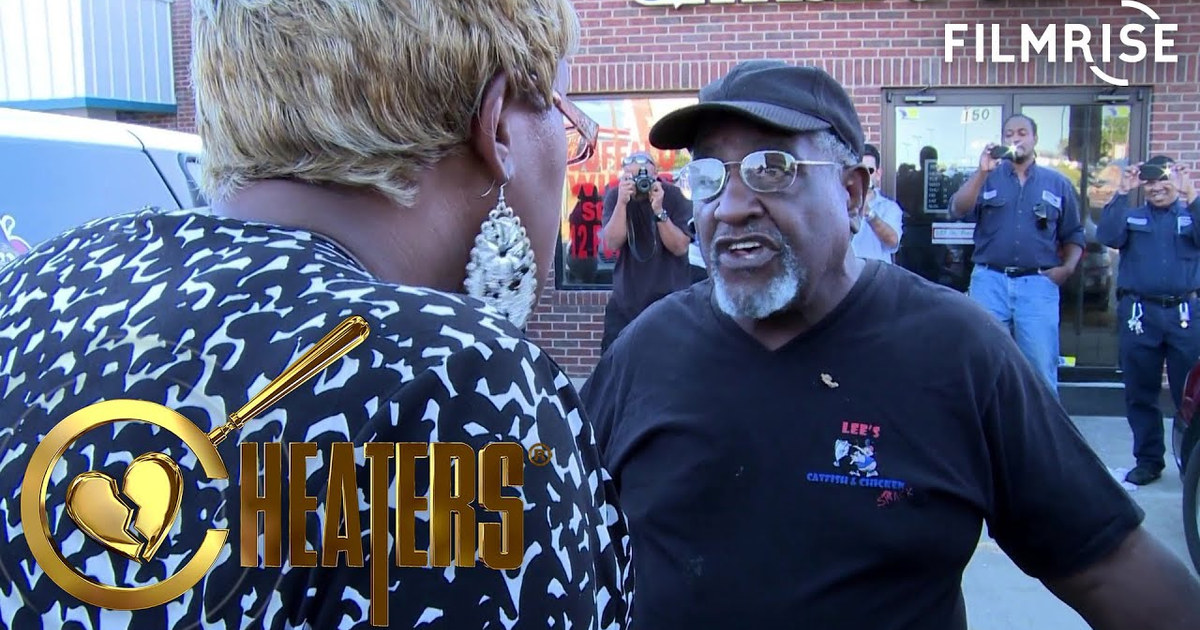
Enter Ariel Garrison. She comes to the Cheaters Detective Agency after 30 years with her partner, Virgil, a 69-year-old cook at Lee's Catfish and Chicken Shack. She is not certain. She is not even sure she wants to be certain. 'I hope it's not true but I know it's something going on,' she says. That sentence is the whole show in miniature: a woman caught between dread and desire, asking for the truth while already bracing for the worst.
So here is the central question: when we demand the truth from someone we love, are we seeking clarity or confirmation? Cheaters suggests it is almost always the latter. Ariel does not come to the agency for a fair trial. She comes for evidence. And the show, with its hidden cameras and dramatic music, is built to give it to her.
Think about what that means. Surveillance is not neutral. It is a choice. Someone decides where to point the lens, when to start recording, what to keep and what to cut. In The Conversation, Harry Caul is a professional eavesdropper who slowly realizes that his work is not just observing reality—it is shaping it. The same is true of Cheaters. The cameras do not just capture infidelity; they create a narrative. They turn suspicion into a story with a beginning, a middle, and a confrontation.
And that story is designed to be watched. Cops and The Real World taught us to consume other people's private moments as entertainment. Cheaters took that lesson and added a detective agency, a host named Clark Gable (no relation to the actor), and a guarantee of drama. It is reality TV at its most raw, but also its most constructed. The truth is out there, the show says. But it is the truth as the cameras frame it.
Ariel's ambivalence is the key. She says she wants to know, but her words betray a deeper fear. 'I don't know what it is,' she repeats. She is not asking for a simple yes or no. She is asking for a resolution to a feeling she cannot name. The Cheaters Detective Agency promises to provide that resolution—for a fee. 'Exercise your right to be informed,' the show says. 'Investigative charges may apply.'
That is the transaction at the heart of Cheaters. You bring your doubt. The agency brings its cameras. Together, you produce a spectacle. But does the spectacle bring peace? Or does it just confirm what you already suspected? Ariel's case will play out over the episode, but the question lingers: if you already know something is going on, what are you really looking for?
The show's genius—and its cruelty—is that it never really answers that question. It just keeps rolling. The cameras keep watching. The confrontations keep happening. And the audience keeps tuning in, because deep down, we all want to know: what would we do if we were Ariel? Would we want the truth, or would we want to be right?
Cheaters does not judge. It just records. And in recording, it turns a private pain into a public ritual. That is the uncomfortable mirror it holds up. You have probably seen the trailer. But have you asked yourself why you watched?
What the Cameras Actually Capture
Day one of the investigation into Virgil, a 69-year-old cook at a catfish and chicken joint, begins with a stakeout. Agents set up a perimeter around his workplace. The cameras roll. Inside, Virgil sits at a corner table with a woman who is not his partner of 30 years, Ariel. They eat. She orders chicken. They talk. Then, before she leaves, she leans in and kisses him on the lips. She drives off. That's it. That's the footage.
If you're keeping score at home, that's a kiss. A single, closed-mouth kiss between a man and a woman in a public restaurant. It could mean everything. It could mean nothing. It could be a goodbye between old friends, a moment of weakness, or the first visible crack in a three-decade relationship. The camera doesn't tell you which. It just shows you the kiss. The rest is up to you — and up to the narrator, who is more than happy to fill in the blanks.
This is the central problem with surveillance as a truth-seeking tool. It captures behavior, not meaning. And meaning is exactly what we're after when we suspect betrayal. We don't just want to know what happened; we want to know what it meant. The camera can't give us that. So we bring in a narrator, a detective, a story. And that story is where things get slippery.


