Part 4
'Cheaters' debuted in syndication in 2000. By the time Greco is standing on that shore, this machine had been running for years. The lake sequence isn't a lucky break from a sloppy operation. It's a veteran operation improvising at full speed, and the improvisation is right there on tape.
A 'Borat'-Grade Production Problem, Solved on the Fly
If you want a respectable comparison, I'll give you four, and I'll give them without blinking.
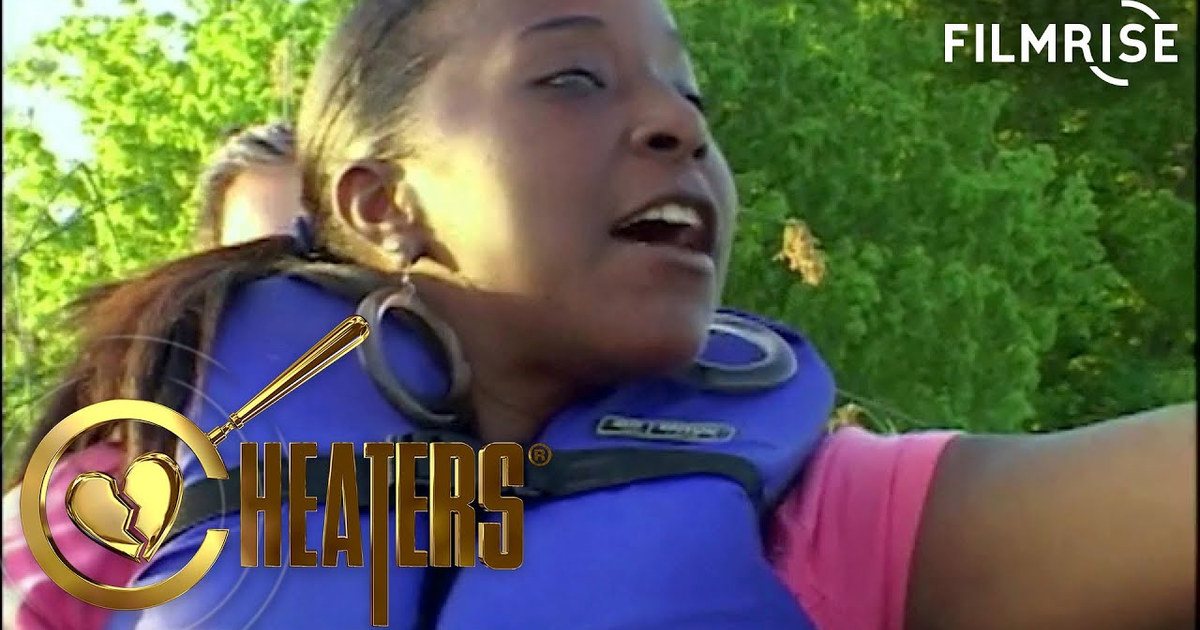
First: Nathan Fielder's 'Nathan for You,' which ran on Comedy Central from 2013 to 2017. The entire project is logistics as comedy. The joke isn't the punchline — the joke is the plan, and the plan is a production problem that has to be physically executed in the real world with real businesses and real people who have not signed up to be in on it. Fielder's genius is that he lets you watch the machinery grind. So does 'Cheaters.' The kayak is a Fielder-grade logistical knot, except nobody's winking.
Second: Josh and Benny Safdie's 'Uncut Gems' from 2019, 135 minutes of Adam Sandler as Howard Ratner, a man whose every solution creates a worse problem. The tension in that film doesn't come from plot mechanics. It comes from escalation — from the way logistics compound until the walls close in. That is precisely the energy of a confrontation that suddenly requires watercraft. The show solves one problem by renting boats and immediately inherits five new ones: how do we follow them, how do we get close enough to hear anything, how does anybody get back to shore, and what happens if he just keeps paddling?
Third: Larry Charles's 'Borat' from 2006, 84 minutes of Sacha Baron Cohen negotiating with non-actors who have no idea what movie they're in. The comedy there isn't the written material. The comedy is the negotiation — the moment-by-moment management of human beings who can walk away, shut the door, or call the police at any second. The kayak rental is a Borat-grade production problem solved on the fly, and Borat at least had a camera crew that knew the plan. Greco is figuring out the plan while the plan is already happening to him.
Fourth, and this is the one I'd actually put on a syllabus: the whole encounter has the structure of a heist movie where the crew forgot to case the joint. The reconnaissance is done. The target is identified. Then the target gets in a boat, and the entire operation has to be rebuilt from scratch in ninety seconds, outdoors, with a heat index.
Joey Greco Is a Performer, Not a Narrator
Watch what Greco is actually doing out there, because it's three jobs at once and he's doing them simultaneously.
He's the host, which means he carries the authority of the show and has to keep the audience oriented. He's the referee, which means 'Ladies, ladies' and 'Easy now' and 'Get out of my face' — the physical and verbal management of people who are genuinely furious and not acting. And he's the translator, standing between two people who are hearing each other for the first time and have no shared vocabulary for it. Half of his dialogue is de-escalation, and the other half is exposition, and he's delivering both while balancing in a small plastic boat.
The closest thing in cinema is Werner Herzog narrating 'Grizzly Man' in 2005 — 103 minutes of a voice describing a situation it cannot possibly control. Herzog is the most composed narrator alive, and even he sounds like a man narrating over the wreckage. Greco is that voice, except he isn't narrating from a booth. He's a voice trapped inside the situation, steering it, narrating it, and holding a kayak steady mid-sentence so the shot doesn't tip into the water.
And he's an heir to a real tradition, which is the thing the sneer-merchants never want to admit. The composed daytime host — Phil Donahue from 1970 to 1996, Jerry Springer from 1991 to 2018, Maury Povich from 1991 to 2022 — is one of the great American performance registers. Calm, direct, faintly amused, unshakeable while the room falls apart. Greco is squarely in that lineage. He's just the rare one who has to physically hold the set together with his hands.
The Deadpan Beats Are Written in the Edit, Not the Script
'Does she need to sit in the middle?'
'We need to rent some boats.'
Those two lines land, and they land hard, because of where they're placed. If you heard them over silence, they'd be nothing. They're funny because the edit slams them directly against Rita shouting. That's a cut — a choice, made in a room, by somebody with a timeline open and a finger on the spacebar. The flat line lands after the loud one. The practical question lands after the emotional explosion. Nobody wrote that rhythm. Somebody found it.
So give the editing room its credit, because the temptation is always to attribute this to chaos. Chaos doesn't cut on the exhale. Chaos doesn't know that 'Does she need to sit in the middle?' is devastating in the middle of a screaming match but inert anywhere else. That's rhythm. That's an editor who understands exactly how much deadpan this format can carry, which turns out to be a lot more than anybody gave it credit for. The absurdity is engineered, and it's engineered in post, and it's engineered well.


